
Introduction
One of the most crucial components of total wellbeing is mental health, although not everyone can willingly seek treatment. The law permits an involuntary mental health commitment, also known as a 302 commitment, in specific circumstances where an individual is in a severe crisis and a danger to themselves or others.
The definition of 302 mental health, the procedure, the rights of those concerned, and the potential effects of such a commitment on patients and their family will all be covered in this article.
What Is 302 Mental Health?
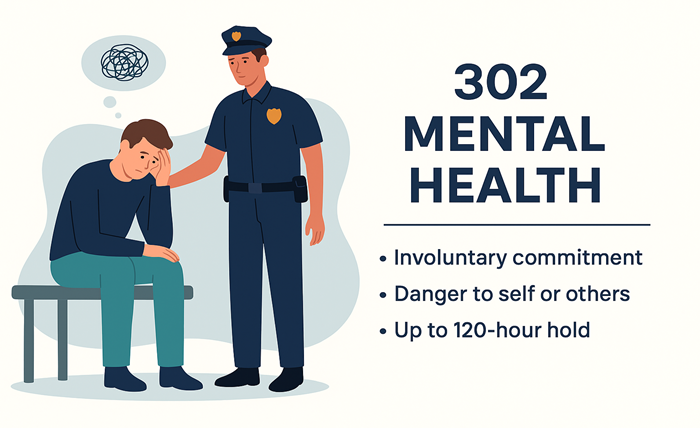
302 mental health refers to Section 302 of the Mental Health Procedures Act, widely used in the United States (especially Pennsylvania law). If someone is deemed a danger to themselves or others, they may be involuntarily admitted to a mental health hospital for assessment and treatment.
Unlike voluntary treatment, where the patient checks in willingly, 302 involuntary commitment allows immediate intervention without consent when urgent safety concerns exist.
Key highlights of 302 commitment:
Can be initiated by family, police, or medical professionals.
Requires legal paperwork and authorization.
Initial hold lasts up to 120 hours (five days).
Not a punishment but a safeguard for safety.
To put it simply, a 302 commitment is a legal safety net balancing individual freedom with community protection.
When Can Someone Be Placed Under a 302 Commitment?
Not all mental health conditions qualify for a 302. The law requires clear, serious risk factors:
1.Risk to Oneself
Suicide attempts or strong suicidal ideation.
Self-harm or reckless behavior endangering their own life.
2. Risk to Others
Violent actions or threats against others.
Clear and present danger of physical harm.
3. Severe Disintegration of Mental Health
Unable to meet basic needs (food, shelter, hygiene).
Displaying psychosis or irrational, dangerous behaviors.
Anyone with firsthand knowledge can file a 302 petition. Once approved, law enforcement or medical teams transport the person to a psychiatric facility.
The 302 Mental Health Process Step by Step
Families often feel confused during a 302 mental health hold. Here’s the typical process:
Filing the Petition
Completed by family, police, or a physician.
Includes documented proof of dangerous behavior.
Submitted to county or mental health authority.
Evaluation & Acceptance
Reviewed by a court or mental health delegate.
If valid, law enforcement escorts the individual to a hospital.
Emergency Assessment
Doctors conduct a psychiatric evaluation.
Determines if 302 standards for commitment are met.
Short-Term Commitment (up to 120 hours)
If criteria are met, immediate admission.
Stabilization begins with therapy, medication, and crisis care.
Potential Long-Term Commitment
If risks remain, hospital may request 303 or 304 commitments.
Courts intervene to ensure due process.
This system protects both patient rights and public safety.
Rights of Individuals Under a 302 Commitment
Despite being involuntary, individuals retain important legal rights:
Right to Information – Must be informed of reasons and duration.
Right to Legal Counsel – Especially for long-term extensions.
Right to Humane Treatment – Facilities must provide safe, ethical care.
Right to Petition for Release – Patients can challenge their commitment in court.
⚖️ Note: A 302 is a medical intervention, not a criminal charge. Still, it may affect future licensing, employment, or firearm ownership depending on state laws.
Impact of 302 Mental Health Commitment
A 302 can feel overwhelming, but it is often a life-saving measure.
Positive Outcomes
Immediate Safety – Prevents suicide or violence.
Access to Care – Forces evaluation and treatment for those refusing help.
Stabilization – Medication and therapy begin quickly.
Challenges & Concerns
Stigma – Social judgment after involuntary admission.
Trauma – Being forced into care can be distressing.
Long-Term Effects – Future career or legal complications in some cases.
Families can reduce harm by supporting recovery and encouraging voluntary treatment after release.
Conclusion
The idea of 302 mental health commitment is complex but essential. It balances community safety with personal rights. While the process can feel harsh, the ultimate goal is to protect lives and provide necessary mental health support.
Understanding the 302 procedure empowers families to respond effectively when loved ones show signs of severe crisis. Remember, mental health struggles are medical conditions, not personal failings.
FAQ on 302 Mental Health
Is a 302 a permanent record?
No, it’s not a criminal record. It is a medical record, but it may appear in background checks for certain licenses or firearm ownership.
How long does a 302 last?
The first hold is up to 120 hours (five days). Extended holds (303, 304) require court approval.
Can someone refuse a 302 evaluation?
No. Once approved, participation is mandatory because the law prioritizes safety over consent.