
Introduction
There are days when everything just falls apart. You wake up in the morning and the weight on your chest is so heavy you can barely breathe. Your mind races, your hands shake, and for the first time in a long time, you realize you cannot handle this alone. You need help — not in three weeks when the next appointment slot opens up, but right now, today.
This is exactly why the walk in mental health clinic exists.
Whether you are dealing with a sudden anxiety attack, a deep depressive episode that has spiraled out of control, a relationship crisis, or simply the overwhelming pressure of daily life that has reached a breaking point — a walk in mental health clinic can be your first step toward feeling stable again. No referral. No waiting weeks on end. No judgment. Just compassionate, professional care when you need it most.
In this guide, we will walk you through everything you need to know — what a walk in mental health clinic is, how it works, what to expect on your first visit, who these clinics serve best, how much it costs, and how to find one near you. By the end, you will feel confident and prepared to take that first step.
What Is a Walk In Mental Health Clinic?
A walk in mental health clinic is a specialized behavioral health facility that provides immediate, same-day mental health services without requiring a prior appointment or a referral from your primary care doctor. Think of it as urgent care — but specifically designed for your mental and emotional wellbeing rather than physical illness.
Unlike a traditional hospital emergency room, a walk in mental health clinic is not designed for life-threatening psychiatric emergencies. And unlike a scheduled outpatient therapy practice, it does not make you wait weeks before being seen. It occupies the critical space in between — serving people who need help now, but who are not in a full crisis requiring hospitalization.
These clinics go by several names. You might hear them called behavioral health urgent care centers, psychiatric walk-in clinics, or same-day mental health clinics. Regardless of the name, the purpose is the same: to give you access to a licensed mental health professional on the day you walk through the door.
According to the American Association of Medical Colleges, nearly 6 million adults in the United States visited emergency departments for mental health care in 2021 alone — and a large portion of those visits could have been handled at a community-level walk in mental health clinic, saving both patients and the healthcare system significant time and money.
Who Should Visit a Walk In Mental Health Clinic?
One of the most common questions people have is whether their situation is “serious enough” for a walk in mental health clinic. The honest answer is: if you are asking that question, it probably is.
Walk in mental health clinics are ideal for adults and, in many cases, adolescents who are experiencing:
→ Sudden or intensifying anxiety that is disrupting your ability to function at work, school, or home
→ A depressive episode that has worsened and feels out of control
→ Panic attacks that are becoming more frequent or severe
→ Emotional burnout from work, caregiving, or chronic stress
→ Grief or trauma that has become overwhelming
→ Relationship conflicts or family crises that are affecting your mental health
→ Substance use concerns that you want to address before they escalate
→ Suicidal thoughts that are passive — meaning you are not in immediate danger but need support
→ A first mental health concern that you have never sought help for before
It is also perfectly acceptable to visit a walk in mental health clinic simply because you do not know where else to start. Many people use these clinics as their entry point into the mental health care system — getting assessed, receiving a referral, and connecting with a long-term provider who can continue their care.
Importantly, a walk in mental health clinic is not the right resource for active psychiatric emergencies, severe withdrawal from substances, or situations involving imminent danger to self or others. In those cases, please call 988 (the Suicide and Crisis Lifeline) or go directly to your nearest emergency department.
Services You Can Expect at a Walk In Mental Health Clinic
The range of services offered at a walk in mental health clinic varies by location, funding, and staffing. However, most clinics provide a solid core of same-day mental health services designed to stabilize, assess, and refer patients appropriately. Here is what you can typically expect:
1. Mental Health Assessment and Evaluation
Your visit will almost always begin with a comprehensive mental health assessment conducted by a licensed clinician — this might be a licensed clinical social worker (LCSW), a licensed professional counselor (LPC), a psychologist, or a psychiatric nurse practitioner. They will review your history, current symptoms, and what brought you in today. This evaluation forms the foundation of any recommendations made during your visit.
2. Crisis Stabilization
If you are experiencing acute emotional distress — for example, you are in the middle of a panic attack or overwhelmed by intrusive thoughts — the clinic’s care team will help you stabilize before anything else. This is not hospitalization. It is supportive intervention designed to help you regain a sense of calm and safety so that further evaluation can proceed.
3. Short-Term Therapy Sessions
Many walk in mental health clinics offer short, focused therapy sessions on the day of your visit. A walk-in therapist may use evidence-based approaches such as cognitive behavioral therapy (CBT) or motivational interviewing to help you work through immediate concerns and develop coping strategies you can use right away.
4. Psychiatric Consultation and Medication Management
Some clinics have psychiatrists or psychiatric nurse practitioners on staff who can provide a medication consultation. If you are currently taking mental health medications and are having problems, or if you are beginning to explore medication options for the first time, this initial consultation can be invaluable. Note that most walk in mental health clinics will not dispense medications or refill prescriptions directly — but they can connect you with the right provider to do so.
5. Referrals and Care Coordination
One of the most powerful services a walk in mental health clinic provides is the connection to ongoing care. Staff can help you identify therapists, psychiatrists, community mental health programs, and inpatient options if needed — and they can often expedite referrals in ways that a self-referral cannot.
6. Aftercare Planning
Before you leave, most clinics will provide you with an aftercare plan — a written document outlining the recommendations made during your visit, any follow-up appointments scheduled, and resources you can access in the coming days.
What Happens When You Walk In? A Step-by-Step Breakdown
If you have never visited a walk in mental health clinic before, the unknown can feel intimidating. Here is a realistic picture of what most first visits look like:
Step 1: Arrival and Check-In
You walk in during clinic hours — no appointment needed. You are greeted by a receptionist or admissions specialist who will ask for your basic information: name, date of birth, reason for visit, and insurance information if applicable. Many clinics serve patients regardless of their insurance status or ability to pay, so do not let financial concerns stop you from walking through the door.
Step 2: Initial Screening
Before meeting with a clinician, you may be asked to complete some paperwork or a brief screening questionnaire. This helps the care team understand your situation and prioritize care based on urgency. Some clinics also have peer support specialists — people who have their own lived experience with mental health challenges — who may check in with you while you wait. This human touch can make a significant difference when you are feeling vulnerable.
Step 3: Clinical Assessment
You will meet one-on-one with a licensed mental health professional in a private consultation room. This is a confidential conversation. They will ask about your current symptoms, your mental health history, any medications you take, and your support system. This session typically lasts 45 minutes to an hour, though your first visit as a whole could take anywhere from 90 minutes to three hours depending on complexity.
Step 4: Recommendations and Planning
Based on the assessment, the clinician will discuss their findings and recommendations with you. This might include an on-site therapy session, a referral to a specialist, an emergency services plan, or simply validation and psychoeducation about what you are experiencing. You will be offered choices — not handed a one-size-fits-all prescription.
Step 5: Checkout and Follow-Up
Before leaving, you will receive your aftercare plan. The team will often schedule any follow-up appointments while you are still in the office or connect you with resources to do so. Some walk in mental health clinics offer “bridge appointments” — short-term follow-up visits to monitor your progress until a long-term provider becomes available.
How Much Does a Walk In Mental Health Clinic Cost?
Cost is one of the biggest barriers that keeps people from seeking mental health care — and it is a completely legitimate concern. The good news is that walk in mental health clinics are often designed with affordability in mind.
With Insurance
Many walk in mental health clinics accept major insurance plans, including Medicaid and Medicare. Under the Affordable Care Act, marketplace insurance plans are required to cover mental health and substance use disorder services. If you have insurance, contact your provider beforehand to ask about your copay or coinsurance for behavioral health urgent care visits. In many cases, out-of-pocket costs with insurance range from $0 to $50 for a visit.
Without Insurance
Many community-based walk in mental health clinics operate on a sliding scale fee — meaning what you pay is based on your income. Some clinics, like those run by mental health associations or funded through public health grants, offer services completely free of charge. According to SAMHSA (the Substance Abuse and Mental Health Services Administration), most health care professionals treating mental health concerns will offer reduced fees or sliding-scale options for those without coverage.
Self-Pay Costs
If you are paying entirely out of pocket, costs can vary. An initial intake assessment at a private mental health clinic can range from $50 to $200, while follow-up sessions typically fall in the $100 to $200 per session range without insurance. However, community health centers and nonprofit walk in mental health facilities often charge significantly less or nothing at all.
Walk In Mental Health Clinic vs. Emergency Room: What Is the Difference?
Many people end up in the emergency room for mental health crises simply because they do not know another option exists. But emergency rooms are often not the best environment for mental health care — they can be loud, overwhelming, and long waits are common. Staff are typically focused on physical medical emergencies, and psychiatric resources may be limited.
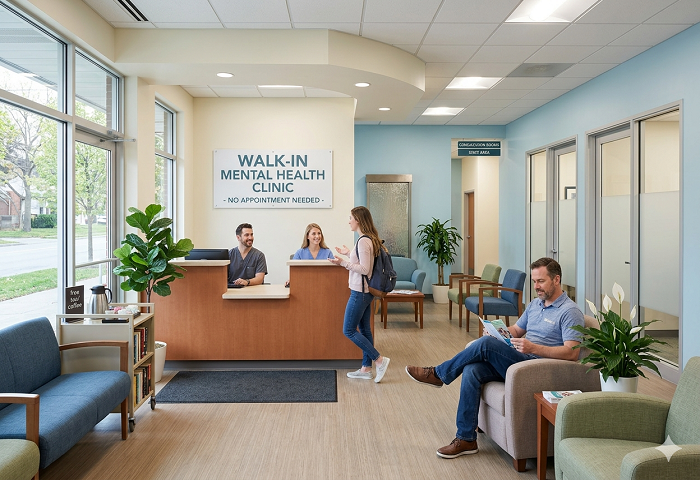
A walk in mental health clinic, by contrast, is specifically designed and staffed for behavioral health needs. The environment is intentionally calming — many clinics describe their spaces as feeling more like a comfortable living room than a sterile medical setting. Clinicians are specialized in mental health, and the entire process is focused on your emotional wellbeing.
The key distinction is severity. If you are in immediate danger — you are experiencing a psychiatric emergency, you are about to act on suicidal thoughts, or someone around you is in danger — go to the emergency room or call 911 immediately. But if your situation is urgent but not a life-threatening emergency, a walk in mental health clinic is almost certainly the better option.
The Growing Need: Why Walk In Mental Health Clinics Matter More Than Ever
The United States is in the middle of a mental health crisis that shows no signs of slowing. According to the AAMC, roughly half of the U.S. population — approximately 169 million people — live in mental health professional shortage areas. The psychiatrist shortage is projected to worsen, with the number of practicing psychiatrists expected to drop by 20% by 2030.
Against this backdrop, wait times for mental health appointments have skyrocketed. It is not uncommon to wait six to twelve weeks to see a therapist or psychiatrist for the first time. For someone in the middle of a depressive episode or a panic disorder flare-up, that wait is not just inconvenient — it is dangerous.
Walk in mental health clinics directly address this gap. They reduce unnecessary emergency room visits, provide early intervention before crises escalate, and serve as a critical bridge connecting patients with long-term care. A study noted by AAMC found that these behavioral health urgent care centers are demonstrably keeping patients out of expensive and often inappropriate emergency department settings.
The model is expanding — and for good reason. From Philadelphia’s first-of-its-kind walk in mental health clinic run by Merakey to community-based centers operated by health systems like Northwell Health in New York and hospital systems across the country, the recognition that accessible, immediate mental health care saves lives is growing.
How to Find a Walk In Mental Health Clinic Near You
Finding a walk in mental health clinic in your area does not have to be complicated. Here are the most effective ways to locate one:
Search Online: Use terms like “walk in mental health clinic near me, “behavioral health urgent care,” or “same-day mental health services” followed by your city or state. Google Maps results will often show hours and reviews.
Call 988: The national Suicide and Crisis Lifeline (988) can connect you with local mental health resources even if you are not in immediate crisis. Counselors can provide referrals to walk-in and same-day services in your area.
Contact SAMHSA: SAMHSA’s National Helpline (1-800-662-4357) is a free, confidential information service available 24/7 that can refer you to local treatment facilities, including walk-in options.
Community Health Centers: Federally Qualified Health Centers (FQHCs) often offer behavioral health services, sometimes on a walk-in basis, and serve patients regardless of insurance status.
Ask Your Primary Care Doctor: If you have a primary care provider, they may be able to refer you directly to a walk-in behavioral health center and speed up your access to care.
Check with Your Employer: If you are employed, your company’s Employee Assistance Program (EAP) may cover or direct you to same-day mental health services.
Tips for Making the Most of Your Walk In Mental Health Clinic Visit
Walking into a mental health clinic for the first time can feel nerve-wracking. These practical tips can help you make the most of your experience:
Bring ID and Insurance Information: Even if the clinic serves patients without insurance, having your ID and any insurance cards available will speed up the check-in process.
Write Down Your Symptoms Beforehand: In moments of high stress, it can be hard to articulate what you are going through. Jot down a few notes about your symptoms, how long they have been happening, and what triggered your decision to come in today.
Be Honest: Everything you share with a mental health professional is confidential (with limited exceptions involving immediate safety). The more honest you are about your experience, the better the care team can help you.
Ask Questions: Do not leave without understanding the next steps. Ask about follow-up care, what resources are available to you, and what to do if your symptoms worsen before your next appointment.
Bring a Support Person If You Need One: Many clinics welcome family members or trusted friends to accompany you. Having someone in your corner can make the experience feel far less daunting.
Final Thoughts: Taking the First Step Is the Hardest — and the Most Important
If there is one thing to take away from this guide, it is this: you do not have to be in the worst moment of your life to deserve help. Mental health struggles exist on a spectrum, and wherever you fall on that spectrum today, there is care available to you — often within the same day.
A walk in mental health clinic is not a last resort. It is an act of courage and self-awareness. It is you recognizing that you need support, and choosing to reach out rather than suffer in silence. That choice — however small it might feel in the moment — can change the entire trajectory of your mental health journey.
You do not need a referral. You do not need to wait weeks. You do not need to have the “right” kind of problem. You just need to walk in.
Whether you are searching for a walk in mental health clinic near you for the first time or exploring options for a loved one who is struggling, we hope this guide has given you the clarity and confidence to take that next step. Same-day mental health services exist precisely because mental health cannot always wait — and neither should you.