

Introduction
There is a moment that many people quietly recognise — the moment when pushing through no longer works. The alarm goes off and the weight of the day already feels unbearable. Sleep offers no real rest. Relationships that once felt nourishing now drain you dry. Work that once gave you purpose now feels hollow and relentless. If this sounds uncomfortably familiar, you are not alone — and you are not broken. You may simply need more than a weekend away. You may need a mental health retreat.
A mental health retreat is a structured, immersive programme designed to give your mind and nervous system the deep rest and professional support they desperately need. Unlike a standard holiday or even a casual yoga weekend, a proper mental health retreat pairs therapeutic care with peaceful surroundings and intentional daily practices — creating the precise conditions in which genuine healing becomes possible.
This guide covers everything you need to know: what a mental health retreat actually is, who benefits most, the different types available, what happens during a typical stay, and exactly how to choose a programme that fits your life and your needs. Whether you are navigating burnout, anxiety, grief, trauma, or simply a persistent sense that something is missing, this article will help you move forward with clarity and confidence.
What Is a Mental Health Retreat?
A mental health retreat is a dedicated residential or immersive day programme focused entirely on psychological, emotional, and holistic well-being. Participants step away from the demands of their ordinary environment and enter a supported space where healing — not productivity — is the only priority.
These programmes typically run anywhere from a long weekend to four weeks, and they combine evidence-based therapeutic approaches with complementary wellness practices. Think individual therapy sessions, group work, mindfulness training, movement, nutritional support, and time in nature — all woven together into a coherent daily rhythm that supports deep restoration.
It is important to understand that a mental health retreat is not the same as a psychiatric hospital or crisis intervention facility. Most retreats are designed for people who are emotionally struggling but do not require emergency medical care. They sit in a powerful middle ground — more intensive than outpatient therapy, less clinical than inpatient treatment — making them an ideal option for the vast majority of people who recognise they need support but are not in acute danger.
They are also very different from spa breaks or wellness holidays, though those have their own value. The distinguishing feature of a true mental health retreat is the presence of qualified mental health professionals — licensed therapists, clinical psychologists, or certified counsellors — who guide the therapeutic work and hold a genuinely safe container for emotional exploration.
Who Should Consider a Mental Health Retreat?
One of the most persistent myths about mental health retreats is that they are only for people in severe crisis. The truth is almost the opposite. While retreats can be profoundly valuable for those who have hit rock bottom, they are equally — perhaps even more — valuable for people who are struggling in quieter, more invisible ways.
You might genuinely benefit from a mental health retreat if you recognise yourself in any of the following:
- Burnout: You have been running on empty for so long that rest itself no longer seems to help. The exhaustion is bone-deep, and no amount of sleep seems to touch it.
- Chronic anxiety: A persistent, low-grade sense of dread follows you through daily life. You cannot switch your mind off, and the worry feels relentless even when circumstances do not warrant it.
- Grief and loss: You have experienced the death of someone you love, the end of a significant relationship, or a loss of identity — and you have not yet found a way to move through it.
- Trauma: Past experiences continue to shape your present in ways that feel beyond your control, even if the events themselves happened long ago.
- Life transitions: A divorce, redundancy, retirement, or major life change has left you uncertain about who you are and where you are going.
- Emotional numbness: You feel disconnected from yourself, from your relationships, and from any sense of meaning or purpose.
- Plateau in therapy: You have been working with a therapist but feel stuck — as though the weekly sessions are no longer moving the needle.
Mental health retreats are also increasingly popular among high-performing professionals — executives, doctors, lawyers, creatives — who have spent years prioritising everything except their inner lives. For people who find it difficult to ask for help in their ordinary environment, the retreat setting offers a powerful permission structure: a place where vulnerability is not weakness but wisdom.
Types of Mental Health Retreats
The phrase ‘mental health retreat’ covers a remarkably wide spectrum of programmes. Understanding the main types will help you identify which approach best matches your particular needs.
Mindfulness-Based Stress Reduction (MBSR) Retreats
Grounded in the work of Jon Kabat-Zinn and now supported by decades of clinical research, these retreats teach participants to relate differently to their thoughts, feelings, and physical sensations through sustained mindfulness practice. They are particularly effective for anxiety, chronic pain, and the kind of rumination that keeps people trapped in cycles of worry and regret. Sessions typically include guided meditation, body scan practices, mindful movement, and group inquiry.
Trauma-Informed Healing Retreats
These specialised programmes are designed for individuals carrying unresolved trauma — whether from childhood adversity, relational harm, acute incidents, or complex, layered experiences. Facilitators are trained in trauma-sensitive approaches such as EMDR (Eye Movement Desensitisation and Reprocessing), somatic experiencing, or trauma-focused CBT. The environment is carefully structured to maximise safety and minimise the risk of retraumatisation, allowing participants to process difficult material at a pace that feels genuinely manageable.
Burnout and Stress Recovery Retreats
Built specifically for people experiencing occupational exhaustion or compassion fatigue, these mental health retreat programmes focus on nervous system regulation, boundary-setting, values clarification, and the practical psychology of sustainable performance. Many include sessions on sleep hygiene, nutrition for mental health, digital wellbeing, and the development of a life that feels meaningful rather than merely productive.
Holistic and Integrative Wellness Retreats
These programmes blend psychological support with complementary modalities — yoga, breathwork, acupuncture, nutritional medicine, creative arts therapy, and nature-based healing. They appeal to people who prefer a whole-person approach, addressing the interconnection between mind, body, and spirit. Many guests describe these retreats as the most comprehensive experience of care they have ever received.
Grief and Loss Retreats
Bereavement is one of the most universally human experiences, yet our culture is remarkably poor at supporting people through it. Grief retreats provide facilitated group and individual work, creative expression, ritual, and compassionate community for those navigating loss — whether of a person, a relationship, a identity, or a dream.
Digital Detox and Reconnection Retreats
In a world of constant notifications, these retreats invite participants to fully power down and rediscover what life feels like without the constant pull of screens. Research consistently shows that reducing digital stimulation improves sleep quality, reduces anxiety, enhances attention span, and restores a sense of groundedness. For many modern people, this alone is a form of radical self-care.
What Does a Day at a Mental Health Retreat Look Like?
People often wonder what they are actually signing up for. The honest answer is that it varies enormously between programmes — but most well-designed mental health retreats share a common underlying rhythm that balances structured therapeutic work with genuine rest and personal reflection.
A typical day might look something like this:
- 6:30–7:30 am — Morning grounding practice: gentle yoga, tai chi, breathwork, or silent walking meditation
- 7:30–9:00 am — Nutritious communal breakfast with space for relaxed connection
- 9:00–10:30 am — Group therapy session or psychoeducational workshop
- 10:30–12:30 pm — Individual therapy session with a licensed clinician
- 12:30–2:00 pm — Lunch and unstructured rest time
- 2:00–4:00 pm — Activity session: nature therapy, art therapy, journalling workshop, somatic movement, or equine-assisted therapy
- 4:00–5:30 pm — Free time for reflection, reading, gentle walks, or simply being
- 5:30–7:00 pm — Communal dinner
- 7:00–8:30 pm — Evening group sharing circle or facilitated discussion
- 8:30 pm onwards — Wind-down practices, restorative yoga, and sleep preparation
What makes this structure genuinely healing is not any single element but the cumulative effect of sustained immersion. When you are not managing emails, running errands, or performing normalcy for the people around you, something in the nervous system begins — often for the first time in years — to genuinely let go.
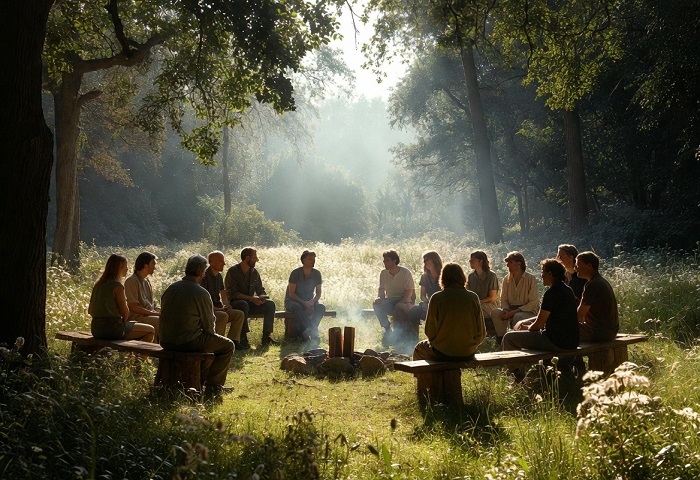
Most mental health retreats intentionally keep group sizes small, typically between eight and eighteen participants. This intimacy creates the conditions for authentic connection. Many people describe the bonds formed during a mental health retreat as among the most honest and meaningful relationships of their lives — a testament to what becomes possible when vulnerability is the shared language.
The Real Benefits of a Mental Health Retreat
The evidence base for residential mental health programmes continues to grow, and the benefits participants report go well beyond temporary relaxation. Here are the most significant and well-documented outcomes:
Genuine Nervous System Rest
Chronic stress keeps the body’s fight-or-flight response in a near-constant state of activation. Cortisol and adrenaline flood the system day after day, creating a cascade of physical and psychological consequences. The immersive environment of a mental health retreat — particularly when situated in nature — allows the parasympathetic nervous system to finally take over, producing measurable reductions in cortisol, improved heart rate variability, better sleep architecture, and a profound sense of physical ease.
Accelerated Emotional Processing
The concentrated nature of a mental health retreat creates conditions for breakthroughs that might take many months to achieve in weekly outpatient therapy. When you remove life’s constant distractions and give full attention to your inner world — supported by skilled professionals — emotional material that has been frozen or avoided can finally move. Grief gets grieved. Anger finds healthy expression. Long-buried insights rise to the surface with remarkable clarity.
Concrete, Transferable Skills
The best mental health retreats do not simply help you feel better in the short term — they equip you with evidence-based tools you will use for the rest of your life. Cognitive reframing techniques, emotional regulation strategies, self-compassion practices, values-based decision-making frameworks, and personalised mindfulness routines all become part of your ongoing psychological toolkit.
Breaking Out of Destructive Patterns
Our habitual thoughts and behaviours are deeply tied to our habitual environments. Simply removing yourself from your ordinary context — the same walls, the same routines, the same social dynamics — disrupts those patterns at a neurological level. Many people return from a mental health retreat with a radically different perspective on relationships, career choices, and personal boundaries that had previously seemed immovable.
The Healing Power of Community
Perhaps the most underestimated benefit of a mental health retreat is the profound relief of shared humanity. Sitting with others who are also struggling — and discovering that you are not uniquely broken, not alone, not without hope — is one of the most therapeutically powerful experiences available to human beings. The research on social connection and mental health is unequivocal: belonging heals.
Renewed Sense of Purpose and Identity
Many people arrive at a mental health retreat with a quiet but crushing sense that they have lost track of who they are. The sustained reflection, professional guidance, and perspective that distance from daily life provides often catalyses a powerful rediscovery of values, strengths, and direction. People leave not just feeling better — they leave knowing more clearly what they want their lives to mean.
How to Choose the Right Mental Health Retreat
With the growing popularity of wellness travel, the market for mental health retreats has expanded rapidly — which means the quality and credibility of programmes varies enormously. Choosing well is essential. Here is a clear framework for making an informed decision:
Start With Honest Self-Assessment
What do you most need right now? Are you in crisis, or seeking preventive care? Do you need clinical support for a diagnosed condition, or are you primarily looking for a reset and a deeper connection to yourself? Being honest about your starting point will help you identify the appropriate level of clinical oversight and the right programme type.
Verify Clinical Credentials
This is non-negotiable. Any reputable mental health retreat should have licensed mental health professionals on staff — ideally clinical psychologists, licensed therapists, or psychiatrists — not just wellness coaches or yoga instructors, however skilled those individuals may be. Ask specifically about the qualifications of the clinical team and their approach to safety planning if participants become distressed.
Evaluate the Programme Structure
Request a sample daily schedule and read it carefully. A well-designed mental health retreat balances structured therapeutic work with adequate rest and unstructured personal time. Be cautious of programmes that are so tightly scheduled there is no space for integration, or conversely, so loosely structured that the therapeutic component is superficial.
Consider the Physical Environment
The setting of a mental health retreat matters profoundly. Research on attention restoration theory and the psychological benefits of nature strongly supports the intuition that natural environments — forests, coastlines, mountains, gardens — enhance the capacity for emotional processing and mental recovery. Choose an environment that genuinely calls to something in you.
Ask About Group Size and Personalisation
Smaller groups allow for more individualised attention and more authentic connection. Enquire about the ratio of facilitators to participants and whether individual one-to-one therapy sessions are included alongside group work. A programme that relies entirely on group dynamics without offering individual therapeutic time will not meet the needs of everyone.
Understand the Full Cost
Mental health retreats vary dramatically in price — from a few hundred dollars for weekend programmes at community retreat centres to many thousands for luxury residential experiences. Get clear on exactly what is included: accommodation, meals, all therapy sessions, activities, and any materials. Some employer wellness schemes, private health insurance policies, or employee assistance programmes may cover part of the cost.
Read Reviews With Discernment
Look beyond the polished testimonials on the retreat’s own website. Seek out independent reviews on platforms where providers cannot curate the feedback. Pay particular attention to comments about how staff handled moments of difficulty or distress — that is the truest indicator of a retreat’s safety culture and clinical integrity.
Mental Health Retreats vs. Traditional Therapy: What Is the Difference?
A common and entirely reasonable question is whether a mental health retreat can replace regular therapy. The most honest answer is: no, but that is not what retreats are designed to do.
Traditional therapy provides something that retreats cannot fully replicate: the sustained, longitudinal relationship with a single therapist over months or years. That continuity — the accumulation of trust, the long arc of growth, the therapist’s deepening knowledge of your history — is irreplaceable and clinically significant.
What a mental health retreat provides is something that weekly therapy often cannot: intensity, immersion, and the catalytic power of a radically different environment. For many people, a well-chosen retreat functions as a turning point in their healing journey — an experience that breaks a plateau, opens new territory, and generates insights that then enrich their ongoing therapeutic work.
For those who have never tried therapy, a mental health retreat can also serve as a remarkably accessible entry point. The group context, the normalisation of emotional struggle, and the compassionate professionalism of the staff often dissolve the fear and shame that prevents people from seeking help in more conventional settings.
The ideal scenario for most people is integration: using a mental health retreat as a powerful intervention within a broader therapeutic framework that also includes ongoing individual therapy, community support, and daily self-care practices.
Preparing for Your Mental Health Retreat
A little preparation can significantly deepen the impact of your mental health retreat experience. Consider these steps before you arrive:
- Speak to your GP or current therapist. If you have a diagnosed mental health condition or are on medication, it is essential to consult your healthcare provider before attending. They can advise on suitability and ensure appropriate support is in place.
- Set a clear intention. What do you most hope to gain? What would feel like progress? Having a loose intention — not a rigid goal — gives your unconscious mind something to orient toward.
- Arrange proper coverage. Make genuine arrangements for work, children, and other responsibilities so that your mind is not half elsewhere during the retreat.
- Arrive with openness. The most profound experiences at a mental health retreat often come from unexpected directions. Try to hold your expectations lightly.
- Reduce commitments in the days before and after. Rushing into a retreat from a chaotic week, or returning from one directly into a pressure-filled diary, significantly reduces the depth of experience.
After the Retreat: Making the Healing Last
What happens after a mental health retreat matters as much as what happens during it. The integration period — the weeks and months following the experience — is where the real work of embedding change takes place.
Many people describe a sense of tenderness or vulnerability in the days immediately after returning home. The ordinary world can feel jarringly loud and fast after the sanctuary of the retreat. This is normal and temporary — and it is actually a sign that something real happened.
To sustain the gains from your mental health retreat, consider the following:
- Continue or begin regular therapy with a licensed clinician who can help you integrate what arose during the retreat.
- Establish at least one daily mindfulness or contemplative practice, even if only for ten minutes.
- Stay connected with fellow retreat participants. The community formed during an immersive healing experience is a genuinely valuable resource.
- Implement one concrete structural change in your life that reflects a value or insight from the retreat.
- Be patient and compassionate with yourself. Integration is not linear. There will be difficult days. They do not mean the retreat did not work.
- Consider a follow-up or shorter refresh programme in the months ahead.
Many mental health retreats now offer post-retreat support in the form of online alumni communities, follow-up calls with facilitators, curated resource libraries, and guidance for finding ongoing therapeutic support. Make full use of these offerings — they represent the retreat’s genuine commitment to your long-term well-being, not just your experience during the programme itself.
The Changing Landscape of Mental Health Retreats
The mental health retreat sector is evolving with welcome speed. Where programmes once drew primarily on spa culture or spiritual tradition, the best contemporary retreats are now grounded in clinical research, designed with input from neuroscientists and psychiatrists, and committed to measurable therapeutic outcomes rather than merely beautiful experiences.
There is also a growing and overdue conversation about accessibility. Historically, the cost and exclusivity of residential wellness programmes meant that mental health retreats were available primarily to affluent individuals. Progressive providers are beginning to address this through sliding scale pricing, scholarship funds, shorter programme formats, employer partnerships, and — cautiously — online retreat models that can reach participants who cannot afford to travel.
The corporate wellness sector is also waking up. Forward-thinking organisations are beginning to offer mental health retreat experiences as part of their employee well-being strategy — recognising that investing in the psychological health of their teams is not merely an act of compassion but a sound long-term business decision with measurable returns in retention, creativity, and performance.
As destigmatisation continues and demand grows, mental health retreats are moving from the fringe of wellness culture to the mainstream of preventive mental health care. That is a profoundly hopeful development for individuals, for organisations, and for society as a whole.
Is a Mental Health Retreat Right for You?
If you have read this far, something in you is likely already answering that question. Perhaps you have known for a while that what you are carrying is heavier than a weekend off can address. Perhaps you have tried other approaches and found them insufficient. Perhaps you simply feel, somewhere deep and quiet, that you deserve more than a life spent managing your way through pain.
A mental health retreat will not fix everything. It is not a magic reset or a permanent solution. What it can be — when chosen thoughtfully and entered into with genuine openness — is a genuine turning point. A dedicated stretch of time in which the noise quiets, the professional support is real, the environment is genuinely healing, and you are finally given permission to prioritise your own inner life.
The journey toward mental wellness is rarely linear, and it is almost never something we can complete alone. A mental health retreat offers something rare and increasingly precious: structured, professional, immersive support within a community of people who understand — because they are right there alongside you.
You do not need to be in crisis to deserve that kind of care. You simply need to be human, struggling, and willing to take one brave step toward something better. A mental health retreat might just be the most important journey you ever choose to make — not outward to somewhere exotic, but inward to yourself.