
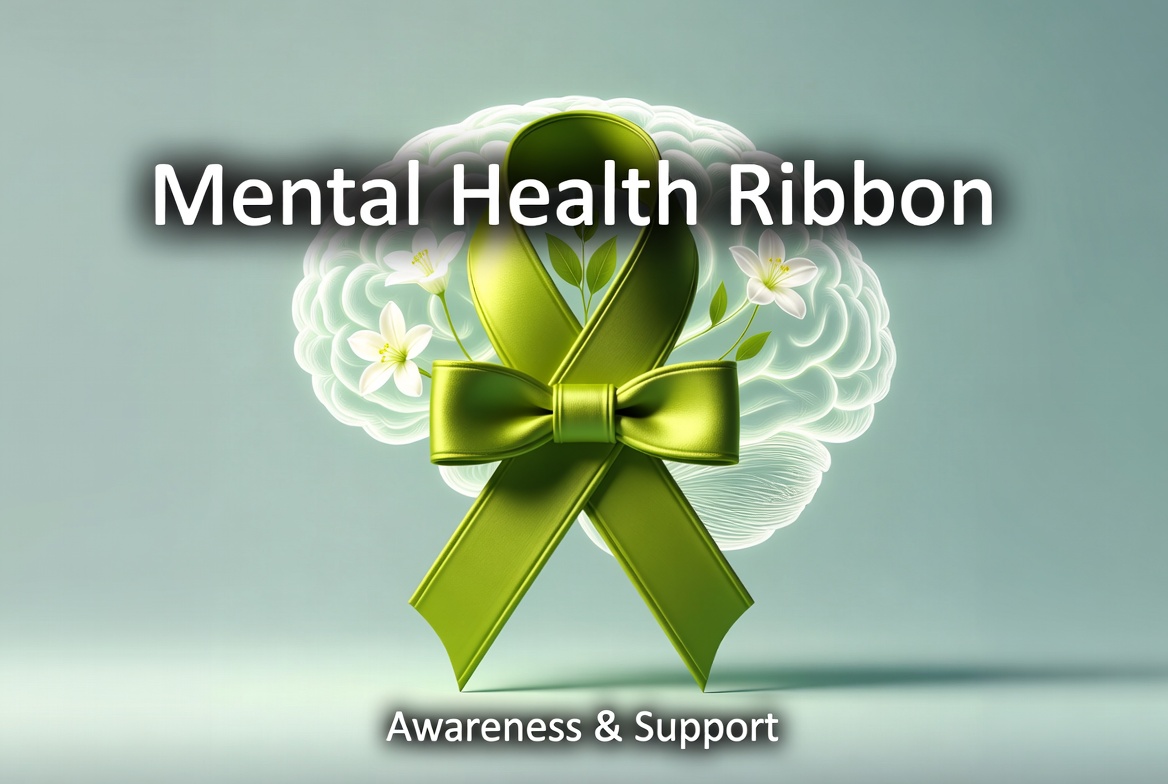
What Is the Mental Health Ribbon?
The mental health ribbon is a small but deeply meaningful symbol worn by millions of people across the world to show solidarity with those living with mental illness. It signals that you believe mental health matters, that you stand against stigma, and that no one should have to suffer in silence. Whether pinned to a jacket lapel, printed on a t-shirt, or shared as a digital badge on social media, the mental health ribbon sends a powerful, wordless message: you are not alone.
Awareness ribbons have been used as symbols for various causes since the early 1990s. The mental health ribbon follows that same tradition — a folded loop of colored fabric that represents something far larger than its physical size. It gives people an easy, visible way to participate in conversations that society has historically been reluctant to have. In this sense, the mental health ribbon does not just represent awareness. It creates it.
The concept of using ribbons to stand for important causes was popularized by the AIDS awareness movement in the late 1980s and early 1990s, when the red ribbon became a globally recognized symbol for HIV/AIDS advocacy. The mental health community drew inspiration from this model and introduced its own ribbon — one that would represent the many millions living quietly with depression, anxiety, bipolar disorder, PTSD, and other conditions that are just as real and serious as any physical illness.
Today, the mental health ribbon is recognized in countries around the world. From schools and hospitals to corporate offices and parliaments, wearing the ribbon has become one of the most accessible ways to join the global conversation about mental well-being.
What Color Is the Mental Health Ribbon?
The mental health ribbon is green. Specifically, a rich, vibrant shade of green has become the internationally accepted color for mental health awareness. If you have ever wondered “what color is the mental health ribbon?” — the answer is green, and it was chosen with deliberate purpose.
Green is deeply connected to nature, and that connection carries real emotional weight. Think about how you feel walking through a park, sitting beside a forest, or looking out at a field after rainfall. Green environments have a documented calming effect on the human mind. They reduce anxiety, lower stress hormones, and promote a sense of renewal. By choosing green for the mental health ribbon, advocates wanted to embed those same qualities — healing, growth, and hope — into the symbol itself.
Green also represents new beginnings. In many cultures, green symbolizes spring, rebirth, and the ability of living things to recover and flourish after a difficult winter. For someone living with a mental health condition, that metaphor resonates deeply. The mental health ribbon does not suggest that a person is broken or beyond help. It says the opposite: recovery is possible, growth is possible, and support is available.
Another practical reason for choosing green was the need to distinguish the mental health ribbon from other widely used awareness ribbons. Red was already associated with HIV/AIDS. Pink with breast cancer. Yellow with suicide prevention. Green was not yet strongly claimed by another major global cause, making it available to represent something equally urgent and equally deserving of public attention.
Green was selected for the mental health ribbon because it symbolizes growth, renewal, and hope. It reflects nature’s calming qualities and the belief that people experiencing mental health challenges can heal, recover, and thrive. The color also helped distinguish mental health awareness from other ribbon campaigns already using prominent colors like red, pink, and yellow.
The History of the Mental Health Ribbon
The story of the mental health ribbon begins in the early 1990s, a period when awareness ribbon campaigns were gaining real momentum worldwide. Community groups and mental health advocates, inspired by the success of the red HIV/AIDS ribbon, began distributing green ribbons at awareness events and mental health conferences. By 1994, these informal grassroots efforts had created a recognizable pattern: green ribbons were becoming a go-to symbol for anyone who wanted to publicly support mental health.
The movement did not begin with a single organization or a formal launch. It grew organically, spreading through advocacy networks, hospitals, support groups, and community organizations that saw the ribbon as a powerful tool for conversation. Over time, major mental health organizations adopted it, lending the symbol institutional weight and international reach.
In the United Kingdom, the Mental Health Foundation and the Time to Change campaign — launched in 2007 — both embraced the green ribbon as a key part of their advocacy work. Time to Change, a social movement dedicated to reducing the discrimination faced by people with mental health problems, used the ribbon to challenge negative stereotypes and encourage people to share their experiences openly. The Lord Mayor’s Appeal in London has since run an annual Green Ribbon Campaign tied to Mental Health Awareness Week, distributing thousands of green ribbons to businesses and encouraging workplaces to create visible cultures of support.
High-profile endorsements further accelerated the ribbon’s reach. The British royal family’s involvement in the Heads Together campaign — which addressed mental health stigma directly and publicly — brought the green ribbon to international headlines. When influential public figures wear the ribbon and speak openly about their own mental health struggles, they signal to millions of people that it is safe to do the same.
In the United States, organizations like the National Alliance on Mental Illness (NAMI) and Mental Health America helped spread the ribbon’s meaning through campaigns, events, and online outreach. Mental Health Awareness Month, which has been observed every May since 1949, became the natural home for the green ribbon in the American context. Every May, the ribbon appears on social media profiles, office noticeboards, school hallways, and government buildings, reinforcing its message year after year.
A Complete Guide to Mental Health Ribbon Colors
While the green mental health ribbon represents mental health awareness broadly, the awareness ribbon landscape is rich with color. Different ribbons have been adopted to represent specific mental health conditions, related causes, and overlapping areas of concern. Understanding the meaning behind each color helps advocates speak more precisely and show targeted support for the causes they care about most.
| Color | Condition / Cause | Key Association |
|---|---|---|
| Green | Mental Health Awareness / Depression | International symbol of mental health support; worn during Mental Health Awareness Month (May) |
| Blue / Navy Blue | Anxiety / Depression | Navy blue ribbons became associated with anxiety awareness; blue environments reduce patient anxiety |
| Yellow | Suicide Prevention / Awareness | Worn during Suicide Prevention Month (September); represents hope and solidarity |
| Purple / Light Purple | Bipolar Disorder / Substance Abuse Recovery | Purple ribbons appear during National Recovery Month; light purple signals bipolar awareness |
| Light Green | Bipolar Disorder / Childhood Depression | Alternative symbol for bipolar awareness; emphasizes personal growth and recovery |
| Red | Trauma / Urgent Mental Health Advocacy | Red communicates urgency in trauma-related campaigns; also used for HIV/AIDS awareness |
| Pink | Eating Disorder Awareness | Widely used in European eating disorder awareness campaigns |
| Silver / Gray | Brain Disorder Awareness | Associated with brain disorders in North American advocacy contexts |
| Teal & Purple | Suicide Prevention | Combined teal and purple ribbon: hope (teal) + courage against stigma (purple) |
It is worth noting that some ribbon colors carry multiple meanings because awareness campaigns developed independently across different communities and countries. The green ribbon alone has more than 30 documented meanings globally, though mental health awareness remains by far its most prominent and widely recognized association. When you see someone wearing a green ribbon, especially in May or around October 10 (World Mental Health Day), mental health awareness is almost certainly the intended message.
Why the Mental Health Ribbon Matters: Breaking the Stigma
Stigma is one of the most damaging barriers to mental health treatment. When people feel ashamed of their mental health struggles — when they fear being judged, dismissed, or misunderstood — they are less likely to seek help. According to federal health data, more than 60 percent of people in California who need mental health treatment do not receive it. Similar patterns are observed across the United States and in many other countries. Stigma is not the only barrier, but it is one of the most persistent and deeply embedded ones.
This is precisely where the mental health ribbon plays a crucial role. By wearing the ribbon openly and publicly, individuals signal that mental health is not a source of shame. They send a message that it is okay to talk about feelings, to ask for help, and to support others who are struggling. Over time, these small signals accumulate into cultural change.
The ribbon is particularly powerful as a conversation starter. When someone sees the green ribbon and asks “what does that mean?” — that question opens a door. It creates a moment of connection where the wearer can share something real about mental health, about their own experiences or those of someone they love. These individual conversations, happening in workplaces, classrooms, and homes around the world, collectively shift the way society thinks about mental illness.
The mental health ribbon also serves as a visible reminder that people who are struggling are not alone. For someone in the midst of a difficult time, seeing the green ribbon on a colleague’s badge or a friend’s profile picture can mean more than words. It communicates: this is a safe space, you can talk here, people care.
Wearing the green ribbon turns a personal belief into a public statement. Research consistently shows that open conversations about mental health — sparked by simple, visible symbols — are among the most effective tools for reducing stigma and encouraging people to seek help. Every green ribbon worn is a vote for a more compassionate, open society.
When and Where to Wear the Mental Health Ribbon
The mental health ribbon can be worn any time of year, but there are specific periods when wearing it carries extra visibility and impact. The two most significant occasions are Mental Health Awareness Month in May and World Mental Health Day on October 10.
Mental Health Awareness Month (May)
Mental Health Awareness Month has been observed every May in the United States since 1949, making it the longest-running mental health awareness campaign in the country. Founded by Mental Health America — then known as the National Association for Mental Health — the month was established to educate the public about conditions like depression, anxiety, bipolar disorder, and schizophrenia, and to celebrate recovery. The 2026 theme chosen by Mental Health America is “More Good Days, Together,” encouraging people to reflect on what makes a good day and to support one another in building more of them.
May was deliberately chosen to align with the spring season, a natural time of renewal and new growth. The green ribbon’s message of hope and healing fits seamlessly into this seasonal symbolism. During May, buildings are lit green, social media feeds fill with green imagery, and organizations distribute green ribbons to employees, students, and community members as part of awareness campaigns.
World Mental Health Day (October 10)
World Mental Health Day is observed every year on October 10, with international participation from over 150 countries. Originally established in 1992, the day has a specific theme each year — focusing on issues like youth mental health, access to care, or suicide prevention. Wearing the green ribbon on October 10 joins you to a global movement of people affirming that mental health is a universal human concern.
Mental Health Awareness Week (UK)
In the United Kingdom, Mental Health Awareness Week is organized annually by the Mental Health Foundation, typically during the second or third week of May. For 2025, the event ran from May 12 to 18. The week is one of the most visible mental health campaigns in the UK and has engaged millions of individuals, businesses, and public institutions since it began in 2001.
Everyday Wear
Beyond these key dates, wearing the mental health ribbon on any ordinary day sends an equally valid message. Mental health struggles do not respect calendar months. Someone sitting next to you on the bus, across from you in a meeting, or standing behind you in a queue could be quietly carrying a weight you cannot see. Wearing the ribbon every day says: this matters to me always, not just in May.
How to Get Involved in Mental Health Ribbon Campaigns
Showing support for mental health awareness does not require a grand gesture. The most meaningful forms of participation are often the simplest. Here are several practical ways to get involved and make a real difference.
Wear Green
The most direct way to participate is to wear the green ribbon. You can purchase green ribbon pins and enamel badges from organizations like the Mental Health Foundation, the Lord Mayor’s Appeal Green Ribbon Campaign, and various mental health charities. During Mental Health Awareness Month, campaigns like Mental Health America’s “Be Seen in Green” actively encourage people to wear green clothing, ribbons, or accessories throughout May to show solidarity and spark conversation.
Share Your Story
Personal stories reduce stigma more effectively than almost any other form of advocacy. If you feel comfortable, sharing your own mental health journey — on social media, in a blog, or at a community event — creates a ripple effect of openness. Every story shared turns silence into connection. NAMI’s 2026 Mental Health Awareness Month campaign centers on exactly this idea, inviting people to break their silence and speak their truths with hashtags like #MHAM and #YouAreNotAlone.
Organize a Workplace Campaign
Workplaces are powerful environments for mental health culture change. Consider hosting a lunch-and-learn session, inviting a mental health professional to speak, distributing green ribbons to colleagues, or setting up a wellness corner with printable mental health resources. Even a simple email to your team explaining the significance of the mental health ribbon during May can start conversations that make a lasting difference.
Support Mental Health Organizations
Donating to or volunteering with organizations like NAMI, Mental Health America, the Mental Health Foundation (UK), or local community mental health centers puts your support into practical action. NAMI, for example, offers support groups, education programs, and a HelpLine for individuals and families affected by mental illness. These organizations depend on community involvement to sustain their work and expand their reach.
Educate Yourself and Others
Understanding the basics of common mental health conditions — what depression really feels like, how anxiety affects everyday life, what recovery from bipolar disorder actually involves — makes you a better source of support for the people around you. Share accurate information, challenge misconceptions when you encounter them, and point people toward reliable resources rather than leaving them to search alone.
Beyond Green: Other Important Mental Health Awareness Ribbons
While the green mental health ribbon is the most widely recognized symbol for mental health awareness overall, it is important to understand the full landscape of awareness ribbons so you can show support for specific conditions and communities that matter to you.
The Yellow Ribbon: Suicide Prevention
The yellow ribbon has become one of the most prominent symbols in the mental health advocacy space. Worn during Suicide Prevention Month every September, the yellow ribbon represents hope, solidarity, and the belief that even in the darkest moments, there is light to be found. Suicide prevention organizations use yellow — and sometimes a combination of teal and purple — to signal hope and the courage to fight stigma together. Wearing a yellow ribbon on Suicide Awareness Day or throughout September is a meaningful way to honor those who have been lost and support those who are currently struggling.
The Purple Ribbon: Bipolar Disorder and Recovery
Purple ribbons have a long and evolving history in mental health advocacy. Originally associated with epilepsy and Alzheimer’s awareness, purple has increasingly been adopted to represent bipolar disorder awareness and substance abuse recovery. During National Recovery Month in September, purple ribbons and building illuminations signal support for those on the recovery journey. Light purple, in particular, is used specifically during Mental Health Awareness Month to signal support for people living with bipolar spectrum conditions.
Blue and Navy Blue: Anxiety Awareness
With anxiety disorders now affecting hundreds of millions of people worldwide, blue ribbons — and particularly navy blue — have become closely associated with anxiety awareness campaigns. The color choice is grounded in color psychology: blue environments are known to reduce patient anxiety and promote calm. As awareness of the scale of anxiety disorders has grown, particularly among younger generations, blue ribbons have become an increasingly visible part of mental health advocacy events and social media campaigns.
Frequently Asked Questions About the Mental Health Ribbon
What does the mental health ribbon symbolize?
The mental health ribbon — typically green — symbolizes support, hope, and solidarity for people experiencing mental health challenges. It represents a commitment to reducing stigma, encouraging open conversations about mental illness, and advocating for better access to mental health care.
What color is the mental health awareness ribbon?
The mental health awareness ribbon is green. Green was chosen because it symbolizes growth, renewal, and hope — qualities that resonate with the journey of mental health recovery. It is also the color most closely associated with nature’s calming effects on the mind.
When did the green mental health ribbon originate?
The green ribbon emerged as a grassroots symbol for mental health awareness in the early 1990s, inspired by the success of the red HIV/AIDS ribbon. By 1994, community groups and advocacy organizations were distributing green ribbons at awareness events. The movement grew steadily through the late 1990s and 2000s as major mental health organizations adopted the symbol.
Is there a different ribbon for depression specifically?
The green mental health ribbon also specifically represents depression awareness. While blue ribbons are sometimes used in depression awareness campaigns, green remains the most widely recognized color for both general mental health awareness and depression support.
When is the best time to wear the mental health ribbon?
The ribbon can be worn at any time. The most visible occasions are Mental Health Awareness Month (May), World Mental Health Day (October 10), and Mental Health Awareness Week (typically mid-May in the UK). However, wearing the green ribbon year-round sends an equally powerful message.
Where can I get a green mental health ribbon?
Green ribbon pins and enamel badges are available through organizations like the Mental Health Foundation, the Lord Mayor’s Appeal Green Ribbon Campaign, NAMI, Mental Health America, and various online retailers. Many campaigns during May also offer free digital ribbon graphics for use on social media profiles.
Final Thoughts: More Than a Ribbon
A mental health ribbon is a small piece of green fabric. But in the hands of someone willing to wear it openly, it becomes something much larger: a declaration that mental health matters, a bridge across silence, and an invitation for others to speak.
Mental Health Awareness Month 2026 runs throughout May with the theme “More Good Days, Together.” Whether you choose to wear the green ribbon, share your story, support a colleague, or donate to a mental health organization, you are participating in one of the most important human conversations of our time. Every green ribbon worn is a step toward a world where no one has to suffer alone.
If you or someone you know is experiencing a mental health crisis, please reach out to the 988 Suicide and Crisis Lifeline (call or text 988 in the US), or contact NAMI’s HelpLine for guidance and support.