
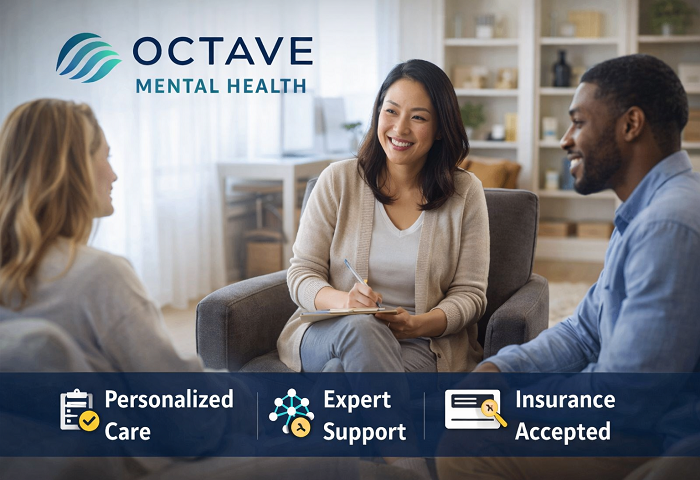
Octave Mental Health: The Complete Guide to Quality In-Network Therapy
Finding a therapist who is genuinely right for you — one who accepts your insurance, has availability, specializes in what you are dealing with, and is someone you actually connect with — has historically been one of the most frustrating experiences in American healthcare. Octave Mental Health was built specifically to solve that problem. It is a mental health platform designed to make high-quality, evidence-based therapy accessible, affordable, and actually findable for the millions of people who need it and have struggled to access it through the fragmented traditional system.
This complete guide covers everything you need to know about Octave Mental Health — what the platform is, how it works, what services it offers, who it serves, how it handles insurance, what the therapy experience looks like, and how it compares to other mental health care options available today. Whether you are considering Octave Mental Health for yourself, a family member, or simply trying to understand the landscape of modern mental health platforms, this guide gives you a thorough and honest picture.
What Is Octave Mental Health?
Octave Mental Health is a behavioral health company founded with a clear and specific mission: to expand access to high-quality mental health care by building a network of skilled therapists who work with major insurance plans, operate across multiple states, and deliver evidence-based treatment for a broad range of mental health conditions.
Unlike many telehealth platforms that function primarily as therapist directories or subscription apps, Octave Mental Health operates as a structured mental healthcare provider with its own employed and contracted clinicians, its own insurance billing infrastructure, and its own clinical quality standards. This distinction matters enormously for patients. When you access Octave Mental Health services, you are entering a system designed around clinical outcomes rather than simply connecting you with any available provider as quickly as possible.
The platform serves clients across multiple states and continues to expand its geographic reach as it grows its clinician network. Octave Mental Health primarily operates through telehealth video sessions, making care available to people regardless of whether they live in an urban center with abundant provider options or a suburban or rural area where in-person mental health services are significantly harder to access.
The core philosophy behind Octave Mental Health is that quality mental health care should not be a luxury available only to those who can afford to pay out of pocket for private-pay therapists. By building a robust insurance contracting operation, Octave Mental Health brings high-quality therapy into the in-network space — meaning clients pay their insurance copay or coinsurance rather than the full private-pay rate that often runs $150 to $300 per session.
The Mental Health Access Problem That Octave Was Built to Solve
To fully appreciate what Octave Mental Health represents, it helps to understand the scale of the problem it is addressing.
Mental health conditions affect a significant portion of the American population. Anxiety disorders, major depressive disorder, PTSD, OCD, relationship difficulties, grief, life transitions, and a wide range of other challenges send millions of people searching for therapeutic support every year. The supply of qualified therapists is insufficient to meet this demand — particularly when filtered by the additional constraints of insurance acceptance, geographic availability, specialty match, and the therapist’s own current capacity.
The result is a system where people who recognize that they need mental health support often spend weeks or months on waiting lists, call dozens of providers who are not accepting new clients, discover that the therapists who are available do not accept their insurance, or simply give up. Octave Mental Health was designed to interrupt this cycle by building a platform that addresses each of these friction points systematically rather than leaving patients to navigate them alone.
By employing its own clinicians, contracting directly with insurance carriers, building a robust matching process, and maintaining active management of therapist caseloads to ensure availability, Octave Mental Health creates a system where accessing high-quality care is a realistic and relatively streamlined experience rather than an exhausting multi-month ordeal.
Services Offered by Octave Mental Health
Octave Mental Health offers a range of therapeutic services designed to meet clients wherever they are in their mental health journey and across a variety of clinical needs.
Individual Therapy
Individual therapy is the core service offered by Octave Mental Health and the entry point for most new clients. One-on-one sessions with a licensed therapist provide a private, focused space to explore the challenges a client is facing, develop coping strategies and skills, process difficult experiences, and work toward specific mental health and wellness goals.
Therapists in the Octave Mental Health network are trained in and practice a range of evidence-based treatment modalities. These include Cognitive Behavioral Therapy (CBT), one of the most extensively researched and validated therapeutic approaches for anxiety and depression; Acceptance and Commitment Therapy (ACT); Dialectical Behavior Therapy (DBT); EMDR for trauma treatment; and other approaches tailored to the specific needs of each client and clinical presentation.
Session frequency is typically weekly at the outset of treatment and may adjust over time based on clinical progress and client preference. Sessions are conducted via secure video call, making them accessible from wherever the client is located within the states Octave Mental Health serves.
Couples Therapy
Relationship difficulties are among the most common reasons people seek mental health support, and Octave Mental Health offers couples therapy as a dedicated service line. Couples therapy at Octave Mental Health addresses communication breakdown, conflict patterns, intimacy challenges, life transition stresses, and the impact of individual mental health struggles on the relationship dynamic.
Therapists who specialize in couples work within the Octave Mental Health network are trained in evidence-based relational approaches and provide structured support for partners navigating the full range of relationship challenges — from early relationship stress to long-term partnership difficulties.
Group Therapy
Group therapy is a clinically powerful and frequently underutilized modality that Octave Mental Health incorporates into its service offering. Facilitated by trained therapists, group sessions bring together small groups of clients dealing with similar challenges — anxiety, depression, grief, life transitions, or specific situational stressors — to work together in a therapeutic context.
Group therapy offers benefits that individual therapy cannot: the normalizing experience of realizing others face similar struggles, peer support and connection, the opportunity to practice interpersonal skills in a safe environment, and often a lower session cost than individual therapy. Octave Mental Health group offerings make these benefits accessible to clients for whom group therapy is clinically appropriate.
Psychiatric Services
Mental health treatment for many conditions involves not just therapy but also medication evaluation and management. Octave Mental Health has expanded its service offering to include psychiatric evaluation and medication management provided by licensed psychiatric providers. This integrated care model — where therapy and psychiatry are available through the same platform — is clinically significant because it allows for coordinated treatment planning across both the therapeutic and pharmaceutical dimensions of mental health care.
How Octave Mental Health Handles Insurance
Insurance coverage is the critical variable that determines whether mental health care is genuinely accessible for most people. Octave Mental Health has made insurance contracting a central pillar of its model, distinguishing it sharply from many therapy platforms that operate on a private-pay or subscription basis.
Octave Mental Health works with a number of major commercial insurance carriers and continues to expand its insurance partnerships. The specific plans accepted vary by state and are updated regularly as new contracts are established. When you begin the intake process with Octave Mental Health, the platform verifies your insurance benefits upfront, providing you with a clear picture of your expected cost per session based on your specific plan, deductible status, and copay or coinsurance structure before you commit to your first appointment.
This upfront cost transparency is an important feature of the Octave Mental Health client experience. One of the most common frustrations in traditional mental health care is discovering — often after several sessions — that coverage is different from what was expected or that a provider is out-of-network despite advertising insurance acceptance. Octave Mental Health‘s dedicated insurance verification process significantly reduces this risk by establishing cost clarity from the outset.
For clients whose insurance is not yet accepted by Octave Mental Health in their state, private-pay options are available. The platform’s private-pay rates, while lower than many private practices in major metropolitan markets, are still a meaningful out-of-pocket expense for many clients — which is why the ongoing expansion of insurance contracting is so central to the platform’s mission.
The Octave Mental Health Therapist Matching Process
Finding the right therapist is not just about availability — it is about fit. Therapeutic relationship quality is consistently identified in clinical research as one of the strongest predictors of positive treatment outcomes, which means that getting matched with a therapist you connect with is not a nice-to-have feature but a clinically meaningful one.
Octave Mental Health addresses therapist matching through a structured intake process that gathers information about the client’s specific concerns, treatment goals, therapeutic preferences, and any preferences around therapist identity or background. This information is used to identify therapists within the Octave Mental Health network who are both clinically appropriate for the client’s needs and well-matched in terms of approach, communication style, and specialization.
Clients are not simply assigned to the first available therapist. The matching process is designed to surface providers who are genuinely likely to be a good fit — a clinical and relational match, not just an availability match. Clients retain the ability to request a different therapist if the initial match does not feel right, and the platform supports these transitions without the administrative difficulty that often accompanies changing providers in a traditional healthcare setting.
This matching commitment is one of the features that most clearly reflects the clinical seriousness with which Octave Mental Health approaches its role as a healthcare provider rather than simply a scheduling platform.

Conditions and Concerns Treated Through Octave Mental Health
The range of mental health conditions and life challenges addressed through Octave Mental Health therapy covers the full spectrum of common clinical presentations.
Anxiety disorders — including generalized anxiety disorder, social anxiety, panic disorder, health anxiety, and specific phobias — represent one of the most common primary concerns among people seeking therapy through Octave Mental Health. Evidence-based approaches like CBT and ACT have an extensive research base supporting their effectiveness for anxiety, and the clinicians within the Octave Mental Health network are skilled in deploying these approaches.
Depression — from mild to severe, from situationally triggered low mood to major depressive disorder — is another primary area of focus. Treatment may involve CBT, behavioral activation, interpersonal therapy, or other approaches depending on the clinical picture, and may be coordinated with psychiatric medication management where appropriate.
Trauma and PTSD treatment at Octave Mental Health is provided by therapists trained in trauma-focused approaches including EMDR (Eye Movement Desensitization and Reprocessing) and trauma-focused CBT. Trauma treatment requires specialized clinical skill and a carefully managed therapeutic environment, and the credentialing process within the Octave Mental Health network is designed to ensure that clients with trauma histories are matched with appropriately trained providers.
Other common presentations include relationship and couples challenges, grief and loss, life transitions including career change and family structure shifts, OCD, ADHD-related challenges in adults, identity and self-esteem concerns, and work-related stress and burnout.
What to Expect From Your First Octave Mental Health Session
For many people, the first therapy session carries significant anxiety of its own — uncertainty about what will happen, concern about what to share, and the vulnerability of being open with a stranger about deeply personal struggles. Understanding what the Octave Mental Health intake and first session process looks like can significantly reduce that anticipatory anxiety.
The process begins online. New clients complete an intake form that collects information about their concerns, goals, insurance, and preferences. Octave Mental Health uses this information to complete insurance verification, identify appropriate therapist matches, and present the client with scheduling options. The initial contact and intake process is designed to be straightforward and completed at the client’s own pace without requiring a phone call or in-person visit.
The first clinical session — often called an intake or initial assessment session — is typically somewhat different from subsequent therapy sessions. The therapist uses this time to gather a fuller understanding of the client’s history, current concerns, and goals. This is a two-way process: the client is also assessing whether the therapist feels like a good fit. By the end of the first session, the therapist and client will typically have a preliminary sense of the treatment approach and frequency that makes sense for moving forward.
Subsequent sessions build on the foundation established in the intake, moving into active therapeutic work. The pace and structure of this work varies considerably by approach and by client — CBT tends to be more structured and skills-focused, while other modalities may be less directive and more exploratory. The therapist within the Octave Mental Health network will communicate clearly about the approach and adjust based on client feedback and clinical observation.
How Octave Mental Health Compares to Other Therapy Platforms
The digital mental health space has expanded dramatically in recent years, and Octave Mental Health now coexists with a range of other platforms including BetterHelp, Talkspace, Cerebral, Brightside, and others. Understanding how Octave Mental Health differs from these alternatives helps prospective clients make an informed decision.
The most fundamental distinction is the insurance model. BetterHelp and Talkspace operate primarily on a subscription basis and do not accept insurance — clients pay a flat monthly fee for messaging-based and session-based access to therapists. For clients whose insurance would cover in-network therapy, using a subscription platform means paying out of pocket for care that could be covered, often at a significantly higher total cost. Octave Mental Health‘s in-network insurance model makes it a financially more sensible choice for clients with relevant insurance coverage.
The clinical quality standards also differ. Octave Mental Health employs and contracts with licensed therapists who practice evidence-based treatments and are supervised within a clinical structure. Some lower-cost platforms have faced criticism for employing counselors who do not meet the full licensure requirements for independent practice in certain states. Octave Mental Health‘s clinical credentialing standards are designed to ensure consistent quality across its provider network.
The telehealth model used by Octave Mental Health — live video sessions rather than text-based or asynchronous communication — is also clinically meaningful. Most clinical research on therapy effectiveness is based on live session modalities. The video session format used by Octave Mental Health most closely mirrors the traditional in-person therapy experience and is generally considered clinically superior to asynchronous text-based therapeutic models.
Who Is Octave Mental Health Best Suited For?
Octave Mental Health is best suited for adults who are seeking individual, couples, or group therapy for common mental health concerns, who have insurance coverage through a plan accepted by the platform, and who are comfortable with telehealth video sessions rather than in-person care.
It is particularly well-suited for people who have been frustrated by the traditional therapy search process — who have encountered long waiting lists, difficulty finding in-network providers, or a mismatch between therapist availability and their own schedule — and who are looking for a more streamlined and supportive access pathway to quality care.
Octave Mental Health may be less suited for individuals with severe psychiatric conditions requiring intensive levels of care, those in acute crisis requiring emergency mental health services, children and adolescents (as the platform primarily serves adult populations), or those whose specific insurance plan is not yet covered in their state.
For anyone experiencing a mental health crisis or immediate safety concern, crisis resources including the 988 Suicide and Crisis Lifeline (call or text 988) and emergency services are always the appropriate first contact.
Tips for Getting the Most From Octave Mental Health
If you decide to pursue therapy through Octave Mental Health, a few practical approaches will help you get the maximum benefit from the experience.
Be honest and specific in the intake process. The more clearly you communicate your concerns, goals, and preferences during intake, the better the therapist matching process can serve you. Vague or minimized responses lead to less precise matches.
Give the therapeutic relationship time. Research consistently shows that therapeutic alliance — the quality of the working relationship between therapist and client — builds over several sessions. Do not judge the fit exclusively on the basis of the first session, which often feels more awkward and assessment-focused than subsequent sessions.
Do the work between sessions. Therapy is most effective when the insight and skills developed in sessions are actively applied in daily life. Homework assignments, journaling, skill practice, and reflection between sessions significantly accelerate progress.
Speak up if something is not working. If the therapeutic approach does not feel right, or the therapist match does not feel like a good fit after several sessions, communicate that clearly — either to your therapist directly or to the Octave Mental Health support team. Changing therapists is a normal and sometimes clinically necessary part of the treatment process.
Final Thoughts
Octave Mental Health represents a genuinely meaningful approach to one of American healthcare’s most persistent failures: the gap between the demand for quality mental health care and the accessible supply of it. By building an in-network insurance model, maintaining rigorous clinical standards, offering a structured and thoughtful therapist matching process, and delivering care through a convenient telehealth format, Octave Mental Health makes high-quality therapy a realistic and achievable option for a much broader population than the traditional private-pay therapy model serves.
If you have been considering therapy but have been put off by the complexity and frustration of the traditional search process, Octave Mental Health is worth exploring as a starting point. Quality mental health care is not a luxury — it is a healthcare need as legitimate and as treatable as any physical health condition. And finding the right support, through the right platform, at a cost you can actually manage, is exactly what Octave Mental Health was designed to help you do.