
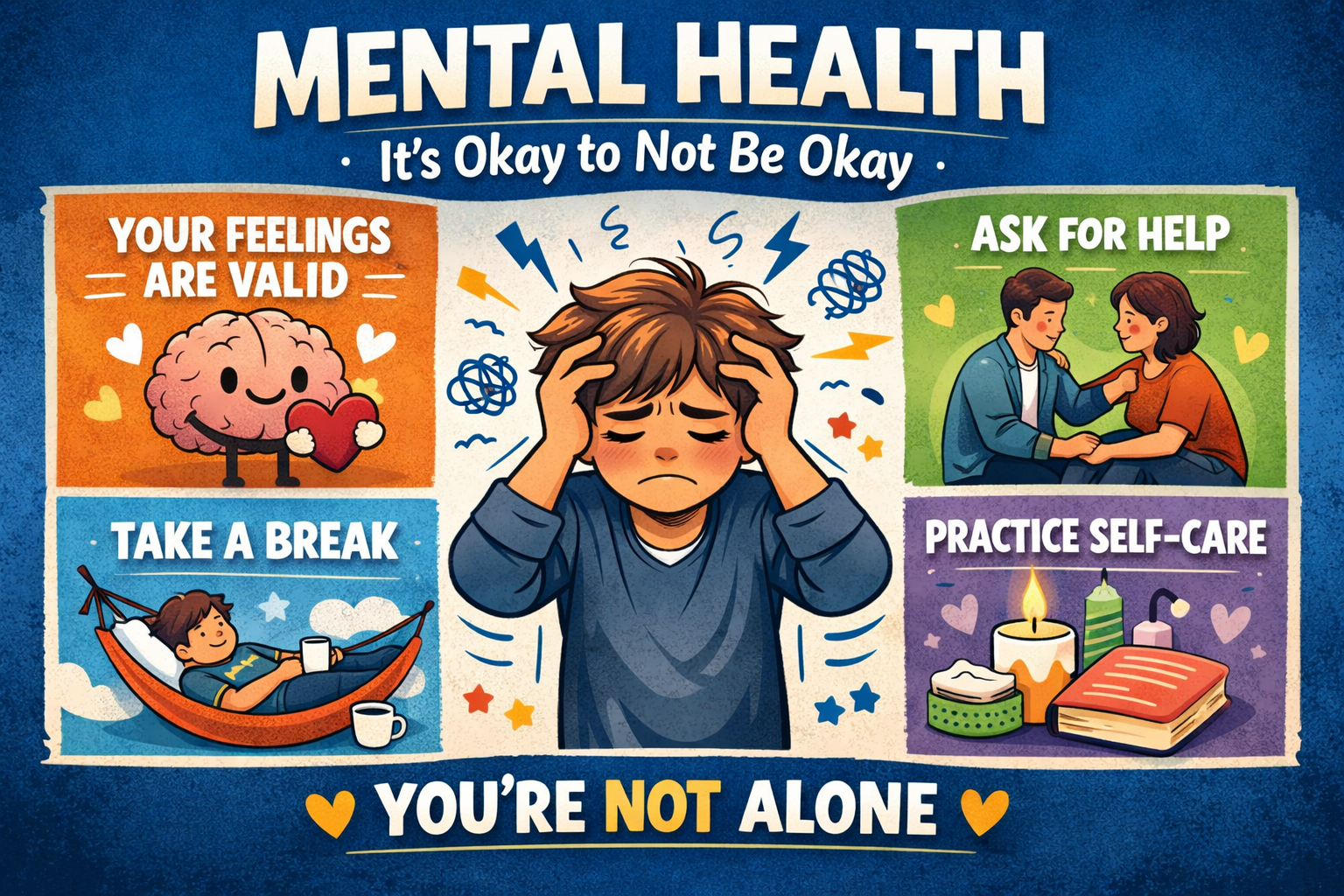
Introduction: Why a Mental Health Meme Hits Differently
Scroll through any social media feed for five minutes and you will almost certainly stumble across a mental health meme that makes you laugh out loud — and then pause for a second, a little unsettled by how accurately it described something you thought only you felt. That bizarre combination of humor and recognition is exactly why mental health memes have exploded across Instagram, Twitter/X, Reddit, TikTok, and Facebook over the last several years.
For a long time, mental health was a topic spoken about in hushed voices, tucked behind closed doors, or confined to a therapist’s office. Discussing anxiety, depression, burnout, or intrusive thoughts publicly was considered taboo. Then the internet happened. Then meme culture happened. And somewhere in that noisy overlap, something surprisingly meaningful emerged: a shared language for emotional pain that does not require a clinical diagnosis or a vulnerable face-to-face conversation.
A mental health meme is more than a funny picture with text on it. It is a cultural artifact — a compressed piece of human experience that communicates something true and relatable in under three seconds. It says “I feel this way too” without anyone having to say it out loud. For millions of people navigating anxiety, depression, burnout, loneliness, trauma, OCD, ADHD, and a thousand other invisible struggles, that quiet acknowledgment matters enormously.
This article dives deep into the world of mental health memes — where they come from, why they work, how they help, where they fall short, and how to engage with them in a way that actually supports your well-being rather than undermining it.
The History of Mental Health Memes: From Taboo to TikTok
To understand the mental health meme, you first have to understand meme culture itself. The word “meme” was coined by biologist Richard Dawkins in his 1976 book The Selfish Gene to describe cultural information that spreads from person to person — much like a gene replicates biologically. In internet culture, it became shorthand for any piece of shareable content — usually an image, video, or phrase — that gets passed around and remixed endlessly.
The first wave of internet memes in the early 2000s was largely absurdist: dancing hamsters, “All Your Base Are Belong to Us,” LOLcats. Mental health was nowhere in sight. But as social media platforms matured and users began sharing more personal content, the tone started shifting. Tumblr in the 2010s became a particularly notable breeding ground for mental health expression online — where teenagers and young adults used dark humor, aesthetic imagery, and raw text posts to talk about depression, self-harm, and existential dread in ways they could not elsewhere.
This is where the mental health meme began to take shape. Early iterations were edgy and sometimes problematic — glorifying suffering or romanticizing depression. But over time, the form evolved. Mental health memes became more grounded, more empathetic, and more self-aware. They shifted from aestheticized pain to recognizable, everyday emotional truth.
By the late 2010s, formats like “this is fine” (the cartoon dog sitting calmly in a burning room), “nobody: / me at 3am:” structures, and brain-on-fire memes had become genuinely iconic representations of anxiety and overthinking. Then the COVID-19 pandemic hit — and mental health memes went fully mainstream. Isolated, stressed, grieving, and collectively anxious, people found connection through shared digital humor. Mental health meme culture was no longer niche. It was universal.
Why Mental Health Memes Work: The Psychology Behind the Laugh
There is real science behind why a mental health meme can make you feel better, even briefly. Several psychological mechanisms are at work:
Humor as a coping mechanism. Research in psychology has long recognized that humor is one of the most adaptive coping strategies humans use. It creates emotional distance from a painful experience, making it feel more manageable. When you laugh at a meme about your anxiety spiraling at 2 a.m., you are not minimizing the anxiety — you are finding a way to observe it from the outside rather than being consumed by it.
Validation and normalization. One of the most isolating aspects of mental health struggles is the belief that you are the only one who feels this way. A mental health meme shatters that illusion instantly. When thousands of people share and comment “this is literally me,” it sends a powerful message: your experience is common, your feelings are valid, you are not broken or alone. That validation can be genuinely therapeutic, especially for people who have never spoken about their mental health to anyone.
Social bonding through shared reference. Memes function as cultural shorthand. Sending a mental health meme to a friend or tagging someone in it is a low-stakes way of saying “I relate to this” or even “I’ve been struggling and I thought you might get it.” This kind of indirect emotional communication can open doors that direct conversation might not.
Destigmatization through repetition. Every time a mental health meme circulates widely, it normalizes the language of mental health. When millions of people joke about their “depression naps,” their “anxiety brain,” or their “therapy homework,” they are collectively eroding the stigma that has historically kept mental health in the shadows.
Types of Mental Health Memes You’ve Definitely Seen
The world of mental health memes is surprisingly diverse. Here are the most common categories that circulate online today:
Anxiety memes are arguably the most ubiquitous. They capture the spiral of overthinking — sending a text and immediately catastrophizing about the response, replaying a conversation from three years ago at 3 a.m., or interpreting a neutral tone in an email as personal rejection. These resonate with an enormous audience because anxiety disorders are among the most common mental health conditions globally.
Depression memes tend to capture the exhaustion, numbness, and dark humor of living with depressive episodes. A classic format involves a character enthusiastically doing unimportant tasks while completely neglecting basic needs — showering, eating, sleeping — with the caption playing on the absurdity of how depression actually presents in daily life.
Therapy memes have surged in popularity as therapy itself has become more mainstream. They poke fun at the therapy experience — the awkward silences, the “and how does that make you feel?” trope, the cost, the homework, or the strange loop of being emotionally exhausted after sessions that are supposed to help you feel better.
ADHD memes have become a category all their own, especially following the social-media-driven wave of ADHD awareness and self-identification in recent years. These memes capture the experience of having seventeen browser tabs open simultaneously — metaphorically and literally — hyperfocusing on an irrelevant task, forgetting why you walked into a room, or time blindness.
Burnout and work stress memes reflect the collective exhaustion of hustle culture, remote work blurring into home life, and the relentlessness of productivity pressure. These often go viral among working adults who see their entire week described perfectly in a single image.
Intrusive thought memes have carved out a particularly fascinating niche. They normalize the very human experience of having weird, dark, or inappropriate thoughts pop into your head — thoughts that feel alarming but are actually a near-universal cognitive experience. This category has helped many people realize they are not uniquely disturbed.
Mental Health Memes and Social Media Platforms: Where the Culture Lives
Different platforms have developed distinct mental health meme cultures worth understanding:
Reddit hosts communities like r/mentalhealth, r/depression, r/anxiety, and countless others where mental health memes are shared alongside genuine peer support. The upvote/downvote system and comment culture create a sense of communal participation that amplifies the validating function of memes.
Instagram has produced a wave of mental health content creators — often called “mental health influencers” — who combine meme formats with advocacy, psychoeducation, and personal storytelling. Accounts focused on anxiety, depression, trauma recovery, and therapy awareness have amassed millions of followers.
TikTok has arguably done the most to transform mental health meme culture in recent years. Short video formats allow creators to combine humor, relatability, and genuine emotional disclosure in ways static images cannot. Mental health TikTok — sometimes called “MentalHealthTok” — is a robust community where therapists, psychologists, and lived-experience creators produce content that blurs the line between meme, education, and testimony.
Twitter/X remains a powerful platform for viral mental health meme content, particularly text-based formats. A single tweet capturing a relatable mental health experience can accumulate hundreds of thousands of likes and retweets within hours.
The Positive Impact: Real Benefits of Mental Health Meme Culture
The mental health meme is not just a distraction or a joke. When engaged with thoughtfully, it can produce real psychological and social benefits:
Reducing stigma. This is perhaps the single most significant contribution of mental health meme culture. By making mental health discussions visible, casual, and normalized — especially among younger audiences — memes chip away at the cultural shame that prevents people from seeking help. Every viral mental health meme is, in a small way, a public health intervention.
Gateway to help-seeking. Many people report that encountering mental health content online — including memes — was the first time they saw their own experience reflected back at them, which prompted them to look into therapy or professional support. Humor lowers the emotional threshold for engagement with difficult topics.
Community building. Mental health meme communities — whether organized around ADHD, depression, anxiety, or general mental wellness — create genuine belonging for people who often feel profoundly isolated. The comment sections of viral mental health memes are frequently filled with warmth, shared experience, and even practical support.
Psychoeducation through entertainment. Many mental health memes do more than just validate — they introduce concepts from psychology in accessible ways. A meme about rejection sensitive dysphoria may be the first time someone encounters that term. A meme about the window of tolerance, cognitive distortions, or nervous system regulation might plant a seed that grows into genuine self-understanding.
Creative expression and processing. Creating mental health memes — not just consuming them — can itself be therapeutic. Translating a painful or confusing feeling into a shareable, humorous format requires some degree of reflection and externalization, which are both components of emotional processing.
The Dark Side: When Mental Health Memes Do Harm
Honest engagement with mental health meme culture requires acknowledging where it falls short or causes harm:
Trivializing serious conditions. Not all mental health memes treat their subject with appropriate weight. Memes that use serious clinical conditions — bipolar disorder, schizophrenia, PTSD, OCD — as casual punchlines can reinforce misconceptions and diminish the reality of people living with those diagnoses. “Being so OCD about my desk” as a cute quirk erases the debilitating reality of actual obsessive-compulsive disorder.
Wallowing rather than healing. There is a difference between humor that processes pain and content that marinates in it. Some mental health meme formats become a feedback loop of shared hopelessness — more about collective suffering than collective resilience. Consuming large amounts of this content, particularly during a depressive episode, can deepen rather than relieve the distress.
Replacing professional support. The validation found in mental health meme culture is real and valuable — but it is not a substitute for therapy, medication, crisis support, or professional diagnosis. When people substitute meme-scrolling for actual help-seeking, the harm is significant.
Misinformation and misdiagnosis. As mental health content creators have proliferated, so has the spread of inaccurate information. Memes that casually equate everyday experiences with clinical diagnoses — “I’m so bipolar, I love coffee and then I hate it” — can spread genuine misinformation about complex conditions.
Triggering content without warning. Not all mental health meme creators add content warnings to material that touches on self-harm, suicidal ideation, or trauma. For vulnerable individuals, unexpected exposure to this content can be actively harmful.
How to Engage With Mental Health Memes in a Healthy Way
Given both the benefits and the risks, here is how to approach mental health meme culture in a way that supports rather than undermines your well-being:
Be selective about what you follow. Curate your feed intentionally. Follow accounts that pair humor with genuine warmth, education, or encouragement rather than accounts that only amplify darkness.
Notice how content makes you feel. If a particular type of mental health meme consistently leaves you feeling worse — more hopeless, more anxious, more convinced nothing will ever get better — that is important information. Use it.
Use memes as conversation starters, not conversation replacements. The indirect communication that memes enable is valuable, but it should supplement direct conversation about mental health, not replace it. If you identify with a meme enough to tag a friend in it, consider whether there might be something worth saying directly.
Complement meme culture with professional support. Online community and humor are great, but if you are dealing with persistent mental health struggles, please reach out to a qualified mental health professional. A mental health meme can normalize the conversation; a therapist can actually help you through it.
Contribute thoughtfully. If you create or share mental health memes, think about the full range of people who will encounter your content. Consider content warnings, consider accuracy, and consider the difference between content that empowers and content that just commiserates.
Mental Health Memes in Pop Culture and Media
The influence of mental health meme culture now extends well beyond social media. Mental health memes have been referenced in news articles, academic papers, mainstream advertising campaigns (particularly in mental health awareness months), and even clinical training materials. Therapists sometimes use relatable meme-style content with clients to introduce concepts or reduce shame around difficult topics.
Brands and organizations have tried — with varying degrees of success and authenticity — to leverage mental health meme aesthetics for campaigns around World Mental Health Day, mental health awareness, or anti-stigma initiatives. When done well, this amplifies important messages. When done cynically, it rightfully draws criticism for exploiting vulnerable communities for marketing purposes.
The academic world has also begun to take mental health memes seriously as cultural and public health phenomena. Researchers have studied how mental health meme sharing affects stigma, help-seeking behavior, and community formation online. The emerging consensus is that these effects are genuinely significant — neither dismissible as “just jokes” nor uncritically positive.
Famous Mental Health Memes That Defined a Generation
Some mental health memes have transcended viral content to become genuine cultural touchstones:
The “This is Fine” dog — the cartoon character calmly sipping coffee in a burning room — has been widely adopted as a representation of how people experience anxiety, denial, and overwhelm simultaneously. It has been shared millions of times, referenced in political cartoons, and adapted for countless specific contexts.
The “Big Brain” meme adapted for anxiety, showing increasingly elaborate neural activity over increasingly trivial social worries, perfectly captured the experience of catastrophizing in a way that resonated globally.
“Depression memes” featuring Kermit the Frog, SpongeBob, or other beloved cultural characters articulating exhaustion, numbness, and dark thoughts gave a familiar, non-threatening face to experiences that might otherwise be difficult to look at directly.
The “Nobody asked for your trauma” and “Therapist said I need to express my feelings” formats opened space for humor about the awkwardness of learning emotional literacy as an adult — something millions found immediately recognizable.
The Future of Mental Health Memes
Mental health meme culture is not going anywhere. If anything, it is evolving. As mental health literacy improves globally and as the generation that grew up with internet meme culture enters adulthood, the relationship between digital humor and emotional well-being will only deepen.
We are already seeing mental health meme culture becoming more nuanced — more attentive to intersectionality, more careful about clinical accuracy, more intentionally constructive in tone. Creators with clinical backgrounds are increasingly contributing to the space, bringing professional knowledge to accessible formats.
AI-generated meme content is also emerging as a factor — raising questions about authenticity, about whether algorithmically generated emotional content can carry the same validating weight as human-generated content, and about who profits from the mental health content economy.
What seems clear is that the mental health meme has earned its place as a legitimate and meaningful part of how modern people communicate about their inner lives. Dismissing it as trivial misses the point entirely. For millions of people, a single well-crafted mental health meme has been the first moment they felt truly seen — and that is nothing to laugh at.
Conclusion: Laughing Together Toward Better Mental Health
The mental health meme is a small thing with a surprisingly large reach. At its best, it offers connection, validation, humor, and the radical normalcy of being told that what you feel is human and shared. It chips away at stigma, opens conversations, builds communities, and makes it a little less scary to say “I’m not okay.”
At its worst, it can trivialize real suffering, spread misinformation, or become a substitute for the genuine support people actually need. Like most things in mental health, context and intention matter enormously.
The healthiest approach is probably the most balanced one: enjoy mental health memes for what they genuinely offer — moments of recognition, laughter, and shared humanity — while staying honest about their limits. Let them open doors. Let them validate. Let them make you laugh at 3 a.m. when your anxiety brain is being insufferable.
But also: call your therapist. Text a real friend. Reach out for actual support when you need it. The meme got you here. The rest is up to you.