
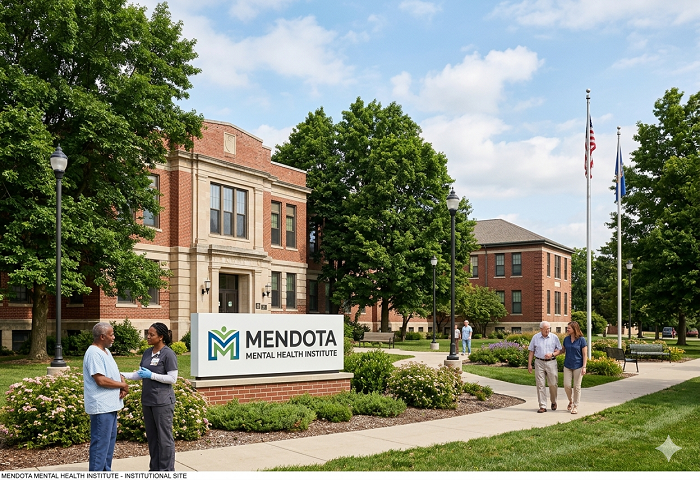
What Is Mendota Mental Health Institute?
When people search for trusted, long-standing psychiatric care in Wisconsin, the name Mendota Mental Health Institute comes up consistently — and for good reason. Located at 301 Troy Drive in Madison, Wisconsin, the Mendota Mental Health Institute (MMHI) is one of the most historically significant and clinically advanced public psychiatric hospitals in the United States. Operated by the Wisconsin Department of Health Services, MMHI has been serving patients with serious and complex mental health needs for more than 160 years. It is fully accredited by the Joint Commission, a hallmark of quality that reflects the institute’s commitment to safe, evidence-based, and patient-centered psychiatric care.
What makes the Mendota Mental Health Institute stand out is not just its age but its evolution. From its origins as Wisconsin’s first asylum to its current role as a specialized forensic psychiatric hospital, MMHI has continuously adapted to the changing landscape of mental health treatment. Today, it primarily serves adult men who require court-ordered mental health competency evaluations, treatment to restore competency, and long-term inpatient psychiatric care following a verdict of not guilty by reason of mental illness. At the same time, MMHI operates a dedicated geropsychiatric unit and houses the Mendota Juvenile Treatment Center, making it a comprehensive facility that addresses mental health needs across age groups.
Understanding the full scope of the Mendota Mental Health Institute means looking at its rich history, its groundbreaking programs, its current services, and the role it plays in Wisconsin’s broader mental health ecosystem.
A Brief History of Mendota Mental Health Institute
The story of the Mendota Mental Health Institute begins on July 14, 1860, when the facility opened its doors as the Wisconsin Hospital for the Insane. It was the first mental hospital in the entire state of Wisconsin, established after the Wisconsin Legislature passed legislation in 1854 to construct a state asylum. From its very first day of operation, the institution demonstrated a spirit of responsiveness: on that opening Saturday, staff admitted a patient who had been transported all the way from Oconto County by horse and wagon, even though the facility was not technically ready to receive patients. That willingness to prioritize patient need above institutional convenience set a tone that would define Mendota Mental Health Institute for generations.
In its earliest decades, the hospital reflected the psychiatric thinking of the 19th century, functioning primarily as a custodial institution. Patients were admitted from across Wisconsin, and by the mid-20th century, the population had swelled to its peak of 1,300 patients in 1959. The physical campus grew along with the patient population, eventually incorporating a main brick building, 17 Tudor-inspired Craftsman-style cottages, multiple specialized halls, and extensive institutional farmland.
In 1935, the facility was renamed Mendota State Hospital, reflecting a broader national movement to modernize the language used to describe psychiatric facilities. Then, in 1974, it underwent its final name change to become the Mendota Mental Health Institute — the name it holds today. This renaming coincided with a pivotal shift in the facility’s mission and treatment philosophy, moving away from long-term institutionalization toward community-based and forensic psychiatric care.
By 1997, patient populations had dropped to fewer than 300, a reflection of deinstitutionalization trends and the success of the community treatment programs that MMHI itself had helped pioneer. In 2014, the state took a defining step and designated Mendota Mental Health Institute as a facility exclusively serving forensic and criminal justice populations, transferring civil patients to the Winnebago Mental Health Institute near Oshkosh.
Accreditation, Oversight, and Facility Structure
The Mendota Mental Health Institute operates under the governance of the Wisconsin Department of Health Services and is one of only two state-operated psychiatric hospitals in Wisconsin. Its accreditation by the Joint Commission is not a formality — it represents an ongoing, rigorous evaluation of the facility’s clinical standards, patient safety protocols, and treatment quality. MMHI was among the first mental hospitals in the country to receive this accreditation, and it has maintained it consistently, distinguishing itself from many other public psychiatric facilities.
The physical campus of the Mendota Mental Health Institute is substantial and historically significant. Portions of the facility are included in the Wisconsin Memorial Hospital Historic District. On the grounds, visitors and researchers will also find the Mendota State Hospital Mound Group and the Farwell’s Point Mound Group, both listed on the National Register of Historic Places. The largest mound on the property is believed to be an eagle or thunderbird effigy that once had a wingspan of approximately 624 feet, and MMHI’s own eagle logo is derived from this ancient mound — a fitting symbol of resilience and vision.
Current inpatient capacity stands at approximately 320 beds across 18 separate inpatient units, each designed to serve specific populations and security levels. Units range from maximum-security admissions units for newly arriving forensic patients to medium-security rehabilitation units and minimum-security settings for patients approaching discharge readiness. Multidisciplinary teams — including psychiatrists, psychologists, nurses, social workers, occupational therapists, and vocational rehabilitation specialists — deliver individualized treatment plans for every patient.
Forensic Psychiatric Services at Mendota Mental Health Institute
The core mission of the Mendota Mental Health Institute today is forensic psychiatry. This specialized field sits at the intersection of mental health care and the criminal justice system, and MMHI has been recognized by the National Institute of Mental Health as operating one of the top ten forensic psychiatry programs in the entire United States. That recognition speaks to the quality, depth, and impact of the work done here.
Forensic patients at Mendota Mental Health Institute fall into several distinct legal categories. The largest group consists of men who have been found not guilty of criminal activity by reason of mental disease or defect — commonly referred to as NGRI patients. These individuals require structured, secure inpatient treatment that addresses the underlying psychiatric conditions that contributed to their legal involvement. A second major group includes individuals committed by courts for competency evaluation and restoration — people who need to be evaluated to determine whether they are mentally fit to stand trial and, if not, who require treatment to achieve that competency.
The Mendota Mental Health Institute approaches forensic psychiatric treatment through a risk-based, individualized model. Patients move through different security levels as they demonstrate progress, stability, and readiness for greater independence. The goal is never simply containment — it is rehabilitation. Treatment teams work toward measurable outcomes: reduced symptoms, improved insight, development of community living skills, and meaningful reduction in the risk of reoffending or relapse.
Competency evaluations at MMHI are conducted by experienced forensic psychologists and psychiatrists who produce court-admissible reports. These evaluations assess whether an individual understands the nature of the charges against them and can meaningfully assist in their own defense. When competency cannot be established, the institute provides treatment specifically designed to restore that legal capacity — a service that is critical for the functioning of Wisconsin’s criminal courts.
The Program of Assertive Community Treatment (PACT): A Global Legacy
No discussion of the Mendota Mental Health Institute would be complete without examining the Program of Assertive Community Treatment, known worldwide simply as PACT. This program, developed at MMHI in the late 1960s and early 1970s, is arguably the most influential contribution any single psychiatric facility has made to modern mental health care globally.
PACT was born out of a growing recognition that traditional hospital-centered care for people with severe mental illness was not working. Patients with schizophrenia and other serious psychiatric conditions were being discharged from hospitals without adequate community support, only to relapse and be readmitted — a revolving-door pattern that harmed patients, strained families, and drained public resources. Researchers and clinicians at Mendota, including Dr. Leonard Stein and Dr. Mary Ann Test, began experimenting with a radically different model: instead of waiting for patients to return to the hospital in crisis, teams of mental health professionals would go directly into the community and provide support in real time.
The resulting program — initially called Training in Community Living — sent multidisciplinary teams of former hospital employees, retrained for community work, directly into patients’ homes and workplaces. These teams helped with medication management, employment, housing, daily life skills, and crisis intervention, providing around-the-clock availability. The results were remarkable. In randomized controlled trials, only a small fraction of PACT participants required rehospitalization compared to control groups receiving standard aftercare.
In 1974, the American Psychiatric Association awarded MMHI its prestigious Gold Achievement Award for PACT — the highest award possible for mental health programs in America, and to this day the only time it has been awarded to a Wisconsin facility. The “Madison model,” as it became known internationally, has since been adopted by mental health systems in dozens of countries across Europe, Asia, Australia, and the Americas.
Today, PACT continues to operate as an outpatient program run by Mendota Mental Health Institute, serving adults with severe and persistent mental illness in the Madison area. Key services include comprehensive psychiatric assessment, medication prescription and monitoring, 24-hour crisis intervention, substance abuse counseling, vocational rehabilitation, housing assistance, and psychoeducation for both patients and their families. The program remains one of the strongest examples of how evidence-based community care can reduce hospitalization, improve quality of life, and support long-term recovery.
Mendota Juvenile Treatment Center: Addressing Youth Mental Health
The Mendota Mental Health Institute is also home to the Mendota Juvenile Treatment Center (MJTC), a specialized residential facility that provides intensive mental health treatment to seriously and violently involved youth transferred from Wisconsin’s juvenile justice system. Established by the Wisconsin State Legislature in 1995, the MJTC was created specifically to serve juveniles who had not responded to traditional rehabilitation services in standard correctional settings — young people whose behaviors were too dangerous, too complex, or too treatment-resistant for conventional juvenile institutions.
What makes the Mendota Juvenile Treatment Center distinctive is its clinical-correctional hybrid model. Unlike most juvenile correctional facilities, MJTC is physically located on the grounds of a psychiatric hospital and is staffed primarily by experienced mental health professionals rather than security officers. The staffing ratios reflect this priority: approximately one psychologist and one social worker for every 20 youth — a ratio dramatically more favorable than the roughly one psychologist for every 75 youth found in traditional juvenile correctional settings.
Youth in the Mendota Juvenile Treatment Center live in small inpatient units of approximately 15 per unit, each with single bedrooms — a far cry from the double-bunked units housing 50 or more youth that characterize conventional juvenile correctional facilities. Treatment is intensive and individualized, designed to address the underlying emotional problems driving dangerous behavior rather than simply managing the behavior through punishment or deterrence. When youth act out or become disruptive, the MJTC responds with additional therapy and enhanced clinical support rather than purely punitive measures.
Research on the Mendota Juvenile Treatment Center has demonstrated meaningful outcomes. Study participants showed an increased length of time prior to committing a subsequent felony offense compared with control groups, suggesting that the program’s approach — combining secure containment with rigorous mental health treatment — can interrupt cycles of violence and reoffending even among the most challenging youth populations.
Geropsychiatric Services: Supporting Older Adults
Among the specialized treatment units at Mendota Mental Health Institute, the Geropsychiatric Treatment Unit (GTU) plays a vital role. This unit focuses on the assessment and treatment of elderly men and women who suffer from emotional and neurological conditions that significantly affect their behavior. Conditions addressed include Alzheimer’s disease, other forms of dementia, late-life depression, psychosis, and complex behavioral disturbances related to neurological decline.
The Geropsychiatric Treatment Unit reflects MMHI’s commitment to treating the whole person across the lifespan. Older adults with severe psychiatric and neurological conditions often face unique barriers to care — medical comorbidities, medication sensitivities, cognitive impairments, and family stressors that require a highly individualized treatment approach. The multidisciplinary teams at MMHI’s GTU are specifically trained to address these complexities, delivering care that integrates psychiatric expertise with geriatric medicine principles.
This unit stands as one of the few remaining civil treatment services at MMHI following the 2014 policy shift, reflecting the state’s recognition that elderly patients with severe neurological and psychiatric conditions require the kind of specialized, secure, hospital-level care that only a facility like Mendota Mental Health Institute can provide.
The Historic Campus and Cultural Significance
The physical landscape of the Mendota Mental Health Institute carries deep historical and cultural significance. The Wisconsin Memorial Hospital Historic District, listed on the National Register of Historic Places in 1988, encompasses the main two-story brick building and 17 Tudor-inspired Craftsman-style cottages arranged across a parklike campus. This architectural heritage reflects the “moral treatment” philosophy of 19th-century psychiatric care, which held that pleasant, structured environments were themselves therapeutic.
On the grounds of Mendota Mental Health Institute, two ancient effigy mound groups — the Mendota State Hospital Mound Group and Farwell’s Point Mound Group — serve as reminders of the Indigenous history of the land. The largest mound, believed to represent an eagle or thunderbird, once spanned 624 feet in wingspan and remains one of the most remarkable effigy mounds in Wisconsin. These mounds are listed separately on the National Register of Historic Places and are treated with respect as sacred cultural sites. The eagle imagery drawn from these mounds has become part of MMHI’s institutional identity.
Mendota Mental Health Institute’s Role in Education and Training
Beyond direct patient care, the Mendota Mental Health Institute has long served as a training ground for mental health professionals across Wisconsin and the nation. The facility hosts a psychology internship program that trains doctoral-level psychologists in forensic assessment, psychotherapy, competency evaluation, violence risk assessment, and working with diverse psychiatric populations. Supervisors at MMHI represent decades of expertise in areas including forensic psychiatry, geropsychiatry, juvenile justice, and community treatment.
MMHI also conducts regular seminars and workshops that attract thousands of mental health professionals annually, spreading evidence-based practices throughout Wisconsin’s mental health workforce. This educational mission reflects the institute’s belief that excellent psychiatric care depends not just on what happens within its walls but on the quality of the broader mental health system it helps to train and support.
Challenges, Oversight, and the Path Forward
Like any large public institution, the Mendota Mental Health Institute has faced scrutiny and challenges over the years. In 2010, federal investigators found deficiencies in patient treatment within the Adult Assessment Treatment Unit, resulting in a temporary loss of Medicare certification and approximately one million dollars in federal reimbursement. The institute responded by implementing corrective measures and working to restore its certification standards — a process that, while painful, demonstrated the value of ongoing external oversight.
Patient rights and complaint processes at MMHI are taken seriously. The facility employs dedicated client rights facilitators, and patients and families can escalate concerns to the Wisconsin Department of Health Services’ Division of Quality Assurance or directly to the Joint Commission. This multi-layered accountability structure reflects the complex obligations that public psychiatric institutions carry — balancing safety, civil rights, clinical care, and public accountability simultaneously.
Looking ahead, the Mendota Mental Health Institute remains a vital anchor in Wisconsin’s mental health infrastructure. As public understanding of mental illness, forensic psychiatry, and community-based care continues to evolve, MMHI’s combination of historical depth, research heritage, and clinical specialization positions it to remain at the forefront of psychiatric care for decades to come.
Frequently Asked Questions About Mendota Mental Health Institute
Where is Mendota Mental Health Institute located? The Mendota Mental Health Institute is located at 301 Troy Drive, Madison, Wisconsin 53704.
Who does Mendota Mental Health Institute serve? MMHI primarily serves adult men requiring court-ordered forensic psychiatric services, including competency evaluations and treatment. It also operates the Mendota Juvenile Treatment Center for serious juvenile offenders and a Geropsychiatric Treatment Unit for elderly patients.
Is Mendota Mental Health Institute accredited? Yes. The Mendota Mental Health Institute is fully accredited by the Joint Commission and is one of only two state-operated psychiatric hospitals in Wisconsin.
What is PACT at Mendota Mental Health Institute? PACT stands for the Program of Assertive Community Treatment. It is a community-based outpatient mental health program developed at MMHI in the late 1960s and early 1970s that has been adopted by mental health systems around the world.
Conclusion
The Mendota Mental Health Institute is far more than a hospital — it is a living piece of psychiatric history, an engine of clinical innovation, and a critical component of Wisconsin’s mental health system. From its founding in 1860 as the state’s first psychiatric hospital to its current identity as a nationally recognized center of forensic psychiatry and community treatment, MMHI has consistently demonstrated the capacity to evolve, to lead, and to serve even the most vulnerable and complex patient populations with skill and compassion.
Whether you are a researcher exploring the origins of assertive community treatment, a family member seeking to understand the forensic psychiatric system, a student of mental health policy, or simply someone curious about one of Wisconsin’s most enduring institutions, the Mendota Mental Health Institute offers a remarkable story — one defined by more than 160 years of commitment to the belief that every person struggling with mental illness deserves thoughtful, evidence-based, and humane care.