
Introduction
Millions of people wake up every single day carrying invisible weight — anxiety that won’t quiet down, depression that blurs the edges of life, trauma that echoes through every relationship. They know they need support. But they have no idea where to start. That’s exactly why understanding how to find a true mental health match has never been more important.
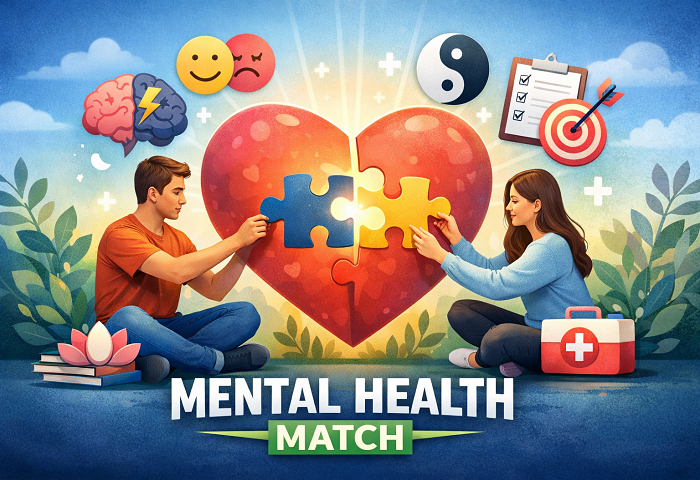
A mental health match is not just about finding someone with a license on the wall and an open calendar slot. It is about finding a professional whose approach, personality, and expertise genuinely click with who you are — your values, your communication style, your cultural identity, and the specific struggles you are trying to work through.
When the fit is right, therapy becomes one of the most transformative experiences of your life. When it isn’t, even the most skilled therapist can leave you feeling stuck, misunderstood, and ready to give up on the whole process entirely.
This guide is written to help you navigate that search with confidence. From understanding what the term truly means to taking practical steps toward finding your ideal mental health match, every section of this article is designed to bring you closer to the care you genuinely deserve.
What Is a Mental Health Match — and Why Does It Matter?
At its core, a mental health match refers to the degree of compatibility between you and the mental health professional you choose to work with. Therapists, counselors, psychologists, and psychiatrists all bring different training, specialties, communication styles, and personalities to the table. Not every therapist is the right fit for every person — and that’s completely normal.
The concept is backed by decades of research. Studies in psychotherapy consistently show that the therapeutic alliance — the quality of the relationship between client and therapist — is one of the most powerful predictors of whether therapy will actually help. In fact, many researchers believe the therapeutic relationship matters more than the specific type of therapy being used.
This means that finding the right mental health match isn’t a luxury or an afterthought. It is a foundational requirement for therapy to truly work.
There are four main dimensions of a strong fit:
Personality compatibility: You need to feel genuinely at ease with your therapist — able to speak openly, be honest about difficult things, and trust that you won’t be judged.
Specialty alignment: A therapist who specializes in grief and loss is not the same as one who focuses on trauma-informed care, addiction recovery, or eating disorders. Your mental health match should have direct experience with the challenges you’re facing.
Cultural sensitivity: Your background, faith, ethnicity, gender identity, and lived experiences all shape how you communicate and what you need from therapy. A genuine mental health match respects and understands this context deeply.
Therapeutic approach: Some people respond best to structured, goal-oriented therapy like Cognitive Behavioral Therapy (CBT). Others flourish in more exploratory, open-ended approaches. Your ideal match should reflect the way you naturally process and heal.
The Real Cost of a Poor Fit
One of the most common reasons people abandon therapy prematurely is not that therapy doesn’t work — it’s that they were never with the right therapist to begin with. A poor mental health match can be quietly damaging in ways people don’t always recognize.
When you consistently leave sessions feeling dismissed, confused, or worse than when you arrived, it chips away at your motivation to keep going. It reinforces the dangerous belief that you are beyond help or that nothing will ever change. These are not signs that therapy is failing you. They are signs that this particular pairing is not your true mental health match.
Understanding this distinction is liberating. It means your healing is still possible — you simply haven’t found the right door yet.
When the right therapeutic relationship clicks into place, everything shifts. Clients who feel fully seen and supported by their mental health professional are measurably more likely to stay consistent in therapy, apply the tools they learn in daily life, experience lasting improvement in anxiety and depression symptoms, build genuine emotional resilience, and develop meaningful self-care habits that carry forward long after therapy ends.
The difference between a mediocre experience and a deeply healing one often comes down entirely to one thing: whether or not you found your true mental health match.
Types of Mental Health Professionals: Who Might Be Your Match?
The world of mental health care includes a wide range of professionals, each with distinct training, roles, and areas of expertise. Part of finding your mental health match is understanding who is out there and what they each bring to the table.
Psychologists
Licensed psychologists hold doctoral-level degrees and specialize in psychological testing, assessment, and evidence-based therapy. They are often an excellent mental health match for people dealing with complex conditions, learning differences, or those wanting a comprehensive understanding of their psychological profile.
Licensed Professional Counselors (LPCs)
LPCs are trained to address emotional, behavioral, and relational challenges across all life stages. If you’re working through a major life transition, career stress, relationship conflict, grief, or personal growth goals, a licensed counselor could be a strong mental health match for your needs.
Marriage and Family Therapists (MFTs)
If your primary concerns involve family dynamics, romantic relationships, parenting conflicts, or communication breakdowns within your household, an MFT may be the most relevant mental health match for your situation.
Psychiatrists
Psychiatrists are medical doctors who can prescribe medication in addition to providing therapy. For individuals whose emotional well-being challenges have a biological or neurological component — such as bipolar disorder, severe depression, or schizophrenia — a psychiatrist may be an essential part of a complete mental health match.
Licensed Clinical Social Workers (LCSWs)
Social workers take a holistic view of mental wellness, considering not just internal psychology but systemic social factors — housing, economics, community, and family history. For people navigating complex life circumstances, an LCSW can be a powerful and deeply empathetic mental health match.
Online Therapists and Telehealth Providers
The growth of teletherapy has opened up the search for a mental health match to more people than ever before — including those in rural areas, those with limited mobility, parents juggling demanding schedules, and anyone who simply feels more comfortable opening up from home. Research shows that online therapy can be just as effective as in-person sessions for most mental health conditions.
How to Find Your Mental Health Match: A Practical Step-by-Step Guide
Knowing what you’re looking for is one thing. Knowing how to find it is another. Here is a clear, actionable process for discovering your ideal mental health match.
Step 1: Get Honest About Your Needs
Before you search, spend some quiet time reflecting on what’s actually going on and what you hope therapy will help you achieve. Are you struggling with panic attacks, racing thoughts, or chronic worry? Are you processing grief, childhood trauma, or the fallout of a painful relationship? Are you looking for tools to manage stress and build emotional resilience, or do you simply want a confidential space to think things through?
Write down your top three concerns and top three goals. This clarity will be your compass as you evaluate potential therapists and determine whether each one could be a genuine mental health match for where you are right now.
Step 2: Know What Matters to You in a Therapist
A true mental health match takes your whole identity into account — not just your symptoms. Think about whether you have a gender preference for your therapist, whether shared faith or spiritual values are important to you, whether cultural or linguistic considerations matter for your comfort, and whether you prefer in-person sessions, virtual therapy, or a combination of both.
These are not trivial preferences. They are the filters that help you move from a long list of qualified therapists to the handful who could genuinely become your mental health match.
Step 3: Use Quality Directories and Matching Platforms
Today there are outstanding tools designed specifically to help you find a mental health match efficiently and confidently.
Psychology Today’s Therapist Finder allows you to search by specialty, insurance, location, and identity-related preferences, making it one of the most comprehensive starting points available.
Zocdoc simplifies the practical logistics of finding a mental health match by showing you real-time appointment availability and accepted insurance plans in one place.
BetterHelp and Talkspace use brief intake questionnaires to pair you with a compatible therapist based on your unique needs and preferences — making the process fast and accessible from anywhere.
Open Path Collective exists specifically to help people who cannot afford standard therapy rates find an affordable, high-quality mental health match with a licensed professional.
Step 4: Book Consultation Calls
Most therapists offer a free or low-cost 15–20 minute consultation call before you commit. Use these calls as deliberate opportunities to evaluate whether this person could be your mental health match.
Ask questions like: What experience do you have with the specific issues I’m dealing with? What therapeutic approaches do you primarily use? How do you typically structure sessions and measure progress? What do you think is most important in a strong therapeutic relationship?
But beyond the answers themselves, pay close attention to how the conversation makes you feel. Does this person’s presence feel calming and trustworthy? Does their language resonate with you? Your gut instinct is a valuable part of assessing a potential mental health match.
Step 5: Evaluate the First Few Sessions Honestly
The first session with any new therapist is rarely definitive. Give it at least two or three sessions before drawing conclusions about whether this is your mental health match. Some initial discomfort is completely normal — real therapy requires vulnerability, and vulnerability takes time to build.
However, if you consistently leave sessions feeling worse, confused, unheard, or judged, those are legitimate signals worth paying attention to. A right mental health match should feel — even in the early stages — like a safe, honest space where your growth is possible.
Red Flags: Signs You Haven’t Found Your Mental Health Match Yet
Learning to recognize when a therapeutic relationship is not working is just as important as knowing when it is. Here are clear warning signs that you may not yet be with the right therapist.
You feel a persistent sense of dread or reluctance before every session. While nervousness is completely natural in early therapy, a lasting feeling of avoidance is a meaningful signal.
You feel judged, minimized, or talked over. Therapy must be a space of unconditional acceptance. If your therapist dismisses your concerns, makes assumptions based on stereotypes, or appears bored or distracted, they are not your mental health match.
You’re spending more energy explaining your identity than doing actual therapeutic work. If sessions consistently get derailed by your therapist’s lack of cultural awareness or worldview misalignment, it is a sign this is not the right mental health match for you.
You feel completely stuck after months of consistent attendance. Some plateau periods are normal in therapy. But if there has been absolutely zero progress, new insight, or useful skill-building over several months, it may be time to seek a different mental health match.
Special Considerations for Different Populations
Children and Adolescents
Young people require therapists with specialized training in developmental psychology, play therapy, or adolescent counseling. When searching for a mental health match for a child or teenager, prioritize professionals who are trained in evidence-based approaches for youth — such as CBT adapted for children or DBT for teens struggling with emotional regulation and impulsivity.
Older Adults
Seniors face unique mental wellness challenges including grief, chronic illness, cognitive changes, and deep social isolation. A strong mental health match for an older adult should understand geriatric psychology and be comfortable navigating the intersection of physical health and emotional well-being in later life stages.
LGBTQ+ Individuals
For LGBTQ+ individuals, finding a fully affirming mental health match is not optional — it is essential. Therapists who are not actively affirming of all sexual orientations and gender identities can cause real additional harm. Always look for professionals who specifically list LGBTQ+ affirmative therapy as a central focus of their practice.
Maintaining and Deepening Your Mental Health Match Over Time
Finding your mental health match is not the finish line — it is the starting point. Once you have found the right therapist, the real work of building that relationship begins.
Show up consistently. Therapy works best when it is regular and sustained. Even when life gets busy or you’re feeling better, maintaining the rhythm of your sessions keeps the momentum of your healing going.
Be radically honest. The most powerful thing you can do within your therapeutic relationship is tell the complete truth — even the parts that feel embarrassing, contradictory, or confusing. The right person can hold all of it.
Give your therapist feedback. If a particular session felt off-target or if you want to explore something new, say so. Healthy communication about what’s working and what isn’t actually strengthens your bond and keeps your therapy moving in the direction you need.
Practice between sessions. Journaling, mindfulness, boundary-setting, stress management exercises — these are not optional homework assignments. They are how the work of therapy actually transforms into lasting change in your everyday life.
Conclusion
Your emotional well-being is not something to settle on. You deserve care that genuinely fits — a therapist who truly sees you, understands you, and knows how to help you grow.
Finding the right support is rarely instant, and that’s okay. Be patient with yourself. Define your needs clearly. Use the powerful resources available to you. Trust your instincts during consultations. And give yourself full permission to keep looking until you land on the connection that feels real.
Because there is a professional out there whose approach, personality, and expertise align perfectly with exactly where you are and where you want to go. You just need to take the first step toward finding your ideal mental health match — and then trust yourself enough to keep going until you do.
Your healing is waiting. It begins the moment you decide you’re worth the search.
Frequently Asked Questions
Q: How many therapists should I try before finding my mental health match? A: There is no fixed number. Some people connect immediately with the first therapist they meet. Others may try three or four before finding the right fit. What matters is staying committed to the search rather than giving up after one difficult experience.
Q: Is it okay to tell a therapist they are not the right fit for me? A: Absolutely. Ethical therapists appreciate honesty and understand that not every pairing works. Advocating for yourself in this way is a sign of self-awareness, not rudeness.
Q: Can online therapy genuinely help me find a quality match? A: Yes. Telehealth platforms have made it easier than ever to connect with qualified professionals nationwide. Research strongly supports the effectiveness of online therapy for anxiety, depression, trauma, and relationship challenges.
Q: What if I can’t afford therapy right now? A: Community mental health centers, university training clinics, sliding-scale private practices, and platforms like Open Path Collective all offer reduced-rate options so that cost is not a barrier to getting the support you need.
Q: How do I know when I’ve truly found my match? A: You feel consistently safe, understood, and motivated after sessions. Progress — even small progress — becomes visible over time. You look forward to the work rather than dreading it. When those things come together, you have found your match.