

Introduction
Mental health is one of the most important pillars of overall well-being, yet millions of people struggle in silence every single day. In Tyler, Texas — a city known for its warm community spirit and rich East Texas heritage — the conversation around Tyler mental health has never been more urgent or more necessary. Whether you are a long-time resident seeking therapy for the first time, a parent worried about your teenager, or a caregiver navigating a loved one’s crisis, understanding the full landscape of Tyler mental health services can be the first step toward healing.
This comprehensive guide walks you through everything you need to know about Tyler mental health — from the sobering statistics that reveal the scope of the challenge, to the hospitals, clinics, nonprofits, and crisis lines that are working every day to help East Texans live healthier, fuller lives. The goal is simple: to make sure no one in Tyler feels lost when they need help the most.
Why Tyler Mental Health Deserves Urgent Attention
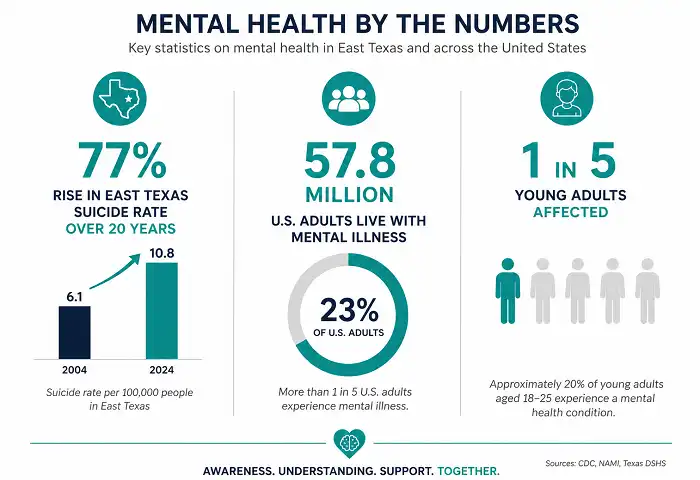
To understand the importance of Tyler mental health care, you first need to look at the numbers. East Texas as a region has historically faced some of the highest rates of mental health challenges in the state. According to data from the University of Texas at Tyler and local advocacy organizations, the per capita suicide mortality rate across Smith County and surrounding counties — which includes Tyler and its neighboring communities — has climbed by 77% over the past two decades. That is a staggering figure that far outpaces the statewide increase of 46% over the same period.
Nationally, the picture is similarly sobering. In 2025, over 57.8 million adults in the United States — approximately 22.8% of the adult population — live with some form of mental illness. Among young people, the statistics are particularly alarming: nearly half of Generation Z Americans have been diagnosed with a mental health condition, most commonly anxiety, depression, or ADHD. These are not just numbers on a page — they are neighbors, coworkers, students, and family members who deserve access to quality Tyler mental health support.
What makes Tyler unique is both its challenges and its growing response to them. The city sits in a region that has long been underserved when it comes to behavioral health resources. Cultural stigma, financial barriers, and a shortage of qualified providers have historically made it difficult for residents to access the Tyler mental health care they need. But thanks to growing investment from institutions like the University of Texas at Tyler, community organizations like Andrews Behavioral Health and NAMI Tyler, and local nonprofits such as the SocialWorx Advocacy Group, the tide is beginning to turn.
Key Tyler Mental Health Services and Providers
UT Health North Campus Tyler
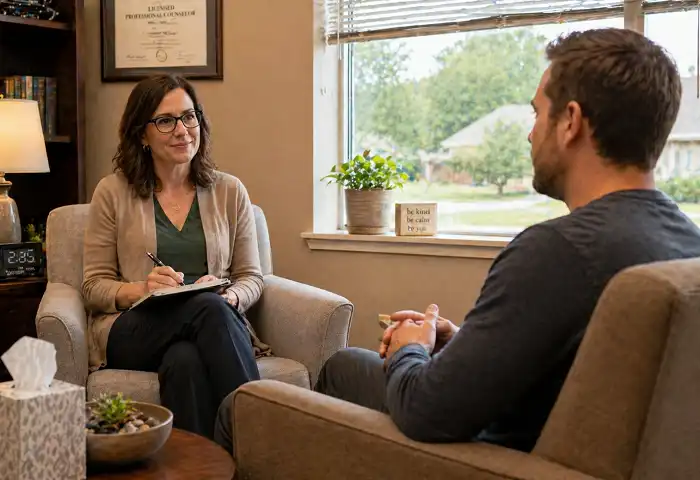
One of the most comprehensive sources of Tyler mental health care is UT Health North Campus Tyler. Their behavioral health team offers a broad range of services designed to treat patients at every stage of life. These services include inpatient behavioral health treatment for adults and seniors, outpatient behavioral therapy, and clinic-based counseling and therapy.
The team at UT Health North Campus Tyler includes psychiatrists, psychologists, and specialized physicians who work together to provide individualized care. When a patient arrives at their mental health clinic, a psychiatrist performs a thorough evaluation to understand their specific symptoms and then builds a customized treatment plan. Depending on the patient’s needs, treatment may involve medication, psychological therapy, or a combination of both.
For individuals experiencing a mental health crisis, UT Health also provides short-term inpatient stabilization services. This level of care is designed for people who are in acute distress, meet certain clinical criteria, or may be at risk of harming themselves or others. A doctor’s order is required for admission, and the process follows strict legal protocols to protect patient rights. During stabilization, patients receive immediate psychiatric help in a safe, confidential, and therapeutic environment.
Andrews Behavioral Health (Andrews Center)
Andrews Behavioral Health — also known as the Andrews Center — is one of the most established Tyler mental health institutions in the region. With more than 20 years of experience serving Northeast Texas, Andrews Center provides psychiatric evaluations, individual and group counseling, crisis management, medication management, and case management services. They serve adults, children, and adolescents.
Andrews Center has been vocal about the mental health crisis facing East Texas, noting that the region faces some of the highest suicide rates in the state — a direct indicator of the urgent need for expanded Tyler mental health resources. The organization has partnered with UT Tyler to host community events like the East Texas Mental Health Summit, bringing together leading authorities on behavioral health to raise awareness and propose solutions.
For anyone in immediate need, Andrews Center operates a 24/7 crisis line at 1-877-934-2131 and can also be reached through Smith County Crisis Intervention at 903-597-1351.
Tyler Care Clinic (Behavioral Health and Substance Abuse)
For residents dealing with co-occurring mental health and substance use disorders, Tyler Care Clinic on Troup Highway offers integrated behavioral health services that treat the whole person — not just isolated symptoms. Their services range from medication management and counseling to nutritional support, and they offer a specialized Suboxone Program for individuals struggling with alcohol or opioid use disorder.
Tyler Care Clinic recognizes that behavioral health encompasses mental health but extends beyond it, addressing the interconnected nature of emotional, psychological, and physical well-being. This holistic Tyler mental health approach is increasingly recognized as best practice in modern psychiatry and behavioral medicine.
NAMI Tyler
The National Alliance on Mental Illness (NAMI) has a local affiliate in Tyler that provides vital resources for individuals living with mental illness and their families. NAMI Tyler focuses on education, advocacy, and community support, helping people understand their diagnoses, navigate the healthcare system, and build meaningful support networks.
NAMI Tyler also provides crisis preparedness resources, helping families create plans before a crisis occurs. These plans include contact information for therapists and psychiatrists, instructions for involving trusted family members, and guidance on legal tools like Psychiatric Advance Directives (PADs) — legal documents that allow a trusted individual to make treatment decisions on behalf of someone who becomes unable to do so themselves.
NAMI Tyler can be reached at 903-308-0200 and is located at 6141 Paluxy Dr., Tyler, TX.
SocialWorx Advocacy Group
One of the most innovative and community-driven Tyler mental health organizations is the SocialWorx Advocacy Group, a nonprofit that provides free mental health support and navigation services. Founded after executive director Samantha Megaw recognized significant gaps in the local system — including long waitlists, cultural barriers, and financial constraints — SocialWorx helps people find the right counselor or therapist based on their individual needs and budget.
What sets SocialWorx apart is their peer support model: they do not just help clients find a provider, they walk alongside them throughout their entire mental health journey for a full year. Free walk-in and online support sessions are held every Wednesday from 3 p.m. to 7 p.m.
Understanding the Barriers to Tyler Mental Health Care
Even with these resources available, many Tyler residents still face significant obstacles in accessing mental health care. Understanding these barriers is essential to dismantling them.
Stigma remains one of the most powerful barriers to seeking Tyler mental health support. Across the United States, roughly 7 in 10 Americans believe there is a stigma surrounding mental health, and this is particularly pronounced in close-knit, traditional communities like those found in East Texas. People may fear judgment from neighbors, coworkers, or fellow church members if they openly seek therapy or psychiatric care.
Financial barriers are also significant. Many residents are uninsured or underinsured, and the cost of therapy or psychiatric appointments can be prohibitive. Organizations like SocialWorx Advocacy Group and Andrews Center work to provide free or low-cost Tyler mental health services, but demand often outpaces availability.
Provider shortages are another critical issue. East Texas has historically had far fewer mental health professionals per capita than urban areas like Houston or Dallas. However, efforts like the $1.5 million grant recently awarded to UT Tyler by the Health Resources and Services Administration — which will train 24 additional psychology interns and provide free mental health services to patients — represent meaningful progress in addressing this gap.
Cultural and language barriers affect immigrant communities in Tyler, particularly Hispanic and Latino families who may not have access to Spanish-speaking therapists or who come from cultural backgrounds where mental health treatment carries a heavy stigma. Organizations like SocialWorx are actively working to reach these underserved populations.
Mental Health Conditions Commonly Treated in Tyler
Tyler mental health providers treat a wide spectrum of psychiatric and behavioral conditions. Among the most commonly encountered are:
- Depression — persistent feelings of sadness, hopelessness, and loss of interest in daily activities
- Anxiety disorders — including generalized anxiety, panic disorder, and social anxiety
- Post-Traumatic Stress Disorder (PTSD) — often seen among veterans, survivors of trauma, and individuals who have experienced domestic violence
- Bipolar disorder — characterized by extreme mood swings between depressive lows and manic highs
- Schizophrenia and psychotic disorders — serious mental illnesses requiring specialized psychiatric care
- Substance use disorders — which frequently co-occur with other mental health conditions
- Eating disorders — including anorexia, bulimia, and binge eating disorder
- ADHD — increasingly diagnosed in both children and adults
A proper diagnosis from a qualified psychiatrist or psychologist is the essential first step in treating any of these conditions. Tyler mental health professionals use evidence-based approaches including cognitive-behavioral therapy (CBT), medication-assisted treatment, group therapy, and peer support to help patients manage their conditions and build resilience.
Tyler Mental Health for Youth and Families
The mental health crisis among young people is a particularly pressing issue in Tyler. Adolescents and young adults face unique stressors — including academic pressure, social media use, bullying, and the lingering psychological effects of the COVID-19 pandemic — that make early intervention especially important.
UT Health North Campus Tyler’s behavioral health team specifically includes providers who work with children and adolescents. The recent UT Tyler grant from the federal government is designed to expand child and adolescent psychology services, which will be provided at no cost to patients. This is a significant step forward for Tyler mental health services targeting the youngest and most vulnerable members of the community.
Parents and caregivers play a vital role in supporting youth mental health. Creating open lines of communication at home, reducing the stigma around mental health conversations, and knowing when to seek professional help are all critical components of a healthy family approach to Tyler mental health.
Telehealth and Modern Approaches to Tyler Mental Health

One of the most significant developments in Tyler mental health care in recent years has been the rise of telehealth. Virtual therapy sessions, online psychiatric evaluations, and mental health apps have dramatically expanded access to care for residents who may not be able to travel to a clinic, who live in rural areas surrounding Tyler, or who feel more comfortable seeking help from the privacy of their own home.
Telehealth is particularly beneficial for those experiencing mild to moderate depression or anxiety, as well as for ongoing medication management and follow-up therapy sessions. SocialWorx Advocacy Group, for example, offers online support sessions in addition to their in-person walk-in hours.
Crisis Resources: What To Do in a Tyler Mental Health Emergency
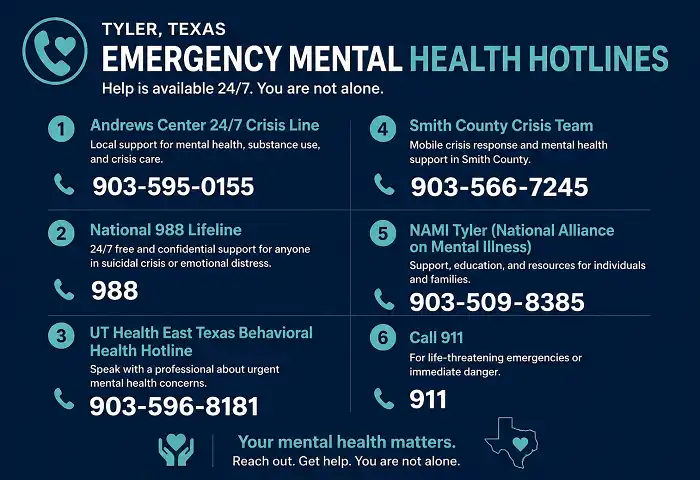
If you or someone you know is experiencing a mental health crisis, it is crucial to know where to turn. Here are the most important Tyler mental health crisis resources:
- Smith County Crisis Intervention Team: 903-597-1351
- Andrews Center 24/7 Crisis Line: 1-877-934-2131
- UT Health North Campus Tyler 24-Hour Hotline: 903-877-7168
- National Suicide and Crisis Lifeline: Call or text 988 (available 24/7)
- National Suicide Prevention Hotline: 1-800-273-TALK (8255)
- Tyler Police Department: 903-531-1090
- Emergency Services: 911
A mental health crisis can look many ways — it may be a panic attack, a breakdown, suicidal thoughts, or a complete loss of connection with reality. No matter what form it takes, help is available. You are not alone, and reaching out is always the right thing to do.
How the Community Can Support Tyler Mental Health

Improving Tyler mental health outcomes is not just the responsibility of clinics and hospitals — it is a community-wide effort. Here are practical ways that residents, employers, schools, and faith communities can contribute:
Employers can implement Employee Assistance Programs (EAPs), create stigma-free workplaces, and offer mental health days as part of their benefits packages.
Schools can integrate mental health education into curricula, train teachers to recognize warning signs, and connect students with counselors proactively rather than reactively.
Faith communities can open dialogue around mental health from the pulpit and in small groups, helping to dismantle the idea that seeking help is a sign of weakness or lack of faith.
Individuals can simply check in on friends and neighbors, use person-first language when discussing mental illness, and share resources like this guide to help others find Tyler mental health support.
The Future of Tyler Mental Health
The future of Tyler mental health care looks increasingly hopeful. Investments from the University of Texas at Tyler, partnerships between community organizations, and federal funding are all expanding the infrastructure of care available to East Texans. The growing number of nonprofits focused on mental health navigation, peer support, and stigma reduction signals a cultural shift that is long overdue.
Mental illness does not have to be permanent, disabling, or isolating. With the right support, the right treatment, and a community that genuinely cares, recovery is possible. Tyler mental health is a conversation that the entire city needs to keep having — loudly, compassionately, and without shame.
Conclusion
Tyler mental health services have come a long way, but there is still work to be done. From UT Health’s inpatient stabilization programs to SocialWorx’s free peer support model, from Andrews Center’s crisis lines to NAMI Tyler’s family education resources, the city has a growing network of care that is ready to help. The most important thing anyone can do — whether for themselves or for someone they love — is to take that first step.
If you are struggling with your mental health in Tyler, you do not have to figure it out alone. Reach out to one of the resources listed in this guide, talk to your doctor, call a crisis line, or simply tell someone you trust that you need help. Tyler mental health services exist because the community believes every person deserves to be well.