
Introduction
Your emotions don’t always have words — but they always have shapes, colors, and lines. That’s exactly why mental health drawings ideas have become one of the most powerful tools for emotional healing in recent years.
Whether you’re dealing with anxiety, depression, grief, or simply the daily weight of stress, drawing gives your inner world a place to exist outside your mind. In this guide, we’ll walk you through 25+ creative mental health drawings ideas that are easy to start, deeply therapeutic, and scientifically backed. No art degree required — just a pen, some paper, and the courage to begin.
Why Drawing Is Good for Your Mental Health
The Science Behind Art Therapy
Art therapy isn’t just a feel-good activity. Research published by the American Art Therapy Association confirms that creating visual art reduces cortisol (the stress hormone), activates the brain’s reward system, and builds emotional resilience over time.
When you draw something that represents your feelings — even abstractly — your brain begins to process those emotions differently. It shifts from reactive to reflective. That’s healing in action.
You Don’t Need to Be an Artist
Many people avoid mental health drawings ideas because they believe they “can’t draw.” But art therapy isn’t about skill — it’s about expression. A scribble, a doodle, a stick figure — all of these carry meaning when drawn with intention.
Think of your sketchpad like a journal. The goal isn’t beauty. The goal is truth.
25+ Mental Health Drawings Ideas to Try Today
1. Draw Your Emotions as Weather
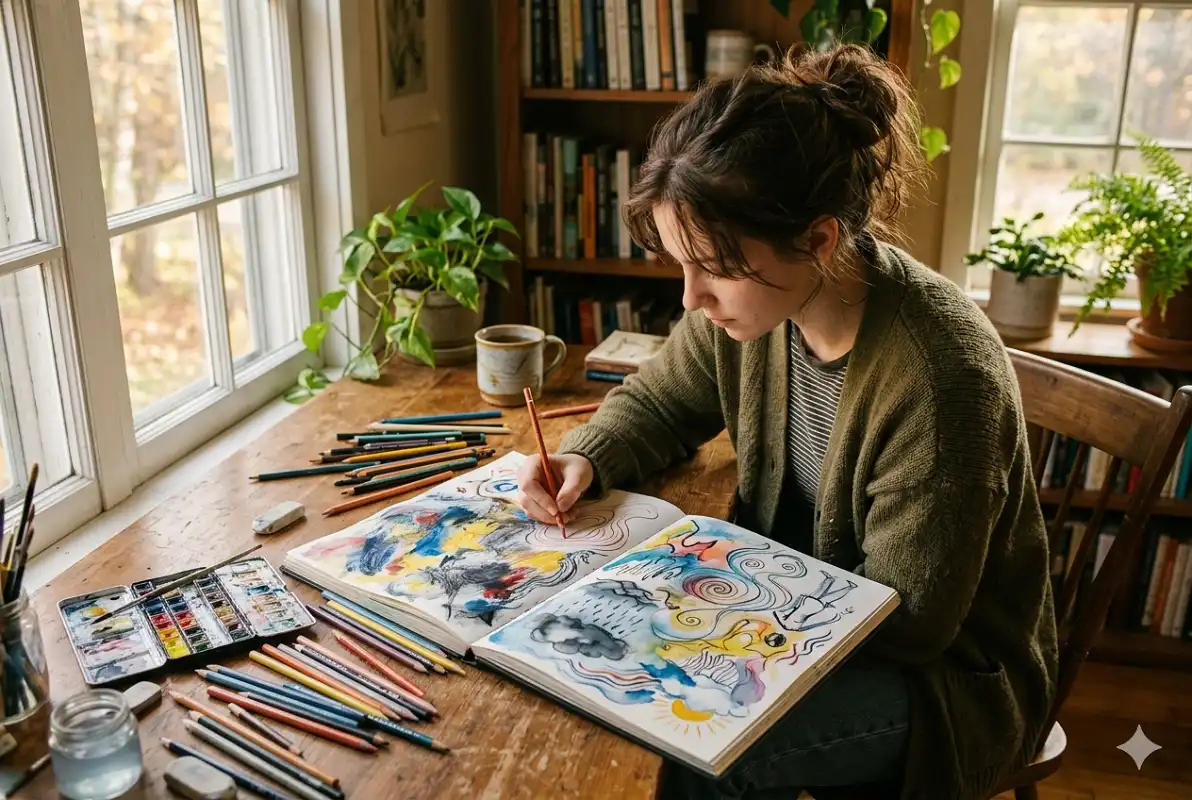
Picture your current mood as a weather pattern. Is it stormy? Foggy? A clear blue sky with one dark cloud? This is one of the simplest yet most revealing mental health drawings ideas for beginners.
- Draw rain to represent sadness
- Draw lightning for anger or overwhelm
- Draw sunshine breaking through clouds for hope
2. The Safe Place Drawing
Close your eyes and imagine a place where you feel completely safe and calm. It could be real or imaginary. Now draw it in as much detail as you can. This exercise is used widely in trauma therapy and mindfulness practices.
3. Your Inner Child
Draw yourself as a child. How do you look? What are you doing? What do you need? This prompt helps uncover unresolved emotions and opens conversations with your younger self.
4. Anxiety as a Shape or Monster
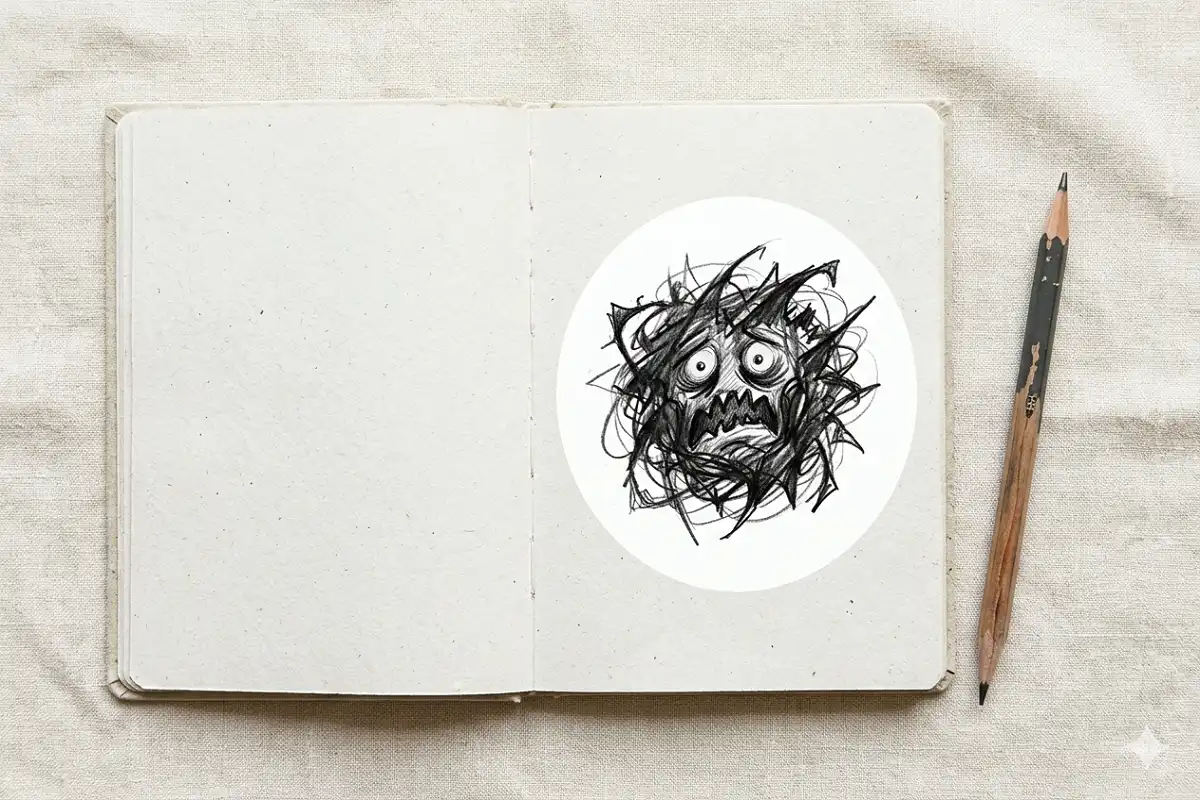
One of the most popular mental health drawings ideas for anxiety is to give your anxiety a visual form. Draw it as a creature, a shape, or an abstract form. Giving anxiety a face makes it feel smaller — and more manageable.
Want to learn more about what your anxiety art reveals? Check out this deep dive on mental health drawings and anxiety to understand your artwork on a deeper level.
5. The Emotion Wheel
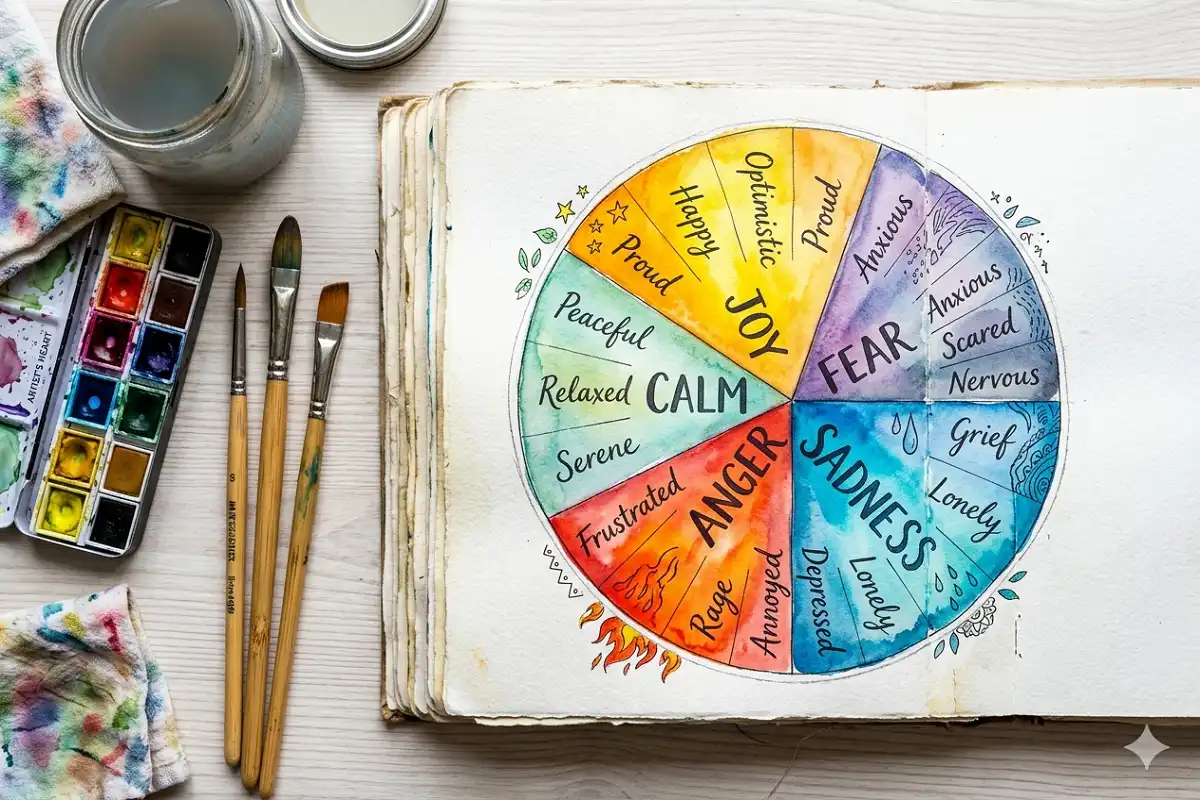
Draw a circle and divide it into sections. Color each section with an emotion you’ve felt this week. Use different shades and intensities. This is a great tool for emotional awareness and journaling.
6. A Portrait of Your Depression
Depression is often described as grey, hollow, or heavy. Try drawing what your depression looks like to you. Some people draw empty rooms. Others draw a figure sinking underwater. There’s no wrong answer.
7. Draw What You’re Grateful For
Gratitude is one of the most researched positive psychology interventions. Draw three things you’re thankful for today — even small ones. This shifts your mental focus from lack to abundance.
8. Your Body Map
Draw an outline of your body and fill it in with colors, words, or symbols showing where you hold emotions. Many people draw tension in their shoulders, sadness in their chest, and anxiety in their stomach.
9. The Comfort Object Drawing
Draw something that brings you comfort — a blanket, a pet, a hot cup of tea, a childhood toy. This simple act activates the soothing system in your brain.
10. Boundaries as Lines and Walls
If you struggle with boundaries in relationships, draw them literally. What does your boundary look like? A fence? A brick wall with a small door? A force field? This is one of the most insightful mental health drawings ideas for self-awareness.
Intermediate Mental Health Drawing Prompts
11. Before and After Healing
Draw two panels: one showing how you feel right now, and one showing how you want to feel. This creates a visual intention for your healing journey.
12. Your Support System
Draw yourself in the center of the page. Now draw the people, places, and things that support your mental health around you — in circles, orbits, or webs.
13. A Letter You Never Sent
Write the first line of a letter you never sent. Then draw the rest of it. What images come up? What colors? What textures?
14. Your Triggers as Landscapes
Draw your emotional triggers as physical landscapes. A crowded city for social anxiety. A dark forest for fear. A desert for loneliness. Externalizing triggers helps reduce their internal power.
15. The Mask You Wear
Draw two faces: the one you show the world, and the one you keep hidden. This is a deeply powerful exercise used in therapy settings globally.
Advanced & Therapeutic Drawing Ideas
16. Mandalas for Mindfulness
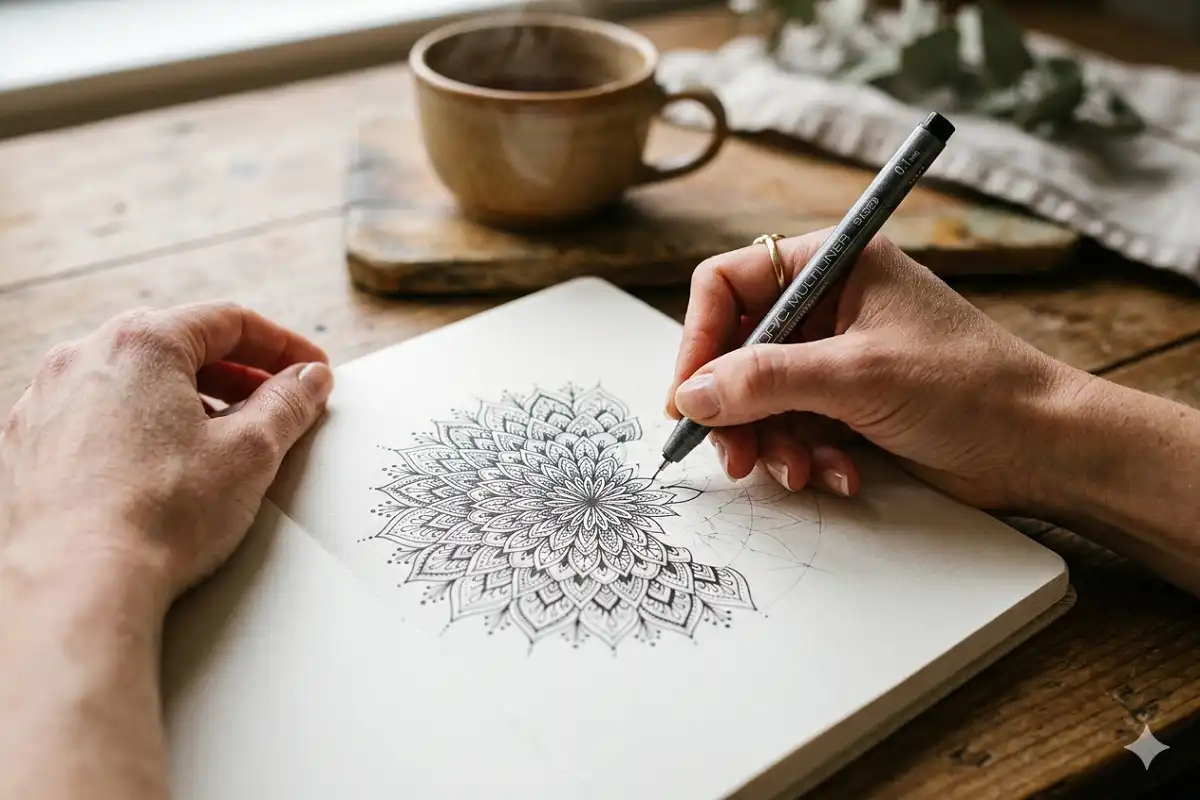
Drawing mandalas — circular, symmetrical patterns — is proven to reduce anxiety and increase focus. According to Psychology Today, mandala drawing induces a meditative state comparable to mindfulness practices.
You don’t need to be precise. The act of creating a mandala is the therapy.
17. Grief Mapping
Draw a map of your grief. Where does it start? Where does it go? What landmarks exist in your grief journey? This is especially helpful for those navigating loss or major life transitions.
18. Color as Emotion
Choose colors intentionally. What does blue mean to you? Red? Yellow? Understanding the emotional language of color can enhance your art therapy practice significantly.
Curious about the deeper meaning of mental health colors? Explore how each awareness color represents different mental health conditions to add more meaning to your drawings.
19. Your Healing Timeline
Draw a horizontal line across the page. Mark your lowest points and your breakthroughs. Illustrate each moment with a small drawing. Seeing your journey visually is profoundly healing.
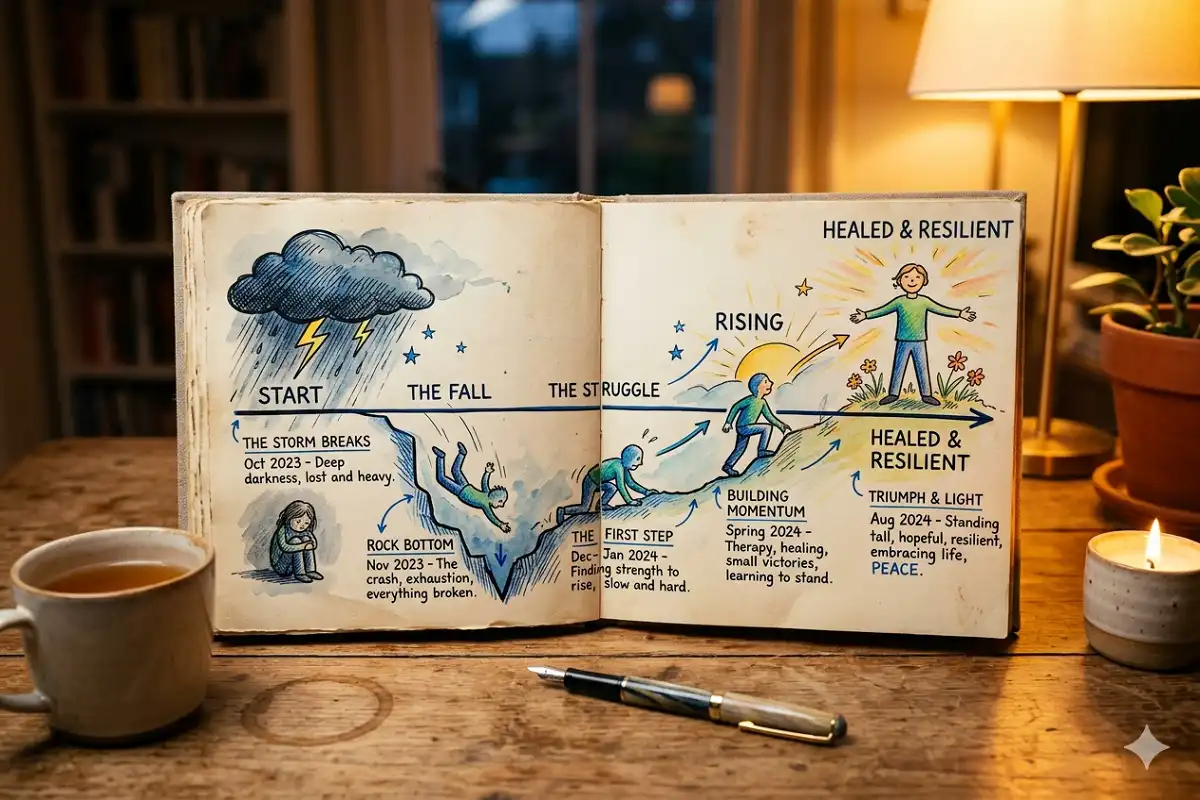
20. Draw What You Can’t Say
Some emotions are too complex for words. Draw them instead. Abstract shapes, scribbles, blobs of color — let your hand say what your mouth cannot.
Mental Health Drawings ideas for Specific Conditions
Drawings for Anxiety
- Tangled lines that slowly untangle
- A knot in your chest releasing
- A narrow tunnel opening into wide space
Drawings for Depression
- A dark room with a window and a crack of light
- A figure slowly lifting its head
- Plants growing from cracked concrete
Drawings for Trauma
Trauma-informed art therapy often uses grounding exercises. Drawing your five senses — what you see, hear, touch, smell, and taste right now — brings you back into the present moment.
How to Build a Mental Health Drawing Routine
Start Small — Just 10 Minutes a Day
You don’t need hours. Set a timer for 10 minutes, pick one of the mental health drawings ideas above, and just start. Consistency matters more than duration.
Keep a Dedicated Art Journal
Get a blank journal just for your mental health drawings ideas. Date each entry. Over time, you’ll notice patterns, growth, and shifts in your emotional landscape.
Don’t Judge the Output
The biggest barrier to therapeutic drawing is self-judgment. Remind yourself: this is not art class. It’s a healing practice. Ugly, messy, chaotic drawings are often the most honest and therapeutic.
Combine Drawing with Other Mental Health Practices
Art works best as part of a broader mental wellness routine. Consider pairing your drawing practice with:
- Journaling
- Meditation
- Therapy sessions
- Watching films that explore mental health authentically for emotional insight and validation
When Drawing Isn’t Enough
Art is a powerful tool, but it’s not a replacement for professional support. If you’re struggling with severe anxiety, depression, or trauma, please seek help from a licensed mental health professional.
Here are some practical ways to access support:
- Walk-in mental health clinics — Learn how a mental health walk-in clinic can provide same-day care when you need it most
- Free services — Explore free mental health services near you using 7 proven methods
- Digital tools — Understand how platforms like Headway make mental health care more accessible and affordable
You deserve real support — and drawing can be one beautiful piece of that puzzle.
Inspirational Stories: Art as a Lifeline
Many public figures have spoken about using creativity as a mental health anchor. NFL star AJ Brown’s journey with vulnerability and emotional expression is a powerful reminder that mental health struggles are universal — and that finding your outlet matters.
Read about AJ Brown’s mental health journey and what it teaches us all for an inspiring real-world perspective on emotional healing.
Additionally, many people choose to permanently honor their healing journeys through body art. If drawing resonates with you, you might find meaning in exploring mental health and depression survivor tattoos in 2026 — another powerful form of visual self-expression.
Tips for Making Your Mental Health Drawings ideas More Effective
- Use prompts, not pressure: Pick one idea and just start. Don’t overthink it.
- Draw in silence: Reduce distractions for maximum introspection.
- Use multiple mediums: Pencils, watercolors, markers — different tools produce different emotional responses.
- Talk about your drawings: Sharing your art with a therapist or trusted person deepens its impact.
- Look back regularly: Reviewing past drawings reveals emotional patterns and growth you might not notice day-to-day.
FAQ: Mental Health Drawings Ideas
1. What are mental health drawings ideas?
Mental health drawings ideas are intentional artworks created to process, express, or understand emotions. They’re used in art therapy, journaling practices, and self-care routines. They don’t require artistic skill — only the willingness to express yourself visually.
2. Can drawing help with anxiety and depression?
Yes. Multiple studies show that drawing and visual art reduce cortisol levels, improve mood, and help people process difficult emotions. According to Verywell Mind, art therapy is effective for reducing symptoms of anxiety, depression, PTSD, and other mental health conditions.
3. Do I need art skills to benefit from mental health drawings?
Absolutely not. Art therapy is about expression, not aesthetics. Even abstract scribbles, simple shapes, or color blocks carry emotional meaning and therapeutic value.
4. How often should I do mental health drawings?
Even 10 minutes a day can make a meaningful difference. Consistency is more important than duration. Many therapists recommend combining drawing with journaling for amplified benefits.
5. What materials do I need for mental health drawings?
You need very little to start — a blank notebook and a pencil or pen. As you develop the practice, you might enjoy adding colored pencils, watercolors, or markers to expand your emotional palette.
6. When should I seek professional help instead of just drawing?
Drawing is a wonderful supplement to mental health care, but not a substitute. If your symptoms are persistent, severe, or interfering with daily life, please reach out to a licensed therapist or counselor. You can also explore mental health counselor jobs and resources to better understand the support landscape available to you.
Conclusion
Mental health drawings ideas are more than creative prompts — they’re doorways to your inner world. Whether you’re drawing anxiety as a monster, mapping your grief, or simply coloring how you feel today, each stroke on the page is an act of self-care.
You don’t need talent. You don’t need expensive supplies. You just need the intention to show up for yourself — one drawing at a time.
Start today. Pick any one prompt from this list, grab whatever you have nearby, and draw for just 10 minutes. Your emotions are waiting to be heard.
If you found this helpful, explore more resources on mental wellness, share this post with someone who needs it, and remember: healing doesn’t always look like progress — sometimes it looks like a page full of messy, beautiful lines.