
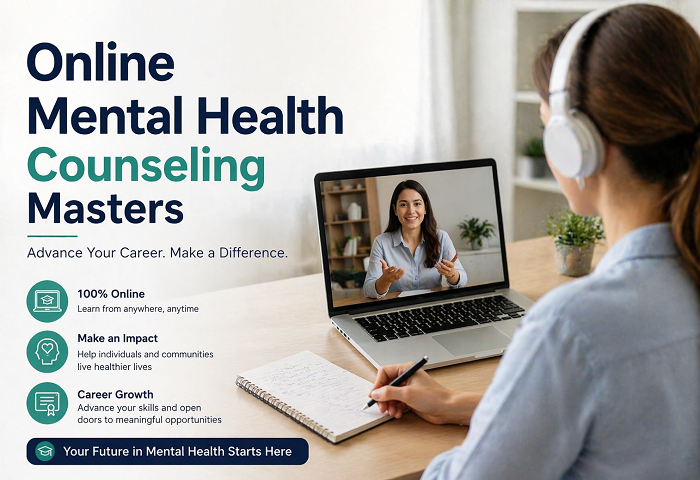
Introduction: Why an Online Mental Health Counseling Masters Is Worth It
Mental health has moved from a quiet conversation to a national priority. Burnout, anxiety, depression, trauma — these are not fringe issues anymore. They are everyday realities for millions of people across the United States and around the world. And with that rising need comes a rising demand for skilled, licensed, compassionate professionals who can truly help.
If you have ever thought about pursuing an online mental health counseling masters degree, 2026 may be the best year to start. The field is growing faster than nearly any other profession, the technology to learn remotely has never been better, and the doors to meaningful, well-paying careers have never been more open.
This guide will walk you through everything you need to know — what the degree involves, which programs are best, how much it costs, what career opportunities await you, and how to choose the right program for your life. Whether you are a working professional, a career changer, or a recent graduate ready to take the next step, this is the complete resource you have been looking for.
What Is an Online Mental Health Counseling Masters?
An online mental health counseling masters is a graduate-level academic program that prepares students to become licensed mental health counselors through a combination of theoretical coursework, clinical skills training, practicum hours, and supervised internship experience — all delivered primarily or fully through an online format.
Most programs award either a Master of Arts (MA) or a Master of Science (MS) in Clinical Mental Health Counseling. The typical program runs between 60 and 66 credit hours and can be completed in as few as two to three years, depending on whether you enroll full-time or part-time.
What makes an online mental health counseling masters different from a traditional campus-based program is the flexibility it offers. You can attend live virtual classes, complete assignments on your own schedule, and still fulfill real-world clinical requirements through practicum and internship placements near your home. This hybrid model is ideal for adults who are already working, raising families, or living in areas far from major university campuses.
Why Pursue an Online Mental Health Counseling Masters in 2026?
1. Job Growth Is Exceptional
The U.S. Bureau of Labor Statistics projects employment for mental health counselors to grow by 17% from 2024 to 2034. That is significantly faster than the average growth rate for all other occupations. This means graduates entering the field now are stepping into a labor market that is hungry for qualified professionals.
2. Online Learning Has Matured
Ten years ago, online graduate programs were seen as second-tier options. That perception has changed completely. Today, the most respected universities in the country — including NYU, Northwestern, and Capella University — offer fully accredited online mental health counseling masters programs that carry the same weight as their in-person counterparts.
3. Licensure Is Within Reach
In almost every state in the U.S., becoming a licensed mental health counselor requires a master’s degree. There is no alternative path. Earning your online mental health counseling masters is the foundation upon which your entire counseling career is built. Without it, licensure is not possible. With it, you open the door to a career that is both professionally rewarding and personally meaningful.
4. The Stigma Around Mental Health Is Declining
More people are seeking therapy and counseling services than ever before. This cultural shift means increased demand for counselors, expanded insurance coverage for mental health services, and a growing public willingness to engage with professional mental health support. Graduating with an online mental health counseling masters puts you right in the path of this momentum.
Key Features of a Strong Online Mental Health Counseling Masters Program
Not all programs are created equal. When you are evaluating your options, pay attention to these critical factors:
CACREP Accreditation
The Council for Accreditation of Counseling and Related Educational Programs (CACREP) is the gold standard for counseling program accreditation in the United States. Many state licensing boards require that your degree come from a CACREP-accredited institution. Look for this credential before applying to any online mental health counseling masters program. The Master’s in Psychology and Counseling Accreditation Council (MPCAC) is another recognized accrediting body worth noting.
Clinical Hours Requirements
All strong programs require hands-on clinical experience. Most CACREP-accredited programs require 100 hours of practicum and a minimum of 600 hours of supervised internship. Some programs go further, requiring up to 700 hours of combined practical experience. These requirements exist to ensure that graduates are not just academically prepared but clinically competent.
Faculty Quality and Student Support
The best online mental health counseling masters programs are taught by faculty who are actively practicing clinicians and researchers. Look for programs that offer personalized advising, small class sizes, and robust academic support systems. When you are learning complex therapeutic techniques, you need professors who are engaged and accessible — not just names in a course catalog.
Specialization Options
Many programs allow students to specialize in areas such as addiction counseling, child and adolescent counseling, trauma-informed practice, military and veterans counseling, or school counseling. Choosing a specialization within your online mental health counseling masters program can make you more competitive in the job market and allow you to align your career with your personal passion.
Synchronous vs. Asynchronous Delivery
Some online programs use a fully asynchronous model, meaning you watch lectures and complete work on your own time. Others include live, synchronous sessions where you interact with instructors and classmates in real time. Many students find that a combination of both — along with required virtual residencies — provides the richest learning experience.
Top Online Mental Health Counseling Masters Programs in 2026
Here is a look at some of the leading programs currently available for students pursuing an online mental health counseling masters degree:
NYU Steinhardt – Counseling@NYU
NYU Steinhardt’s online Master of Arts in Counseling for Mental Health and Wellness is accredited by MPCAC and can be completed in as few as 21 months. The program prepares graduates to pursue licensure across a wide range of professional settings. Students benefit from no GRE requirement, a rolling admissions process, and access to NYU’s clinical placements near their community. The program emphasizes social justice, cultural competence, and equity-driven practice.
Capella University – MS in Clinical Mental Health Counseling
Capella’s CACREP-accredited MS in Clinical Mental Health Counseling offers three specialization tracks: Addiction Treatment and Recovery, Child and Adolescent Counseling, and General Clinical Mental Health Counseling. The program is designed with flexibility in mind, serving working professionals who need to balance graduate study with existing commitments. Capella provides extensive student support services from enrollment through graduation.
University of West Alabama (UWA)
For students concerned about cost, UWA’s online master’s in clinical mental health counseling offers a flat tuition rate of $429 per credit regardless of state residency, making it one of the most affordable accredited programs in the nation. The 60-credit curriculum includes practicum and internship requirements and features elective coursework focused on telehealth counseling practices — an increasingly important skill in today’s job market.
University of Mount Olive – MS in Counseling: Clinical Mental Health
The University of Mount Olive offers a 100% online, CACREP-accredited master’s in clinical mental health counseling that can be completed in two years. The program includes a unique focus on tele-behavioral health and technology-based counseling, preparing graduates for modern practice environments. Dual licensure pathways as both a Licensed Clinical Mental Health Counselor (LCMHC) and Licensed Clinical Addiction Specialist (LCAS) are available.
Commonwealth University – MS in Clinical Mental Health Counseling
Ranked the number one master’s in counseling program in Pennsylvania for 2026, Commonwealth University’s CACREP-accredited online program is known for affordability and licensure readiness. The 60-credit program offers strong support for students throughout the application and enrollment process, and a Cost Estimator Tool helps students plan their investment upfront.
East Carolina University (ECU)
ECU’s online mental health counseling program, housed within the College of Education, carries CACREP accreditation and features 100% online coursework with two required on-campus residencies. The program is a strong choice for students seeking a blend of flexible study and in-person academic community.
How to Apply to an Online Mental Health Counseling Masters Program
The application process for most online mental health counseling masters programs is more accessible than many applicants expect. Here is a general overview of what you will typically need:
Bachelor’s Degree: You do not need an undergraduate degree in psychology or counseling, although having a background in psychology, sociology, social work, or communications makes your application stronger. Most programs welcome applicants from any undergraduate major.
GPA Requirements: Most programs require a minimum undergraduate GPA of 3.0. Some programs will consider applicants with lower GPAs if they can demonstrate professional experience or other strong application components.
Letters of Recommendation: Most programs ask for two to three professional references. These should come from academic advisors, employers, or community leaders — not family members or personal friends.
Statement of Purpose: You will typically write a personal statement or statement of professional goals explaining why you want to pursue an online mental health counseling masters, what career goals you have, and why you are suited to the profession. This is your chance to tell your story.
GRE Scores: Many leading programs — including NYU Steinhardt and the University of Mount Olive — no longer require GRE scores. Always check individual program requirements, as policies vary.
Interview: Some programs require a virtual or phone interview as part of the admissions process. These conversations help programs assess your communication skills and professional maturity.
Cost of an Online Mental Health Counseling Masters
Tuition varies widely across programs. Here is a general breakdown of what to expect:
Affordable Options: Programs like UWA (approximately $27,300 total) and Commonwealth University (recognized as one of the most affordable in Pennsylvania) offer full master’s degrees at competitive price points that make the online mental health counseling masters accessible to a wider range of students.
Mid-Range Programs: Many CACREP-accredited programs charge between $500 and $900 per credit hour, placing the total program cost between $30,000 and $54,000 for a 60-credit degree.
Premium Programs: Top-tier institutions may charge significantly more. Regis University, for example, charges $970 per credit for a program totaling approximately $58,200 — but offers notable outcomes like a 100% licensure exam pass rate and 100% job placement for students seeking employment.
Financial Aid: Most accredited online mental health counseling masters programs are eligible for federal financial aid, including graduate loans and work-study opportunities. Many programs also offer scholarships, assistantships, and institutional grants. Always complete the FAFSA early to maximize your aid eligibility.
Licensure After Completing Your Online Mental Health Counseling Masters
Earning your degree is only the beginning of becoming a licensed mental health counselor. Here is the typical path to licensure after completing your online mental health counseling masters:
Step 1 – Graduate Degree: Earn your master’s degree from an accredited program. In virtually all states, a graduate degree is the minimum educational requirement for licensure.
Step 2 – Supervised Clinical Hours: After graduation, you must accumulate a set number of supervised post-master’s clinical hours. The exact number varies by state but typically ranges from 2,000 to 4,000 hours, often completed over two to three years of supervised practice.
Step 3 – Licensure Examination: Most states require candidates to pass the National Counselor Examination (NCE) or the National Clinical Mental Health Counseling Examination (NCMHCE) before being fully licensed. Some programs like Regis University offer students the chance to sit for the exam during their internship.
Step 4 – State License Application: Submit your application to your state’s licensing board, along with proof of your degree, supervised hours, and examination scores. Licensure requirements vary from state to state, so always review the specific requirements in your state before choosing a program.
Career Paths With an Online Mental Health Counseling Masters
An online mental health counseling masters opens the door to a wide variety of fulfilling career paths. Here are some of the most common directions graduates pursue:
Licensed Clinical Mental Health Counselor (LCMHC): The most direct career path, working with individuals, families, and groups in private practice, community health centers, or nonprofit organizations.
Substance Abuse and Addiction Counselor: Specializing in helping clients overcome dependency issues and develop recovery plans. This specialization is in high demand and often allows for dual licensure.
School Counselor: Working within K-12 or post-secondary educational settings to support students’ emotional, academic, and social development. School counseling typically requires additional state certification beyond the master’s degree.
Marriage and Family Therapist: Some master’s programs provide a pathway to licensure as a marriage and family therapist (MFT), working with couples and families on relationship and communication challenges.
Veterans and Military Counselor: A growing specialization that focuses on the unique mental health challenges faced by service members, veterans, and their families, including PTSD, moral injury, and transition stress.
Rehabilitation Counselor: Helping individuals with physical, emotional, or developmental disabilities achieve their personal, social, and vocational goals.
Telehealth Counselor: A modern and rapidly growing practice model in which counselors provide services entirely online, serving clients in their homes via video conferencing platforms.
How to Choose the Right Online Mental Health Counseling Masters for You
With so many excellent options available, narrowing your choice down to one program requires honest self-reflection. Ask yourself the following questions:
What is your budget? If cost is a primary concern, focus on programs with flat per-credit tuition rates or those with strong scholarship offerings. Remember to factor in the total program cost, not just tuition per credit.
Do you need complete flexibility? If you are working full-time, look for programs with fully asynchronous coursework or those that offer multiple start dates throughout the year.
Where do you plan to practice? Not every program meets licensure requirements in every state. Before enrolling in any online mental health counseling masters program, confirm that it meets the educational requirements for licensure in the state where you intend to practice.
What population do you want to serve? If you already know you want to work with children, veterans, or people in recovery, choose a program that offers a relevant specialization track.
How important is brand recognition? Degrees from institutions like NYU carry significant name recognition. If you plan to build a private practice or work in competitive job markets, the reputation of your program may matter.
Final Thoughts: Taking the Next Step
Choosing to pursue an online mental health counseling masters is one of the most impactful decisions you can make — not just for your career, but for the thousands of people you will help over the course of your professional life. The world needs trained, compassionate counselors now more than ever.
The good news is that the path forward has never been more accessible. Accredited programs are available at nearly every price point. Flexible online formats make it possible to earn your degree without putting your life on hold. And a growing national demand for mental health services means that your skills will be needed everywhere, from rural community health centers to urban private practices to telehealth platforms serving clients across state lines.
Research your options carefully, prioritize CACREP accreditation, confirm state licensure alignment, and choose a program that fits both your professional goals and your personal reality. The investment you make in your online mental health counseling masters today is an investment in a career that will sustain you — financially, professionally, and personally — for decades to come.