
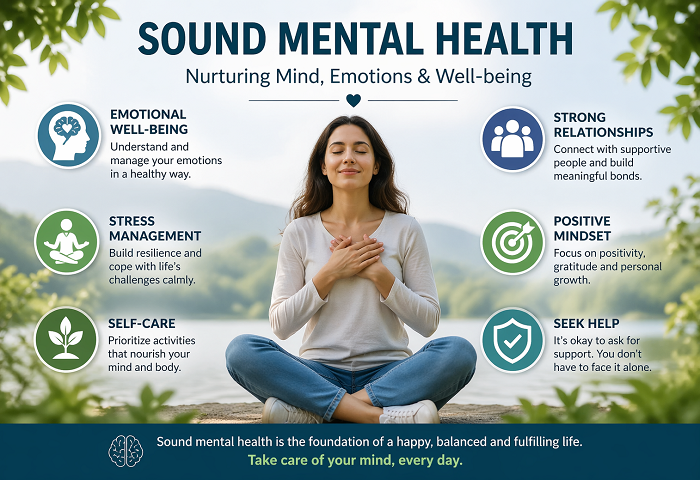
Introduction: Why Sound Mental Health Is the Foundation of Everything
We live in a world that glorifies busyness. We celebrate productivity, applaud hustle, and reward those who “push through” discomfort. But somewhere in that relentless pace, millions of people quietly lose something far more valuable than a deadline or a paycheck — they lose their sound mental health.
Sound mental health is not simply the absence of a diagnosable condition. It is a dynamic, living state of emotional wellness that shapes how you think, feel, relate to others, and handle the inevitable challenges of daily life. It is the invisible architecture behind every decision you make, every relationship you maintain, and every goal you choose to pursue.
According to the World Health Organization, mental health is a fundamental component of overall health, not a secondary concern. Yet globally, more than one billion people live with some form of mental or neurological disorder, and the majority never receive appropriate care. The gap between need and support is staggering — and it begins with awareness.
This guide is written for real people navigating real lives. Whether you are managing work stress, supporting a loved one through a rough patch, or simply trying to build a more emotionally balanced existence, this is for you. We will walk through what sound mental health actually means, why it matters more than most people realize, and — most importantly — the evidence-backed strategies that help you build and protect it every single day.
What Does “Sound Mental Health” Actually Mean?
The phrase sound mental health carries more depth than it might initially suggest. The word “sound” implies stability, solidity, and reliability — like a sound structure that holds firm under pressure. Applied to mental health, it points to a mind that functions well not just on good days, but especially on hard ones.
Sound mental health encompasses several interconnected dimensions:
Emotional wellness — the ability to recognize, understand, and manage your feelings without being overwhelmed or suppressing them entirely.
Cognitive health — clear, focused thinking; healthy memory function; the ability to solve problems and make decisions without excessive anxiety or confusion.
Psychological resilience — the capacity to bounce back from adversity, trauma, or stress without losing your sense of self.
Social well-being — the ability to form and maintain meaningful relationships, communicate effectively, and engage with community.
Behavioral health — patterns of action and habit that support rather than undermine your physical and emotional state.
None of these exist in isolation. A person with sound mental health is not immune to sadness, anger, fear, or grief. They experience the full spectrum of human emotion. The difference lies in how they process those emotions — with awareness, self-compassion, and constructive coping rather than avoidance or collapse.
Understanding this broader definition is the first step. Because when we reduce mental health to simply “not being depressed,” we miss the vast middle ground where most people actually live — a space where small daily choices either build or erode psychological health over time.
The Pillars of Sound Mental Health
Building sound mental health is less like flipping a switch and more like constructing a building — layer by layer, pillar by pillar. Let’s examine the foundations that research consistently identifies as critical.
1. Sleep: The Silent Superpower
If there is one non-negotiable pillar of sound mental health, it is sleep. The relationship between sleep and mental well-being is bidirectional and profound. Poor sleep worsens anxiety, irritability, emotional regulation, and concentration. In turn, stress and mental health struggles frequently disrupt sleep — creating a cycle that is hard to break without intentional intervention.
Adults generally require seven to nine hours of quality sleep per night. This is not a luxury; it is a biological necessity. During deep sleep, the brain consolidates memories, processes emotions, and clears metabolic waste products that accumulate during waking hours. Chronic sleep deprivation literally changes brain chemistry, lowering serotonin and dopamine levels — two neurotransmitters central to mood regulation.
Improving sleep hygiene is one of the most accessible strategies for better mental health. Keep consistent sleep and wake times, avoid screens for at least an hour before bed, reduce caffeine in the afternoon, and create a dark, cool sleeping environment. These changes sound simple because they are — but their impact on emotional wellness is profound.
2. Physical Activity and Mental Fitness
Exercise is one of the most researched and reliable interventions for sound mental health. Regular physical activity increases the production of endorphins, serotonin, and brain-derived neurotrophic factor (BDNF) — a protein that promotes the growth of new brain cells and protects against cognitive decline.
Studies consistently show that moderate aerobic exercise — even 30 minutes three to five times per week — can reduce symptoms of anxiety and depression as effectively as medication in some populations. This does not mean exercise replaces professional treatment when it is needed. But it absolutely belongs in every mental wellness plan.
You do not need a gym membership or an elaborate routine. A brisk daily walk, yoga, dancing in your kitchen, cycling to work — any movement counts. The key is consistency and enjoyment. An activity you dread will not sustain long-term mental fitness. Find movement that feels like play, not punishment.
3. Nutrition and the Gut-Brain Connection
The emerging field of nutritional psychiatry has made one thing unmistakably clear: what you eat directly affects how you feel. The gut and brain communicate via the vagus nerve and through the gut microbiome, which produces roughly 90% of the body’s serotonin.
Diets rich in whole foods — vegetables, fruits, whole grains, legumes, lean proteins, and healthy fats — are consistently associated with lower rates of depression and anxiety. Conversely, ultra-processed foods high in sugar, refined carbohydrates, and artificial additives are linked to increased inflammation, which plays a key role in mood disorders.
Omega-3 fatty acids, found in oily fish, flaxseeds, and walnuts, have particularly strong evidence for supporting psychological health. Magnesium, B vitamins, and zinc are also critical for neurotransmitter function and emotional stability.
You do not need to follow a perfect diet to support sound mental health. Small, sustainable shifts — adding more vegetables, reducing sugary snacks, staying hydrated — can make a meaningful difference over time.
4. Mindfulness and Stress Management
Stress is unavoidable. But chronic, unmanaged stress is one of the most damaging forces against sound mental health. It elevates cortisol, disrupts sleep, suppresses immune function, and gradually erodes emotional resilience.
Mindfulness — the practice of paying deliberate, non-judgmental attention to the present moment — is one of the most evidence-backed tools for stress management available today. Mindfulness-based cognitive therapy (MBCT) has been shown to reduce relapse rates in recurrent depression by up to 44%. Even basic mindfulness practices, like focused breathing or body scan meditations, activate the parasympathetic nervous system, bringing the body out of a stress response.
You do not need to meditate for an hour a day to benefit. Research supports as little as ten minutes of daily mindfulness practice producing measurable improvements in anxiety relief, emotional balance, and overall well-being. Apps like Headspace or Calm can be useful starting points, but even sitting quietly and focusing on your breath for ten minutes costs nothing.
5. Social Connection and Belonging
Human beings are profoundly social creatures. Loneliness and social isolation are now recognized as significant risk factors for mental illness and even premature death. A landmark Harvard study following adults over 80 years found that the quality of relationships — more than wealth, fame, or even physical health — is the strongest predictor of happiness and cognitive health in later life.
Sound mental health flourishes in connection. This does not mean you need an enormous social circle. It means having at least a few relationships where you feel genuinely seen, heard, and valued. Investing time and emotional energy in those relationships — through regular contact, honest communication, and mutual support — is a direct investment in your psychological health.
If loneliness is a challenge, start small. A conversation with a neighbor, joining a local group, or reconnecting with an old friend can begin to rebuild the sense of belonging that healthy emotional wellness depends on.
Recognizing Signs of Declining Mental Health
One of the most important skills for maintaining sound mental health is the ability to recognize when it is slipping — in yourself and in those you care about. Mental health challenges rarely announce themselves loudly. More often, they show up quietly in patterns of behavior and mood.
Warning signs to watch for include:
- Persistent sadness, hopelessness, or emptiness lasting more than two weeks
- Withdrawal from activities that once brought pleasure or meaning
- Unexplained changes in sleep or appetite
- Difficulty concentrating, making decisions, or remembering things
- Increased irritability, anger, or emotional volatility
- Physical symptoms with no clear medical cause — headaches, digestive issues, fatigue
- Increased use of alcohol, substances, or screens as a coping mechanism
- Feelings of worthlessness, excessive guilt, or a sense of being a burden
Recognizing these signs is not a weakness. It is wisdom. The earlier any mental health concern is acknowledged and addressed, the easier it typically is to manage. Ignoring the signs does not make them disappear — it gives them time to deepen.
Therapy, Counseling, and When to Seek Professional Help
There is still an unfortunate stigma around seeking professional support for mental health. Many people wait until they are in crisis before reaching out to a therapist, counselor, or psychiatrist. This is backwards. You would not wait until a broken leg became infected before seeing a doctor. Mental health deserves the same proactive approach.
Therapy is not only for people with severe mood disorders. It is a tool for anyone who wants to better understand themselves, develop healthier coping strategies, process past experiences, or simply have a skilled, objective sounding board. Cognitive-behavioral therapy (CBT) remains one of the most extensively studied and effective forms of treatment for anxiety, depression, OCD, PTSD, and many other conditions.
Other evidence-based approaches include dialectical behavior therapy (DBT), acceptance and commitment therapy (ACT), EMDR for trauma, and interpersonal therapy (IPT). The right approach depends on the individual and the specific concern — a good therapist will guide you.
If you are experiencing suicidal thoughts, severe functional impairment, or symptoms that are worsening rapidly, please reach out to a mental health professional or crisis line immediately. You do not have to manage this alone.
In many countries, including Bangladesh and across South Asia, mental health services are becoming increasingly accessible through online platforms and community health programs. Barriers exist, but they are shrinking. The first step is always the hardest — asking for help.
Daily Habits That Protect Sound Mental Health
Beyond the major pillars, a constellation of everyday habits quietly shapes the state of your sound mental health. These are the micro-decisions that accumulate into a life that either nourishes or depletes your psychological reserves.
Journaling: Writing about your thoughts and feelings for even ten minutes a day has been shown to reduce anxiety, improve mood, and increase self-awareness. Expressive writing allows the brain to process experiences that might otherwise remain unresolved.
Digital boundaries: Excessive social media use is linked to increased anxiety, depression, and poor self-image — particularly among younger people. Setting intentional limits on screen time, especially before bed and first thing in the morning, protects mental well-being.
Time in nature: Exposure to natural environments reduces cortisol levels, lowers blood pressure, and improves mood. Even a 20-minute walk in a park or garden activates measurable reductions in stress hormones.
Acts of generosity: Research consistently shows that giving — time, attention, resources — activates reward circuits in the brain and increases feelings of purpose and connection. Volunteering or simply helping a neighbor contributes to positive mental attitude and overall emotional balance.
Purposeful rest: Rest is not the same as sleep. It includes activities that restore your nervous system — reading for pleasure, listening to music, creative hobbies, or simply sitting without an agenda. In a culture that equates busyness with worth, deliberately resting is a quiet act of self-care that supports holistic mental wellness.
Gratitude practice: Regularly noting what you are grateful for — three specific things each day — has robust evidence for improving mood, reducing anxiety, and increasing life satisfaction. Gratitude does not deny difficulty; it trains attention toward what is working alongside what is not.
Sound Mental Health Across Life Stages
Sound mental health looks different at different points in life, and the strategies that support it must adapt accordingly.
Children and adolescents need secure attachment, consistent routines, open communication with trusted adults, and protection from chronic stress and adverse childhood experiences. Building mental fitness early creates a resilience buffer that lasts a lifetime.
Young adults often face peak stressors around identity, relationships, career, and financial independence. This age group has the highest rates of new-onset mood disorders and is among the least likely to seek help. Normalizing mental health conversations in early adulthood is essential.
Middle-aged adults frequently carry significant caregiving burdens — for children, aging parents, or both — alongside demanding careers. Burnout is a serious and underrecognized threat at this stage. Regular check-ins on emotional wellness, not just physical health, are critical.
Older adults face transitions including retirement, loss of loved ones, changing health, and shifting identity. Social isolation and depression are common but frequently undiagnosed in this group. Maintaining connection, purpose, and physical activity are the most powerful protective factors.
Sound mental health is not a destination you arrive at once and stay. It is a lifelong practice, continuously shaped by the choices you make and the support you seek.
Breaking the Stigma Around Mental Health
One of the greatest barriers to sound mental health globally is stigma — the social shame and judgment that causes people to hide their struggles rather than address them. Stigma does not protect people. It isolates them.
Cultural, religious, and generational narratives often frame mental health struggles as personal failure, spiritual weakness, or something to be ashamed of. These narratives are not just unhelpful — they are harmful. They delay treatment, deepen suffering, and cost lives.
Breaking stigma begins with language. Referring to mental health with the same matter-of-fact normalcy we use for physical health is a powerful first step. Sharing your own experiences honestly, when it feels safe to do so, models vulnerability and builds community. Educating those around you — gently, without judgment — shifts culture one conversation at a time.
When we treat psychological health with the same seriousness and compassion we bring to physical health, we create conditions in which more people feel safe enough to seek the help they need.
Conclusion: Building a Life That Supports Sound Mental Health
Sound mental health is not a privilege reserved for the fortunate few. It is a capacity available to every person who takes the time to understand it, invest in it, and protect it — through daily habits, meaningful relationships, professional support when needed, and a willingness to be honest about how they are truly doing.
The world is not going to slow down and hand you the space to heal. You have to build that space yourself — in the habits you form, the boundaries you set, the connections you nurture, and the conversations you are brave enough to start.
Start small. Start today. Commit to one thing from this guide — better sleep, a daily walk, a conversation you have been avoiding, or finally reaching out to a therapist. Every genuine step toward emotional wellness compounds over time into something remarkable: a life grounded in psychological health, purpose, and authentic well-being.
Your mind is worth every bit of care you would give your body. Sound mental health is not an afterthought. It is everything.