
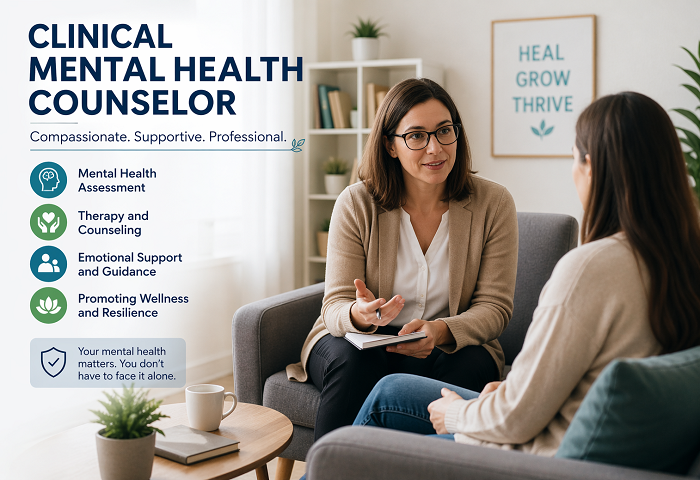
What Does a Clinical Mental Health Counselor Do?
If you have ever wondered who steps in when life feels too heavy to carry alone, the answer often begins with a clinical mental health counselor. These professionals stand at the intersection of science, empathy, and human connection — trained not just to relieve suffering but to actively promote wellness. Whether someone is battling anxiety, navigating a painful divorce, recovering from trauma, or struggling with addiction, the clinical mental health counselor is typically among the first trained professionals available to provide meaningful support.
A clinical mental health counselor uses psychotherapy techniques to diagnose, treat, and help individuals, groups, families, and even communities dealing with psychological distress and a broad range of mental health issues. This is not a passive role. A clinical mental health counselor assesses clients’ mental and emotional states, develops personalized treatment plans, delivers talk therapy, coordinates with other healthcare providers, and continuously evaluates progress toward therapeutic goals.
The profession draws from a wellness and human development framework — a philosophy that separates it meaningfully from psychiatry or clinical psychology. The core question a clinical mental health counselor asks is never simply, “How do we get you unsick?” but rather, “How do we help you thrive?” That distinction shapes everything from session structure to long-term treatment planning and makes the career uniquely rewarding for people who see mental health as a spectrum, not a binary.
Today, with millions of people experiencing economic uncertainty, political stress, grief, and social disconnection, the services of a clinical mental health counselor have never been more urgently needed. Understanding what this professional does, how to become one, and what career paths exist is essential for anyone considering entering the field — or anyone seeking to understand where professional mental health support comes from.
The History and Evolution of Mental Health Counseling
Mental health counseling as a formal profession is younger than many people realize. For most of the twentieth century, psychological care was dominated by psychiatrists and clinical psychologists. Counselors existed primarily in school and vocational settings, helping students choose careers rather than treating clinical disorders.
The shift began in the 1970s and accelerated through the 1980s as lawmakers, insurance companies, and healthcare planners recognized that millions of Americans needed accessible, affordable mental health support that the existing system could not provide. The American Mental Health Counselors Association was founded in 1976, and over the following decades, states began creating formal licensure pathways for professional counselors.
By the 1990s, the clinical mental health counselor had become a recognized healthcare provider. Insurance reimbursement followed, and with it, credibility. Today, the clinical mental health counselor is licensed in all fifty states, recognized by major insurance carriers, and increasingly embedded in hospitals, community health centers, schools, private practices, and telehealth platforms.
The profession’s growth reflects a broader social shift: the destigmatization of mental health treatment. Seeking help from a clinical mental health counselor is no longer seen as a last resort — it is widely understood as a proactive investment in personal wellbeing.
Core Duties and Responsibilities
The day-to-day work of a clinical mental health counselor is varied, demanding, and deeply personal. No two sessions look the same, because no two clients are the same. However, most clinical mental health counselors perform a consistent set of core duties.
Assessment and Diagnosis: A clinical mental health counselor begins every therapeutic relationship with a thorough evaluation. This includes structured interviews, standardized psychological assessments, and review of medical history. The goal is to understand the client’s current mental and emotional condition and identify any diagnosable disorders under the DSM-5.
Treatment Planning: Based on the assessment, the clinical mental health counselor develops an individualized treatment plan. This document outlines specific goals, therapeutic modalities to be used, expected duration of treatment, and measurable benchmarks for progress.
Individual and Group Therapy: The bulk of a clinical mental health counselor’s work involves direct therapeutic sessions. These may be one-on-one, with couples, with families, or in structured group settings. Common therapeutic approaches include cognitive-behavioral therapy (CBT), dialectical behavior therapy (DBT), solution-focused brief therapy, trauma-informed care, and motivational interviewing.
Crisis Intervention: A clinical mental health counselor must be prepared to respond to acute crises — suicidal ideation, domestic violence disclosures, sudden psychotic breaks, or substance overdose situations. This requires both clinical skill and the emotional steadiness to act quickly and effectively under pressure.
Referral and Coordination: Mental health is rarely siloed. A clinical mental health counselor regularly collaborates with psychiatrists, primary care physicians, social workers, and community resource agencies to ensure clients receive comprehensive, coordinated care. When a client needs services beyond the counselor’s scope — medication management, inpatient hospitalization, or legal assistance — the counselor facilitates appropriate referrals.
Documentation and Compliance: Every session must be documented. A clinical mental health counselor maintains detailed clinical notes, tracks treatment plan progress, and ensures records comply with HIPAA regulations and state licensing requirements.
Prevention and Psychoeducation: Beyond treating existing conditions, a clinical mental health counselor often engages in prevention-focused work — delivering workshops, leading support groups, and educating communities about mental health awareness, stress management, and healthy coping strategies.
Education Requirements: The Path to Becoming a Clinical Mental Health Counselor
The educational path to becoming a clinical mental health counselor is rigorous and intentionally so. The responsibilities of the role demand a high level of academic preparation, practical training, and supervised experience.
Undergraduate Education: The journey typically begins with a bachelor’s degree. Majors in psychology, sociology, social work, or human services provide the strongest foundation, though it is entirely possible to pursue a master’s in clinical mental health counseling with an undergraduate degree in a different field, provided prerequisite coursework is completed.
Master’s Degree: A master’s degree in clinical mental health counseling — or a closely related field such as counseling psychology or marriage and family therapy — is the essential academic credential. Most programs take two to three years to complete and include coursework in counseling theory, psychopathology, research methods, multicultural counseling, group dynamics, ethics, and career development. Accreditation by the Council for Accreditation of Counseling and Related Educational Programs (CACREP) is an important quality marker to look for when selecting a program.
Graduate programs in clinical mental health counseling also include significant practicum and internship components. Students complete hundreds of supervised clinical hours during their training — working directly with clients under the close guidance of licensed supervisors. This hands-on experience is not optional; it is foundational to the development of clinical competence.
Post-Graduate Supervised Experience: After earning a master’s degree, the aspiring clinical mental health counselor enters a supervised practice period. Most states require between 2,000 and 4,000 hours of post-graduate supervised clinical experience before full licensure can be granted. This period is formalized under a provisional license — titles vary by state but may include Associate Counselor, Resident in Counseling, or Licensed Associate Professional Counselor.
Licensure Examinations: To complete the path to full licensure, a clinical mental health counselor must pass a state-recognized national examination. The two most commonly used are the National Counselor Examination (NCE) and the National Clinical Mental Health Counseling Examination (NCMHCE), both administered by the National Board for Certified Counselors (NBCC). Passing scores on these exams, combined with the documented graduate degree and supervised hours, qualify the applicant for full, independent licensure.
Continuing Education: Licensure is not a one-time achievement. A clinical mental health counselor must complete regular continuing education credits to maintain their license. Most states require renewal every two years, with specific hours dedicated to ethics training, cultural competency, and emerging clinical practices.
Licensure Titles: Understanding the Alphabet Soup
One of the confusing aspects of the mental health counseling field is the variety of license titles across different states. The core credential of the clinical mental health counselor goes by different names depending on geography.
In many states, the primary license is the Licensed Professional Counselor (LPC). In New York and several other states, it is the Licensed Mental Health Counselor (LMHC). Some states use Licensed Clinical Professional Counselor (LCPC) or Licensed Clinical Mental Health Counselor (LCMHC). Despite the different names, these licenses represent substantially the same training standards and professional scope.
These state-issued licenses are the ultimate gateway to independent professional practice. Without full licensure, a clinical mental health counselor cannot see clients privately, bill insurance independently, or operate without supervision. The license represents both professional achievement and legal authority to practice.
Salary and Job Outlook
For those weighing the financial reality of a career as a clinical mental health counselor, the picture is encouraging — and improving.
Payscale reports that the average annual salary of a licensed mental health counselor is approximately $60,490 as of 2025. Entry-level positions tend to start in the $40,000–$50,000 range, while experienced counselors in private practice, specialized settings, or management roles can earn significantly more. Geographic location, specialization, and work setting all influence earning potential considerably.
The Bureau of Labor Statistics projects 17% employment growth for mental health counselors between 2024 and 2034 — a rate described as “much faster than average.” This growth is driven by several converging forces: growing public awareness of mental health, expanded insurance coverage following parity legislation, the proliferation of telehealth platforms, and the ongoing national mental health crisis fueled by post-pandemic stress, rising rates of anxiety and depression, and increased substance use.
The job market for the clinical mental health counselor is not just stable — it is one of the most robust in the healthcare sector. Graduates from accredited programs who complete licensure requirements typically find strong employment demand across a wide range of settings.
Work Settings: Where Clinical Mental Health Counselors Practice
One of the most appealing aspects of this career is its flexibility. A clinical mental health counselor can work in a remarkable variety of environments, each offering distinct advantages and challenges.
Community Mental Health Centers: These publicly funded agencies serve clients who may not have access to private care. Work here is often fast-paced, with diverse caseloads and strong team support. It is among the most impactful settings for a clinical mental health counselor seeking to address systemic mental health inequities.
Private Practice: Private practice offers the greatest autonomy and often the highest earning potential. A clinical mental health counselor in private practice controls their caseload, hours, therapeutic approach, and fees. Many experienced counselors specialize in specific populations or conditions — trauma survivors, LGBTQ+ clients, couples in conflict, or executives navigating burnout.
Hospitals and Inpatient Facilities: Clinical mental health counselors in hospital settings often work with acutely ill patients, coordinate discharge planning, and participate in interdisciplinary treatment teams. The pace is intense, and the clinical demands are high.
Schools and Universities: School-based clinical mental health counselors support students navigating academic stress, family disruption, mental health diagnoses, and the developmental challenges of adolescence. College counseling centers provide similar services at a higher clinical complexity level.
Substance Abuse and Addiction Programs: Addiction is one of the most significant public health crises of our era. Clinical mental health counselors who specialize in substance use disorders work in residential rehabilitation programs, outpatient clinics, and harm-reduction organizations.
Telehealth Platforms: The growth of virtual therapy has expanded access dramatically. Many clinical mental health counselors now see clients entirely online — a shift that has increased convenience for clients and opened new employment models for practitioners.
Specializations: Focusing Your Clinical Practice
Within the broad field of clinical mental health counseling, a wide range of specializations allow practitioners to deepen their expertise and serve specific populations more effectively.
Trauma-Informed Counseling: Practitioners trained in EMDR (Eye Movement Desensitization and Reprocessing), somatic therapies, or trauma-focused CBT work with survivors of abuse, accidents, combat, or other traumatic experiences.
Marriage and Family Therapy: While a separate license in some states, many clinical mental health counselors obtain advanced training in couples and family systems, addressing relationship dysfunction, infidelity, and communication breakdowns.
Child and Adolescent Counseling: Young people have unique developmental needs that require specialized therapeutic approaches. Play therapy, art therapy, and narrative therapy are among the tools used by clinical mental health counselors who work with children.
Grief and Bereavement Counseling: Loss — whether of a person, a relationship, a career, or a sense of identity — requires specialized support. Grief-focused clinical mental health counselors help clients process loss and rebuild meaning.
Crisis Counseling: Some clinical mental health counselors work specifically in crisis settings — mobile crisis units, emergency rooms, or disaster response teams — providing immediate stabilization to individuals in acute distress.
Clinical Mental Health Counselor vs. Other Mental Health Professionals
Understanding where the clinical mental health counselor fits in the broader mental health landscape helps clarify both the role’s unique value and its boundaries.
vs. Psychologist: Psychologists typically hold doctoral degrees (PhD or PsyD) and are more commonly involved in formal psychological and neuropsychological testing. A clinical mental health counselor generally holds a master’s degree and focuses more on psychotherapy and prevention.
vs. Psychiatrist: Psychiatrists are medical doctors who specialize in mental health. Their primary distinction is the ability to prescribe and manage psychiatric medication. A clinical mental health counselor provides psychological therapy but does not prescribe medication.
vs. Clinical Social Worker: Clinical social workers share therapeutic roles with counselors but their training typically emphasizes systemic and environmental issues — housing, poverty, policy — alongside clinical work.
vs. Marriage and Family Therapist: Marriage and family therapists focus specifically on relational and family systems. A clinical mental health counselor may address relationship issues but operates from a broader individual wellness framework.
Each of these professions serves an important and often complementary role in the mental health ecosystem. Collaborative, team-based care — where a clinical mental health counselor works alongside psychiatrists, social workers, and peer support specialists — is increasingly recognized as best practice.
Is a Career as a Clinical Mental Health Counselor Right for You?
Choosing to become a clinical mental health counselor is not simply a career decision — it is a personal and ethical commitment. The work is deeply rewarding and equally demanding. It requires sustained empathy without emotional depletion, intellectual rigor without losing sight of human warmth, and the ability to sit with pain without becoming overwhelmed by it.
The most effective clinical mental health counselors tend to share certain qualities: genuine curiosity about people, a strong capacity for active listening, cultural humility, a commitment to ongoing self-reflection and professional development, and resilience in the face of emotionally challenging work. Compassion is the entry point, but as one clinical expert noted, it must be paired with a real commitment to elevating clients’ self-understanding — not just making them feel heard.
The self-care dimension of the profession is also critical. The risk of vicarious trauma and burnout is real for any clinical mental health counselor. Sustainable practice requires strong personal support systems, regular clinical supervision, peer consultation, and deliberate boundaries between professional and personal life.
For those with the right temperament and commitment, the career offers rare and profound fulfillment: the privilege of walking alongside people during some of the most difficult moments of their lives, and the deep satisfaction of watching them grow.
Steps to Start Your Journey as a Clinical Mental Health Counselor
If you are ready to pursue this path, here is a practical roadmap:
- Earn a relevant undergraduate degree in psychology, sociology, social work, or a related field.
- Apply to a CACREP-accredited master’s program in clinical mental health counseling.
- Complete your practicum and internship requirements — typically 600–1,000 hours during graduate school.
- Graduate and obtain a provisional license in your state to begin supervised post-graduate hours.
- Accumulate 2,000–4,000 supervised clinical hours under a qualified supervisor.
- Pass your state-required licensure examination (NCE or NCMHCE).
- Apply for full licensure with your state board and begin independent practice.
- Pursue continuing education and specialty certifications to deepen your expertise.
Final Thoughts
The clinical mental health counselor occupies an indispensable place in modern healthcare. As mental health crises continue to affect communities across every demographic, the demand for skilled, compassionate, licensed professionals has never been greater. The field offers extraordinary career flexibility, meaningful daily work, strong employment growth, and the rare opportunity to make a genuine difference in people’s lives.
Whether you are exploring this career for the first time or deepening your understanding of the mental health profession, one truth remains constant: behind every individual who finds their way back to wellness, there is often a clinical mental health counselor who helped light the path.