
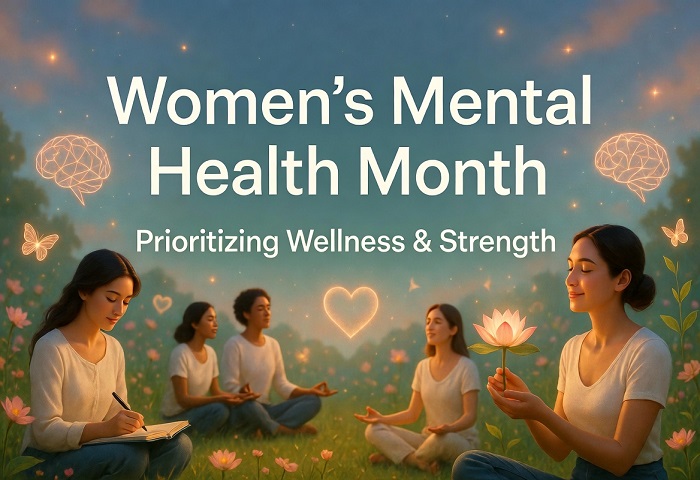
Introduction: Why Women’s Mental Health Month Matters More Than Ever
Every May, the world comes together to observe Women’s Mental Health Month — a dedicated time to raise awareness, break down stigma, and encourage millions of women across the globe to prioritize their emotional and psychological well-being. Yet, despite the growing conversation around mental health in recent years, women continue to face unique, often overlooked challenges that make this month not just meaningful, but genuinely necessary.
Mental health has long been treated as a secondary concern in health conversations, pushed aside by more visible physical ailments. But the truth is, mental wellness is the foundation of everything — how you show up at work, how you parent, how you love, and how you experience the world. Women, in particular, carry an enormous mental load that rarely gets acknowledged, let alone addressed.
Women’s Mental Health Month serves as a powerful reminder that the internal struggles so many women silently endure deserve the same attention and urgency as any physical condition. Whether you are navigating postpartum depression, processing grief, managing chronic anxiety, or simply feeling emotionally depleted from the demands of daily life, this month is for you.
This post explores the significance of Women’s Mental Health Month, the specific mental health challenges women face, the warning signs to watch for, actionable self-care strategies, and how we as a society can do better in supporting women’s psychological health — not just in May, but all year long.
What Is Women’s Mental Health Month?
Women’s Mental Health Month is observed every May, running alongside Mental Health Awareness Month, which has been recognized in the United States since 1949. While general mental health awareness covers everyone, the women-specific focus highlights that female-identifying individuals experience mental health conditions differently — and often at higher rates — than men.
The month is driven by advocacy organizations, healthcare providers, therapists, community groups, and everyday people who want to change the narrative around women’s emotional struggles. From social media campaigns and wellness workshops to therapy fundraisers and community forums, Women’s Mental Health Month brings vital conversations to the surface.
The core mission is threefold: awareness, access, and action. Awareness means helping women recognize symptoms in themselves and others. Access means advocating for affordable, inclusive mental health care. And action means removing the social and cultural stigma that prevents women from seeking the help they deserve.
Understanding the purpose of Women’s Mental Health Month is just the first step. To truly honor it, we need to understand the specific mental health landscape that women navigate every single day.
Mental Health Statistics: The Reality for Women
The numbers tell a story that demands attention. Women are significantly more likely than men to be diagnosed with anxiety disorders, depression, PTSD, and eating disorders. According to data from mental health research institutions, women are nearly twice as likely to experience clinical depression in their lifetime compared to men.
Anxiety disorders affect women at a rate about 60% higher than men. This is not because women are inherently more emotionally fragile — rather, it is a product of biological factors, social conditioning, systemic inequalities, and the psychological burden of caregiving that society largely assigns to women.
Postpartum depression affects approximately 1 in 5 new mothers, yet is still dramatically under-diagnosed and undertreated. Premenstrual dysphoric disorder (PMDD), which affects up to 5% of women of reproductive age, is a severe form of premenstrual syndrome that includes debilitating emotional symptoms. Perimenopause and menopause are associated with notable increases in depression and anxiety, largely due to hormonal shifts that are rarely discussed in mainstream health conversations.
Women’s Mental Health Month puts these statistics in context — these aren’t just numbers, they represent real women in real pain who deserve recognition and care.
Unique Mental Health Challenges Women Face
Women’s psychological health is shaped by an intersection of biological, hormonal, social, and cultural forces. Understanding these challenges is key to addressing them meaningfully during Women’s Mental Health Month and beyond.
Hormonal Fluctuations and Mental Health
One of the most underappreciated aspects of mental wellness in women is the powerful role that hormones play. Estrogen and progesterone directly affect serotonin, the neurotransmitter most associated with mood regulation. Throughout a woman’s life — from puberty through the menstrual cycle, pregnancy, postpartum, and menopause — these hormones fluctuate dramatically.
These fluctuations can trigger or worsen anxiety, depression, irritability, and sleep disturbances. Yet, hormonal mental health is often dismissed or minimized. Women are told they are “just hormonal” rather than being given a thorough mental health evaluation. Women’s Mental Health Month encourages us to take these biological realities seriously as medical conditions worthy of proper care and treatment.
The Mental Load and Emotional Labor
Beyond biology, women carry what researchers call the “mental load” — the invisible cognitive and emotional work of managing households, relationships, children, and careers simultaneously. This constant background processing is exhausting and rarely acknowledged.
Emotional labor, the work of managing one’s own emotions and the emotions of others, falls disproportionately on women in both personal and professional settings. Over time, this invisible work leads to burnout, resentment, anxiety, and a chronic sense of being overwhelmed. Women’s Mental Health Month offers an important opportunity to name and validate this experience, and to demand more equitable distribution of these burdens.
Trauma and Gender-Based Violence
Women face higher rates of sexual assault, domestic abuse, and harassment than men, and these traumatic experiences have profound and lasting effects on mental health. Complex PTSD, dissociation, anxiety, depression, and substance use are all more common among trauma survivors.
During Women’s Mental Health Month, it is essential to center the experiences of trauma survivors and advocate for trauma-informed mental health care that meets women where they are.
Minority Stress and Intersectionality
Women who belong to marginalized groups — including women of color, LGBTQ+ women, women with disabilities, and low-income women — face what psychologists call “minority stress.” This refers to the chronic stress created by systemic discrimination, microaggressions, cultural stigma around mental health, and barriers to accessing care.
For women navigating multiple marginalized identities, the mental health burden is compounded. Women’s Mental Health Month must be inclusive of these experiences, acknowledging that a one-size-fits-all approach to mental wellness ignores the realities of millions of women.
Warning Signs of Mental Health Struggles in Women
One of the most valuable things Women’s Mental Health Month accomplishes is education around warning signs. Many women don’t recognize when they are struggling — or they minimize their symptoms to keep functioning for others. Here are key signs to watch for:
Persistent sadness or emptiness that lasts more than two weeks without a clear external cause is a hallmark symptom of depression. It may feel like a numbness or a gray fog rather than active crying.
Excessive worry or fear that is difficult to control and interferes with daily activities is a core feature of generalized anxiety disorder. Women often experience this as constant “what if” thinking, difficulty relaxing, and physical symptoms like a tight chest or upset stomach.
Changes in sleep patterns — either sleeping too much or experiencing chronic insomnia — are closely tied to mood disorders. Sleep disturbances both cause and worsen mental health conditions.
Loss of interest in activities that previously brought joy is called anhedonia, and it is a telling sign that something deeper is happening emotionally.
Difficulty concentrating or making decisions, feeling easily overwhelmed, and a pervasive sense of self-doubt or worthlessness are also significant indicators.
Physical symptoms without a clear medical cause — headaches, stomachaches, fatigue, and muscle tension — are often how depression and anxiety manifest physically in women.
Social withdrawal and pulling away from friends, family, and activities that once felt important.
Changes in appetite or eating behaviors, especially restrictive eating or binge-purge cycles, can indicate an eating disorder or a mood disorder using food as a coping mechanism.
If you recognize several of these signs in yourself or someone you love, Women’s Mental Health Month is a powerful prompt to reach out and seek support.
Self-Care Strategies for Women’s Mental Health
Self-care is not a luxury — it is a necessity. During Women’s Mental Health Month, one of the most empowering things women can do is invest in practical, sustainable habits that support emotional well-being. Here are strategies backed by research and mental health professionals:
Prioritize Sleep as a Non-Negotiable
Sleep is when the brain processes emotions, consolidates memory, and recovers from stress. Women consistently sacrifice sleep to meet the needs of others, but chronic sleep deprivation is directly linked to increased anxiety and depression. Aim for seven to nine hours and create a bedtime routine that signals to your nervous system that it is safe to rest.
Move Your Body Regularly
Exercise is one of the most effective natural antidepressants and anti-anxiety tools available. Even thirty minutes of moderate movement — walking, yoga, swimming, dancing — significantly reduces cortisol (the stress hormone) and increases endorphins. During Women’s Mental Health Month, committing to daily movement is one of the most meaningful things you can do for your emotional health.
Practice Mindfulness and Stress Reduction
Mindfulness-based practices, including meditation, deep breathing exercises, and grounding techniques, help women interrupt the cycle of rumination and anxiety. Apps like Calm and Headspace make mindfulness accessible, but even five minutes of slow, intentional breathing can shift your nervous system out of fight-or-flight mode.
Set Boundaries Without Guilt
Many women struggle with saying no, driven by a deep-seated fear of disappointing others. But overcommitting leads directly to burnout, resentment, and emotional depletion. Learning to set boundaries — with work, family, friendships, and social media — is a profound act of self-respect and a cornerstone of mental wellness.
Connect with Community
Isolation is both a symptom and a driver of mental health struggles. During Women’s Mental Health Month, seek out community — whether that is a support group, a close friend, a women’s circle, or an online community of like-minded individuals. Human connection is one of the most powerful healers.
Seek Professional Support
There is no substitute for professional mental health care. Therapy, counseling, and psychiatry are not signs of weakness — they are signs of self-awareness and courage. Women’s Mental Health Month actively encourages women to reach out to licensed therapists or mental health professionals. Cognitive behavioral therapy (CBT), EMDR for trauma, and somatic therapies are all evidence-based approaches that have helped millions of women reclaim their emotional health.
If cost is a barrier, many communities offer sliding-scale therapy. Platforms like BetterHelp, Open Path Collective, and community mental health centers provide more accessible options.
How to Support the Women in Your Life
Women’s Mental Health Month is not only a time for women to support themselves — it is also a call to action for everyone in women’s lives to show up differently and more intentionally.
Listen without fixing. One of the most healing things you can offer a woman who is struggling is simply your undivided, non-judgmental presence. Resist the impulse to immediately offer solutions. Often, being truly heard is the first and most essential form of support.
Check in regularly. A simple “how are you really doing?” asked with genuine curiosity can open a door that might otherwise remain shut. Many women will deflect with “I’m fine” out of habit — follow up gently.
Validate her experience. Avoid minimizing what she is going through with phrases like “it could be worse” or “just think positive.” Validation — acknowledging that her feelings make sense given what she is experiencing — is far more therapeutic.
Offer practical help. For women struggling with depression or anxiety, basic daily tasks can feel monumental. Offering to cook a meal, watch the children, or handle an errand can be genuinely lifesaving.
Encourage professional help without pushing. Gently mentioning therapy or counseling as a legitimate, valuable option plants a seed. Avoid framing it as “you need help” in a way that feels stigmatizing — instead, normalize it as something many healthy, high-functioning people choose to do.
Educate yourself. Use Women’s Mental Health Month as an opportunity to learn more about the mental health conditions that disproportionately affect women. Understanding anxiety, depression, PTSD, and postpartum depression makes you a more empathetic and informed supporter.
Breaking the Stigma: Why It Still Matters
Despite meaningful progress in mental health awareness over the past decade, stigma remains a very real barrier for many women. Cultural and generational beliefs about women being “too emotional,” expectations that mothers must be endlessly selfless, and the glorification of busyness and productivity all contribute to an environment where admitting to mental struggles feels shameful or weak.
Women of color face an additional layer of stigma in communities where mental health struggles may be seen as a sign of spiritual weakness, family dishonor, or personal failure. This cultural stigma prevents many women from seeking the care they urgently need.
Women’s Mental Health Month pushes back against all of this. It says clearly and loudly: your mental health matters, seeking help is strength, and no woman should suffer in silence because she fears judgment.
Every conversation about mental wellness, every therapy session attended, every social media post that says “I’m struggling and I’m getting help” chips away at the wall of stigma. These small, courageous acts accumulate into cultural change.
Mental Health Resources for Women
Part of what makes Women’s Mental Health Month powerful is the concentrated spotlight it places on resources. Here are some widely available options:
National Alliance on Mental Illness (NAMI): Offers education, support groups, and a helpline. The NAMI helpline is 1-800-950-6264.
Postpartum Support International: Specifically supports women experiencing postpartum depression, anxiety, and psychosis. Their helpline is 1-800-944-4773.
RAINN (Rape, Abuse & Incest National Network): Provides support for survivors of sexual violence, with a 24/7 hotline at 1-800-656-4673.
The Trevor Project: For LGBTQ+ women and youth, offering crisis intervention and suicide prevention resources.
Crisis Text Line: Text HOME to 741741 for free, confidential support from trained crisis counselors.
Psychology Today’s Therapist Finder: An online directory to find licensed therapists by location, specialty, and insurance type.
During Women’s Mental Health Month, many of these organizations run special events, free workshops, and awareness campaigns. Following them on social media is a great way to stay connected and informed.
Making Women’s Mental Health Month Last All Year
Perhaps the most important message of Women’s Mental Health Month is that the work cannot end on May 31st. Mental wellness is a daily practice, and the systemic changes needed to truly support women’s psychological health require sustained, year-round effort.
On an individual level, this means maintaining the habits built during the month — therapy appointments, movement practices, boundary-setting, and community connection — long after the awareness campaigns wind down.
On a systemic level, it means advocating for mental health parity in healthcare, funding for women-focused mental health research, paid parental leave and family support policies, accessible and affordable therapy, and trauma-informed practices in schools, workplaces, and healthcare settings.
Employers can honor Women’s Mental Health Month and its spirit throughout the year by offering mental health days, flexible work arrangements, Employee Assistance Programs (EAPs) that include therapy, and creating workplace cultures where women feel safe discussing mental health without fear of professional consequences.
Healthcare providers can do better by routinely screening women for anxiety, depression, and PTSD during regular appointments — not just during pregnancy — and by taking women’s self-reported symptoms seriously rather than dismissing them.
Conclusion: Your Mental Health Is Worth Celebrating and Protecting
Women’s Mental Health Month is many things: a celebration of resilience, a call to action, a space for education, and a powerful collective statement that women’s inner lives matter. It is a reminder that behind every strong woman is a nervous system that needs tending, a heart that needs care, and a mind that deserves rest and healing.
Whether you use this month to finally book that therapy appointment you have been putting off, to check in more deeply with the women in your life, to share your own story, or simply to be a little gentler with yourself — every step counts. Every conversation matters. Every act of self-compassion during Women’s Mental Health Month sends a ripple outward.
Mental wellness is not a destination you arrive at. It is a practice, a commitment, and ultimately, a form of love — the kind you give yourself first, so you have more to give to the world.
This Women’s Mental Health Month, and every month after it, choose to show up for yourself. You are worth it.